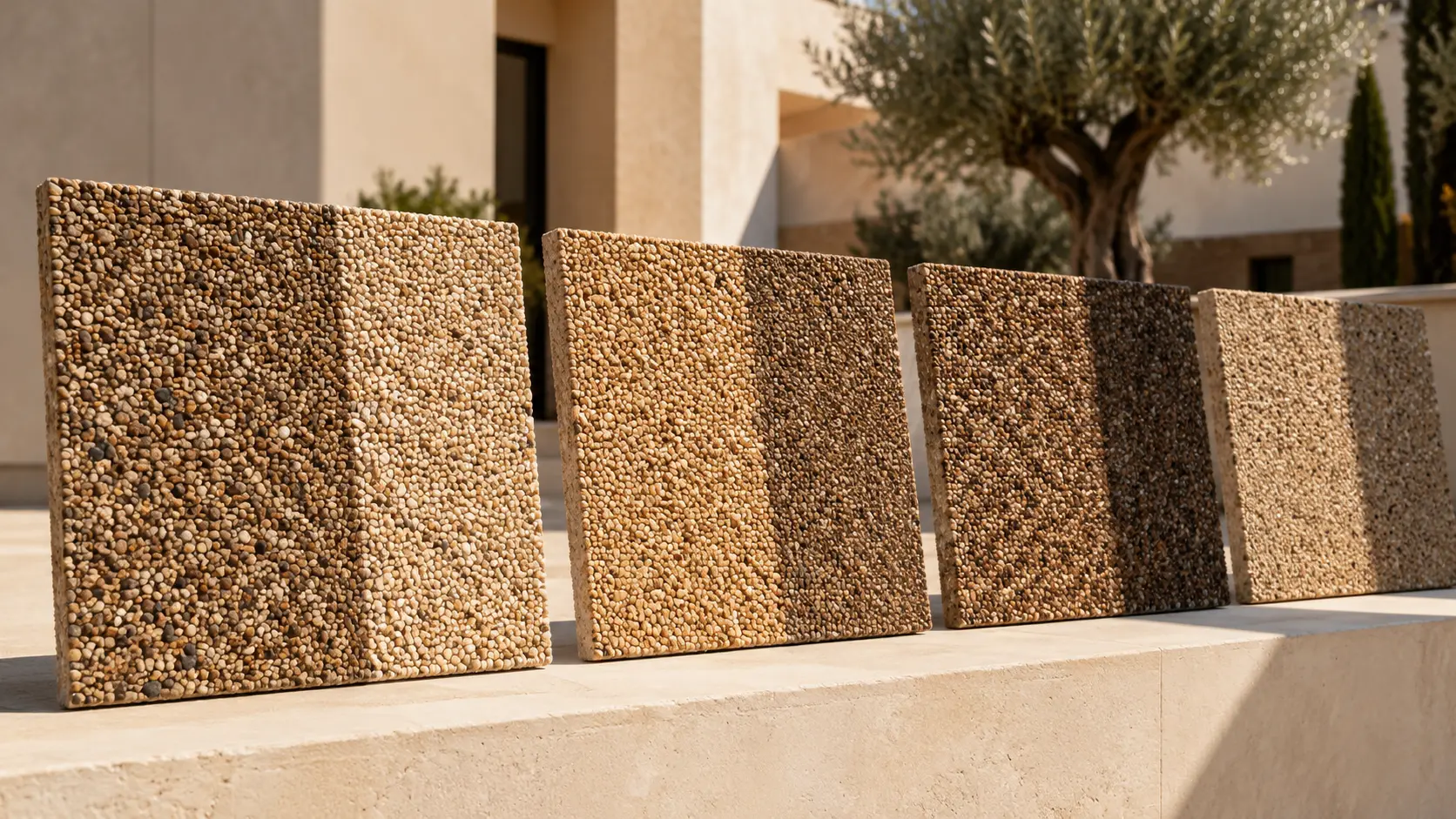
Exterior resin-bound surfacing in Spain should be specified with colour stability in mind. The clear binder sits around every aggregate particle and is exposed across the surface. If that binder changes colour under ultraviolet light, the appearance of the entire area can change with it.
Aliphatic polyurethane binders are commonly selected for UV-resistant exterior resin-bound systems. Aromatic or non-UV-stable binders can yellow or darken as they are exposed, creating a more obvious effect with pale stone and between covered and uncovered areas.
“UV stable” still needs qualification. It refers to the binder's resistance to UV-related discolouration. It does not promise that natural stone, surface gloss, contamination and every other part of the installation will remain visually identical for its whole life.
Planning a terrace, driveway or pool surround? Ask for the proposed resin product, its current technical documentation and a sample of the complete aggregate-and-resin blend.
Discuss an exterior specificationThe short answer: should exterior resin-bound flooring use UV-stable resin?
For a decorative exterior where colour retention matters, a documented UV-stable system is the sensible specification.
This is particularly important with white, cream, silver, pale grey and other light blends. Changes in a clear binder are easier to see against light aggregate. Darker stone can disguise some discolouration, but that does not make a non-UV-stable binder colourfast.
The quotation should say more than “UV resin”. It should name the system or product and make the supplier's supporting information available.
Aliphatic and aromatic polyurethane resins
These terms describe different polyurethane chemistries used in resin surfacing.
Aliphatic resin
Aliphatic polyurethane resin is used in systems designed to resist yellowing and retain a clearer appearance under UV exposure. Manufacturers commonly describe their exterior UV-stable binders as aliphatic.
It is usually the relevant option where the chosen aggregate colour, consistent appearance and long-term decorative finish matter.
Aromatic resin
Aromatic polyurethane resin is generally less resistant to UV-related colour change. Suppliers may offer it as a lower-cost binder for dark blends, internal areas or applications where discolouration is accepted.
Exposure is rarely uniform. Bins, planters, furniture, parked vehicles and fixed equipment create shaded areas. A non-UV-stable surface can therefore develop different tones where sections have received different amounts of sunlight.
The choice should be explicit. A customer should not discover after installation that a lower-cost binder was used because the stone was considered dark enough to hide the effect.
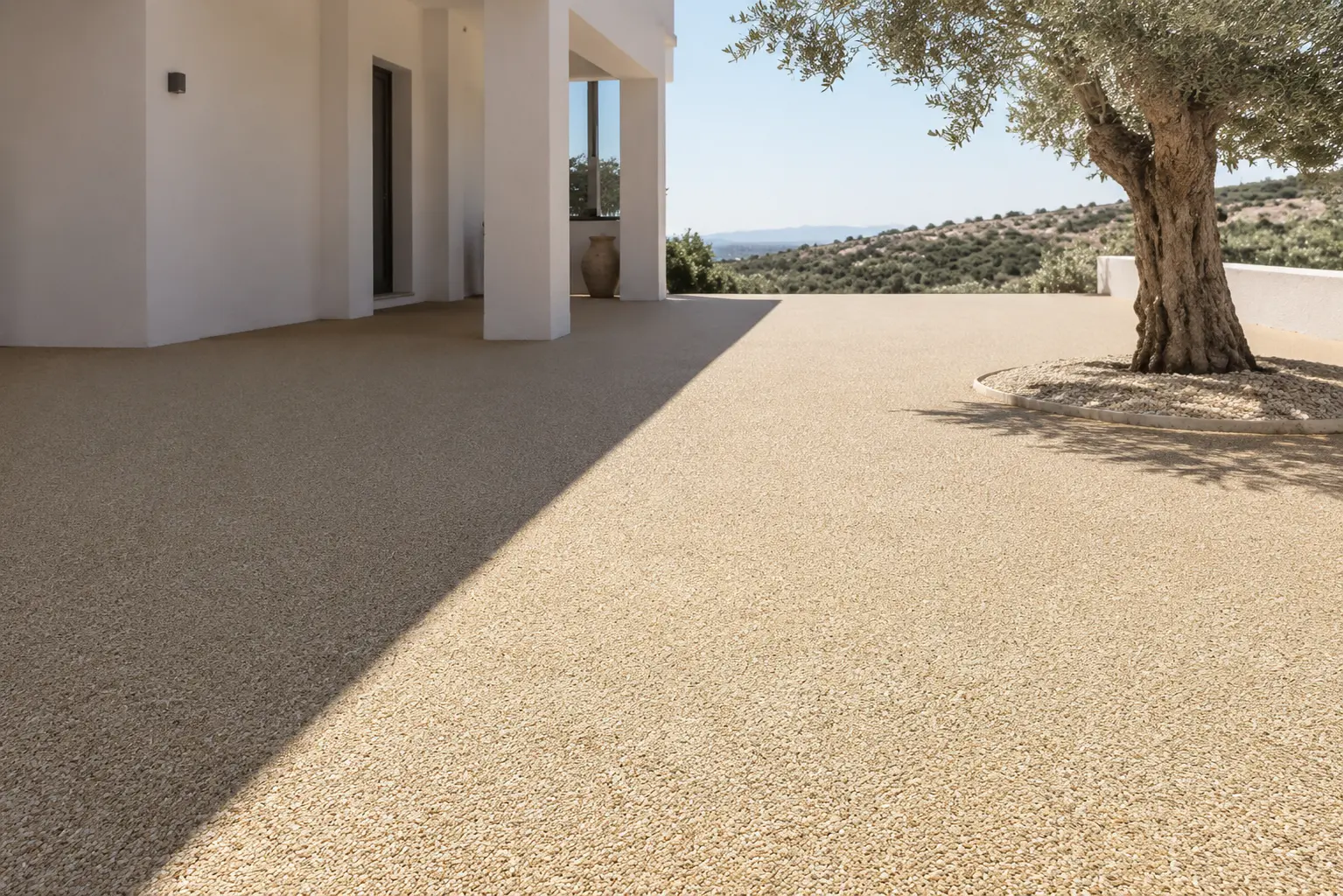
What does “UV stable” actually mean?
In this context, UV stability concerns the resin binder's resistance to colour change caused by ultraviolet exposure.
It does not mean:
- the natural aggregate can never fade or weather
- every batch will be identical
- the surface cannot stain
- gloss and texture will remain unchanged
- repairs will be invisible
- heat cannot affect installation conditions
- a generic guarantee applies to every product and installer
Ask what the manufacturer is claiming, how the product is identified and which exclusions apply. A product guarantee may cover the binder while excluding aggregate variation, workmanship, maintenance, staining and natural weathering.
Why the issue is important in Spain
Exterior areas in Spain can spend long periods exposed to direct sunlight. Open driveways, pool surrounds and south- or west-facing terraces may have little shade during part of the day.
The practical issue is not a country-wide promise about service life. It is that binder selection, colour choice and installation planning need to suit the actual exposure of the site.
The survey should note:
- orientation and periods of direct sun
- permanent shade from buildings and walls
- movable shade from furniture, vehicles and planters
- intense reflected light from pale walls or glazing
- dark substrates that become hot before installation
- pool water, irrigation and cleaning patterns
Sunlight affects appearance over time. Surface temperature affects the working conditions on installation day. They are related site considerations, but they are not the same material property.
UV exposure and installation heat are different questions
A UV-stable resin may still have strict temperature, humidity and moisture limits during installation.
Strong sun can heat a concrete or asphalt base beyond the surrounding air temperature. Warm materials can reduce working time and make consistent mixing and finishing more difficult. Shade moving across the area during installation can also produce changing base conditions.
The installer should measure and follow the limits for the selected system. Calling a binder UV stable does not authorise installation on an excessively hot surface or in any weather.
Read about the installation processThe aggregate can change too
The resin is only one source of colour.
Natural stone contains variation in mineral composition, tone and texture. Some aggregates can become lighter through natural weathering or bleaching. Others may contain minerals that produce local staining when exposed to moisture and air. Manufacturers that guarantee resin colour stability often exclude mineralogical change in the aggregate.
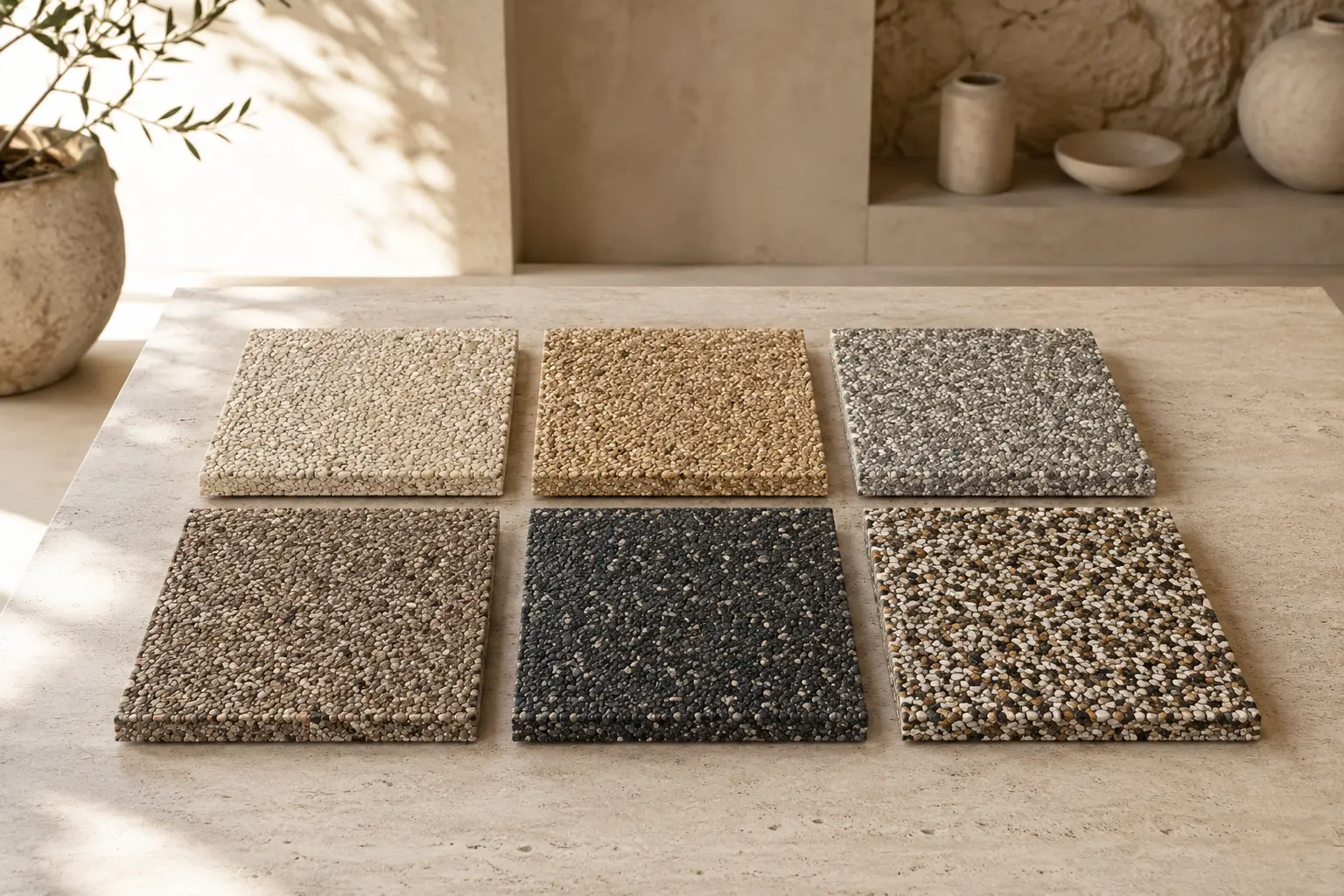
This does not make natural stone unsuitable. It means the appearance should be described honestly. A natural blend has variation and should not be judged as if it were a factory-printed tile.
Questions to ask about the aggregate include:
- Is it suitable for exterior resin-bound use?
- Is the supplied sample representative of a blend or a single handful?
- Are colour and mineral variations expected?
- Does the supplier identify aggregates with a greater risk of iron staining?
- Will material for the project come from one planned order or batch allocation?
Why pale colours need more care
Pale aggregates make contamination and binder colour change easier to see. They can also show tyre marks, soil, leaf staining and uneven cleaning more readily than a mid-tone blend.
That does not mean white or cream surfacing should be avoided. The customer should understand the maintenance implications and view a cured sample outdoors. A very bright blend beside an irrigated planting bed or frequently used vehicle area may require more cleaning than the same blend on a sheltered pedestrian terrace.
For a large area, a balanced blend of related tones can make normal natural variation less conspicuous than a near-monochrome colour.
Dark colours have different trade-offs
Dark aggregate may disguise some staining and non-UV binder change. It can show pale dust, limescale or dried residues more clearly. Dark surfaces can also become hot in direct sun, which matters for barefoot pool areas and for installation planning.
Colour choice should therefore consider use as well as architecture. A dark driveway, shaded path and barefoot terrace do not have the same priorities.
No blend should be called cool, non-fading or maintenance-free without product-specific evidence.
Covered and uncovered areas
Uneven exposure can create the clearest evidence of binder discolouration.
Common examples include:
- plant pots left in one place
- permanently parked vehicles
- outdoor rugs and storage boxes
- furniture with broad bases
- pool covers and equipment
- bins, statues and fixed signs
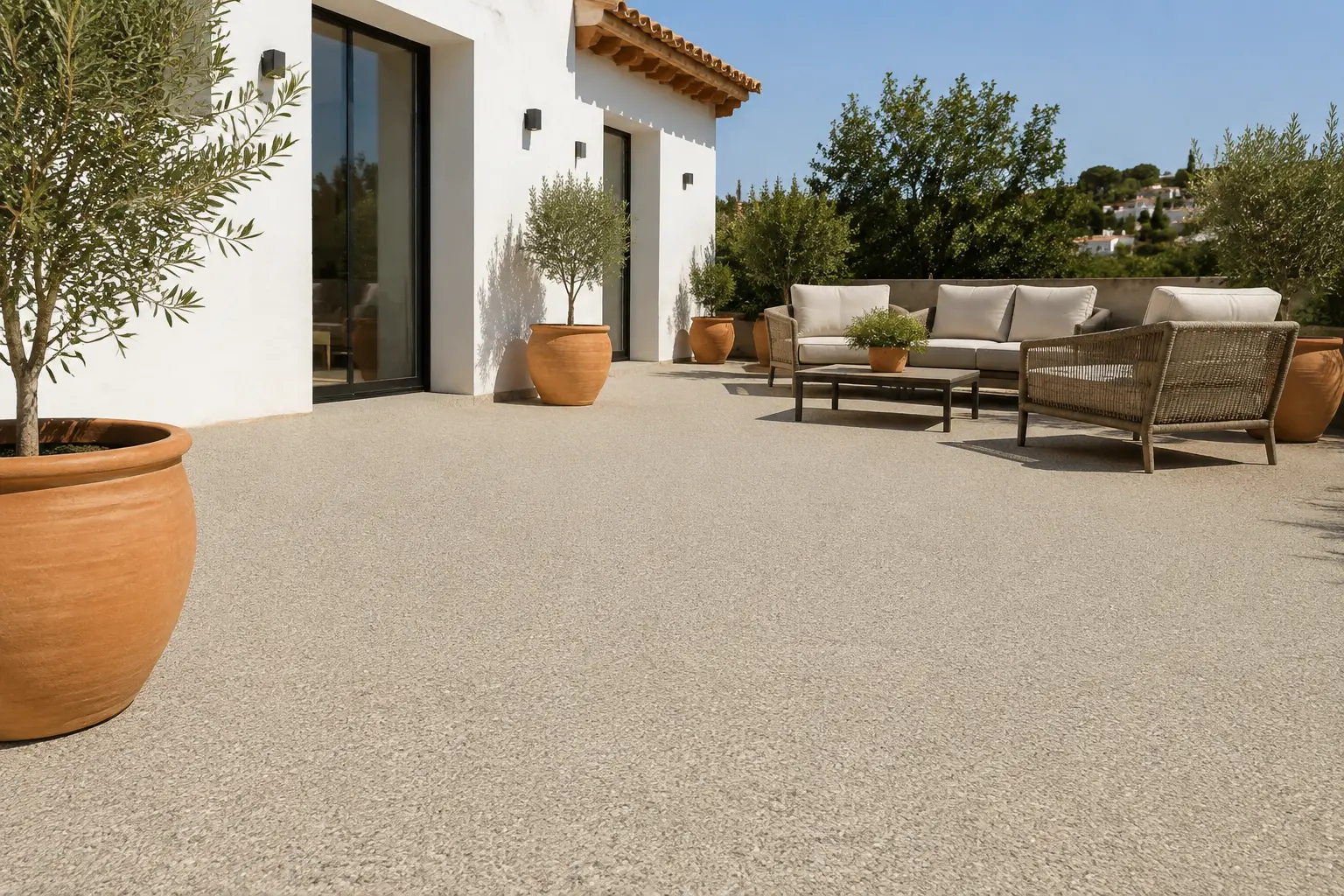
With non-UV-stable resin, moving an object may reveal the original colour beneath while the exposed surface has changed. A UV-stable binder reduces the risk of resin-driven contrast, although dirt, moisture and natural weathering can still produce a difference.
Where heavy objects remain for long periods, occasional movement for cleaning may also prevent debris and organic growth collecting around their edges.
Colour samples and realistic approval
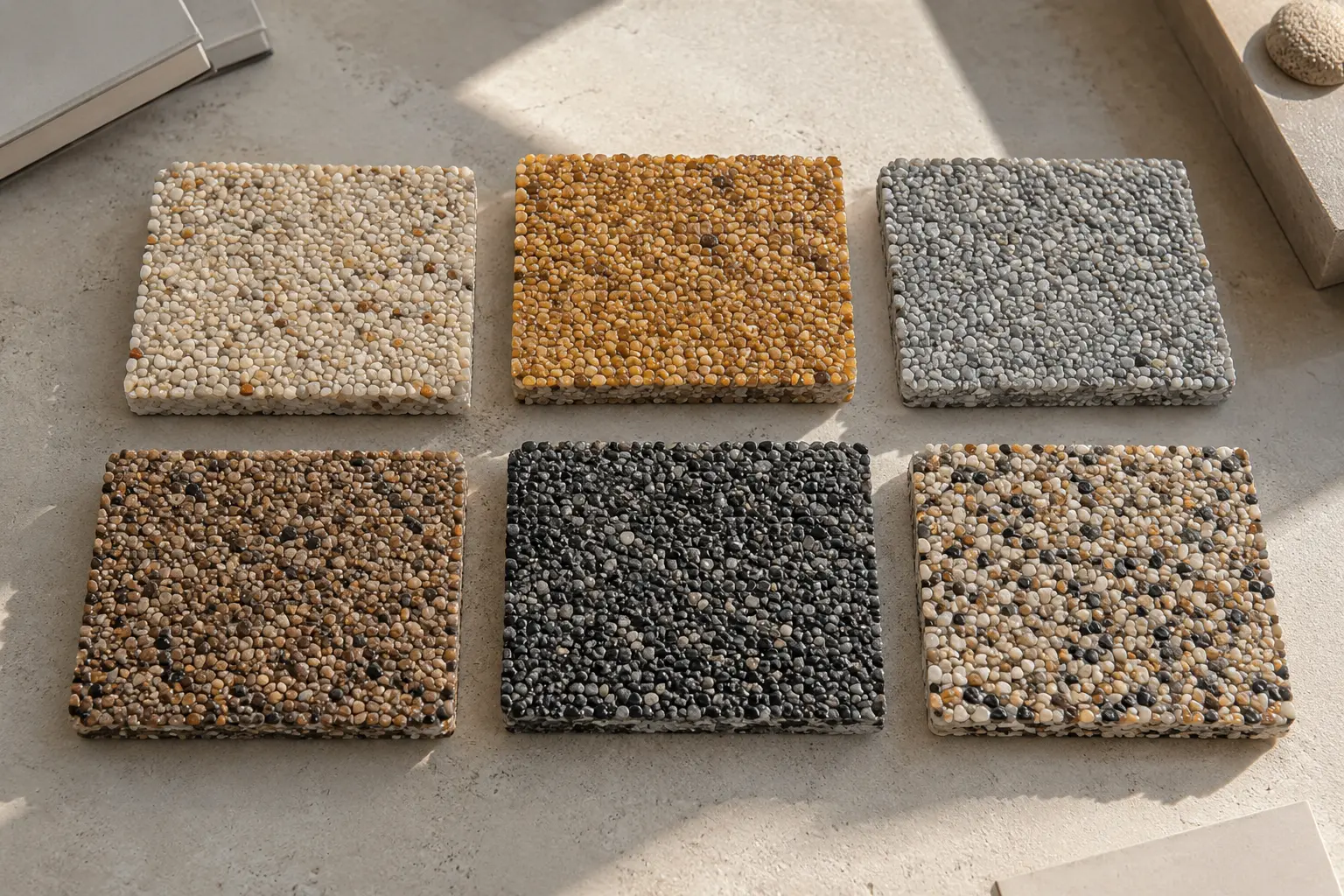
A loose aggregate sample does not show the final surface accurately. Resin changes the depth and saturation of the stone, often creating an appearance closer to wet aggregate.
Use a cured sample made with the specified binder and full aggregate blend. View it outdoors in sun and shade, next to walls, tiles, copings or other permanent materials. Small samples still cannot reproduce all natural variation across a large project.
The approval record should identify:
- blend name or composition
- aggregate size or system designation
- resin product
- sample date or reference
- borders, patterns and adjoining colours
Digital photographs are useful for comparison, but screens and camera processing are poor colour standards.
Batch consistency during installation
Even the correct UV-stable resin can produce an uneven-looking surface if batches are mixed or finished inconsistently.
Aggregate proportions, binder quantity, mixing sequence, timing and trowel technique should remain controlled. Materials from different pallets may need planned distribution in accordance with supplier guidance so natural variation does not appear as blocks or stripes.
An unexpected stop can create a visible day joint. Overworking one batch and lightly finishing the next may change how light reflects from the surface.
Colour stability begins with product selection. Visual consistency also depends on installation control.
Repairs and colour matching
A repair to an existing resin-bound surface should not be promised as invisible.
The original aggregate may no longer be available. Even with the same named blend, quarry variation, batch differences, weathering, contamination and changes in surface texture can reveal the repair. Newly applied resin may initially appear different from an older surrounding area.
UV-stable binder helps prevent avoidable yellowing in the repair material. It cannot reverse the age or exposure history of the existing surface.
Where appearance is critical, the repair can sometimes be placed at a natural boundary or include a larger defined section. The options depend on the cause and extent of the damage.
Staining is not the same as UV fading
A change in colour should be diagnosed before treatment is proposed.
Possible causes include:
- UV-related binder discolouration
- natural aggregate weathering
- iron mineral staining
- oil, tyre or organic contamination
- limescale or irrigation deposits
- algae and retained dirt
- uneven abrasion or surface wear
- an incompatible coating or cleaning product
Each has a different response. Applying a clear coating without identifying the cause may alter the sheen or trap an unresolved problem.
Pool chemicals, irrigation and cleaning
Pool surrounds and garden terraces experience more than sunlight.
Splash water can leave residues. Irrigation may carry minerals and repeatedly wet the same edge. Fertilisers, leaf tannins, barbecue grease and cleaning chemicals can mark the surface. The risk and correct treatment depend on the specified system and contaminant.
Spills should be addressed promptly using the product supplier's maintenance guidance. Strong solvents, acids or improvised coatings should not be applied because a general online cleaning tip recommends them.
A UV-stable binder resists a particular source of colour change. It is not a universal chemical-resistance claim.
Does sealing improve colour stability?
Some manufacturers offer compatible rejuvenating or sealing products for particular resin-bound systems. These may change gloss, deepen colour or refresh the appearance.
They are not automatically suitable for every porous surface. A coating can affect texture, slip characteristics, permeability and future maintenance. The existing surface must be assessed and the treatment confirmed as compatible.
Do not use a generic clear sealer as a substitute for specifying a suitable exterior binder at the original installation stage.
What should the quotation say?
For exterior work, the proposal should identify:
- resin manufacturer and product name
- whether the binder is documented as UV stable or UV resistant
- aggregate blend and grading
- intended application and exposure
- sample approval method
- relevant product data and installation conditions
- stated colour guarantee and its exclusions
- responsibility for installation workmanship
- maintenance requirements
Phrases such as “premium resin”, “best quality” or “suitable for Spain” are not technical specifications.
Questions to ask a supplier or installer
- Is the proposed binder aliphatic and documented for exterior UV exposure?
- What is the exact product name?
- Can I see the current technical data and guarantee conditions?
- Is the guarantee for the binder, complete system or installation?
- Does it exclude aggregate fading, staining and natural weathering?
- Is the cured sample made with the same resin and blend?
- How will batch consistency be controlled?
- Are repairs likely to remain visible?
- What maintenance is recommended for this specific system?
- Are any additional coatings proposed and how would they affect permeability and slip performance?
Answers should be recorded before the material is installed.
UV-stable resin and project cost
UV-stable aliphatic binders may cost more than non-UV-stable alternatives. The difference should be evaluated against the importance of exterior colour retention and the difficulty of correcting widespread discolouration later.
A quotation should not hide the resin choice inside one general square-metre rate. If two proposals use different binders, they are not offering the same decorative specification.
The base, drainage and workmanship still account for a substantial part of the total project. Paying for UV-stable resin does not correct inadequate preparation or installation.
Understand resin-bound flooring costs in SpainSelecting colours for different applications
Pool surrounds
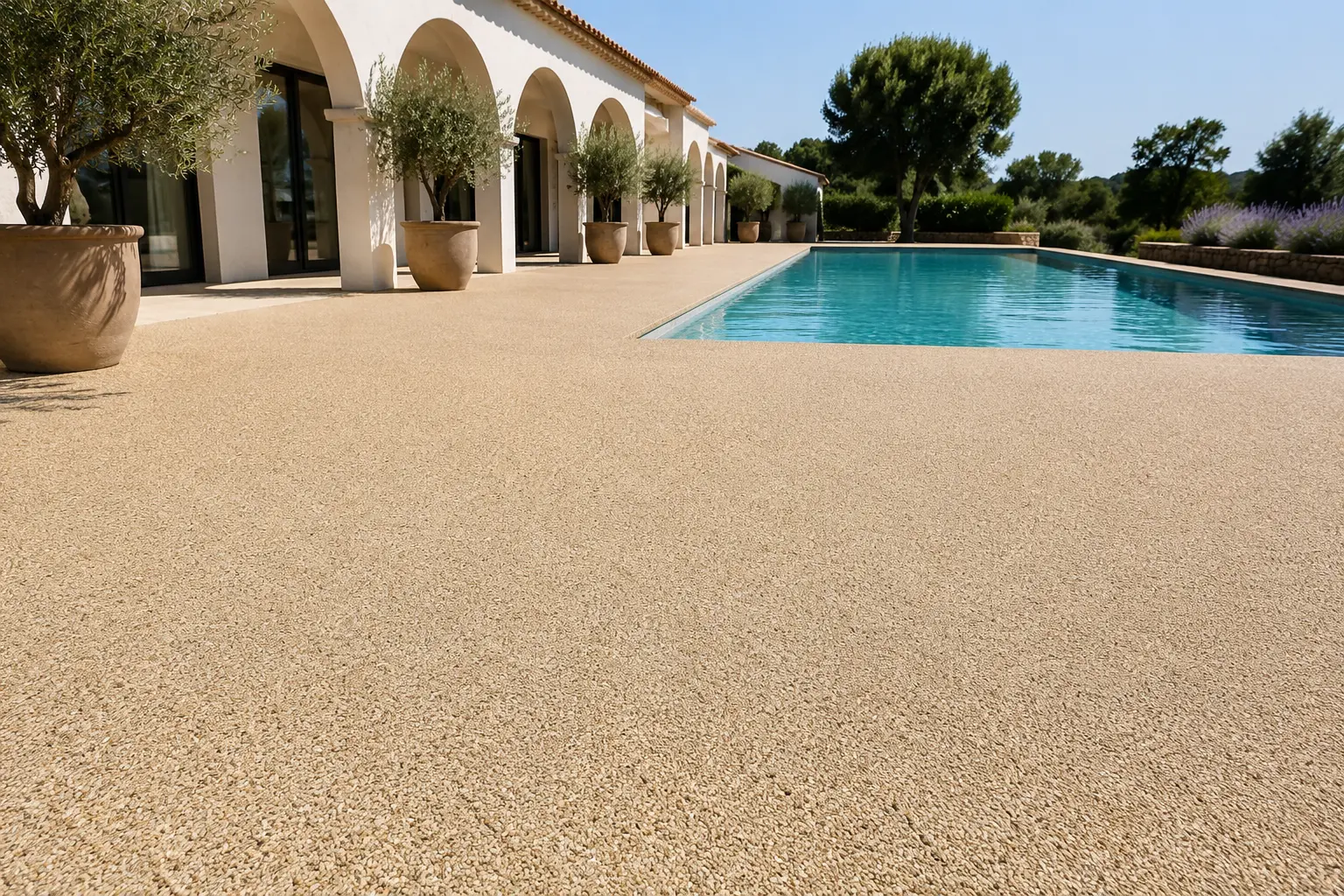
Consider barefoot heat, glare, water residues and the relationship with pool copings. Pale and mixed neutral aggregates are common visual choices, but the actual blend should be tested in the site's light.
Driveways
Mid-tone blends can be more forgiving of tyres, dust and routine traffic. Areas beneath regularly parked cars need a documented UV-stable binder if exposure contrast is to be minimised.
Terraces and patios
Compare the sample with wall finishes, exterior tiles and furniture. Note where pergolas, awnings and planters create changing patterns of shade.
Commercial areas
Colour zoning and logos require precise product selection, records and repair planning. Maintenance staff should receive system-specific cleaning information.
Specify the binder, not the slogan
For decorative exterior surfacing, UV stability should be attached to a named resin system and supported by current documentation. The aggregate, batching, installation and maintenance then need to preserve the appearance that was approved.
Send the location, application, preferred colour family and photographs showing sun and shade. We can help define the questions the exterior specification should answer.
Request a UV-stable specification review