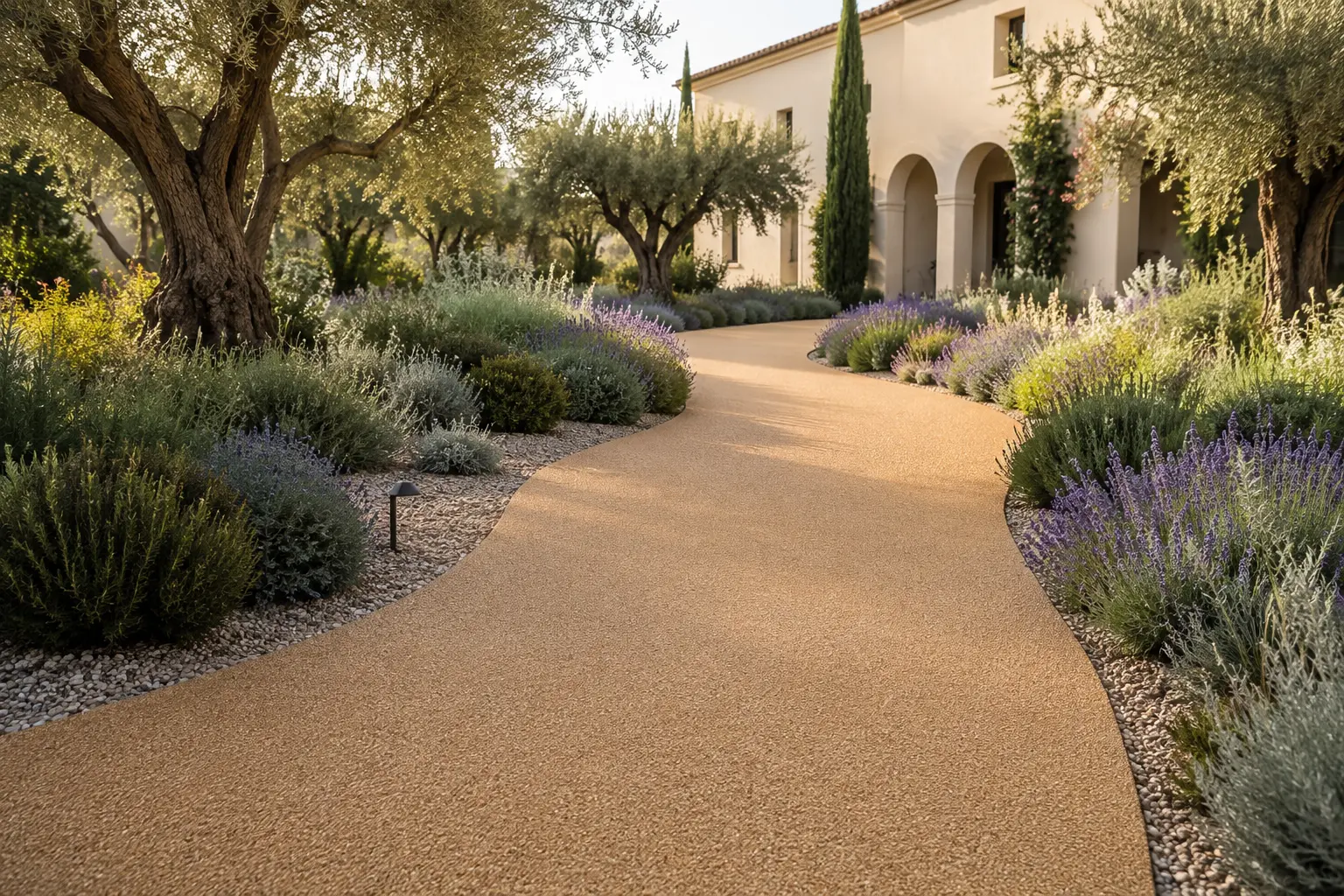
A continuous aggregate finish for garden paths, residential communities, hotel grounds and exterior pedestrian routes.
The route, base, slopes, edges, drainage and expected users should be assessed together before a surface is specified.
Tell us about your paths Explore the technical requirementsA path is part of a route
A path is rarely an isolated strip of surfacing. It connects gates, buildings, terraces, pools, gardens, parking and shared facilities. Its performance depends on those connections as much as the material between them.
Resin-bound aggregate can follow curves and irregular landscaped routes without a repeated paving pattern. It can also use borders or contrasting blends to define edges and changes in use.
The continuous appearance should not hide changes in construction. A level garden path, a sloping entrance and a walkway crossed by service vehicles may need different bases and details even when the chosen aggregate is related.
Where resin-bound paths may be considered
Villas and private gardens
Residential paths can connect entrances, driveways, terraces, pools and garden areas. They may replace loose gravel, ageing concrete, uneven paving or a mixture of finishes laid at different times.
The assessment should include garden irrigation, tree roots, soil at the edges and how the route is used after rain. Narrow access may also affect how base materials, aggregate and mixing equipment reach the site.
Residential communities
Communal paths often carry residents, visitors, pushchairs, mobility aids, cleaning equipment and maintenance trolleys. Some routes may need to remain available while others are resurfaced.
The project plan should identify the main access route, alternatives during the work and any sections used by vehicles. Pool approaches, bin areas and entrances may have different contamination and cleaning needs from quieter garden paths.
Explore resin-bound surfacing for residential communities
Hotels and resorts
Hotel walkways connect guest rooms, pools, restaurants, reception areas, landscaped grounds and service zones. Luggage wheels, housekeeping trolleys and event traffic can concentrate wear along particular lines.
Phasing, guest separation, delivery routes and reopening conditions should be resolved before the installation period is fixed. A surface selected for one sheltered garden path should not be assumed appropriate for a sloping pool approach or service crossing.
Explore resin-bound surfacing for hotels and resorts
Hospitality and commercial entrances
Exterior paths and entrance routes can be considered for restaurants, shops, offices and leisure properties. They may need to remain presentable under frequent use and routine cleaning while meeting steps, ramps, doors and internal floors safely.
Tracked water, food-service contamination, deliveries and furniture movement should be included in the assessment where relevant.
Existing path construction
Concrete paths
Existing concrete may be suitable for an overlay where it is stable, well supported and compatible with the proposed system. Cracks, movement joints, surface contamination, weak concrete and poor levels require review.
A narrow cracked path beside a retaining wall may be moving for reasons that extend beyond its decorative finish. Covering the line does not prevent the base from moving again.
Paving and exterior tiles
Individual slabs, blocks or tiles can become loose, hollow or uneven. Their joints may also allow fine soil and weeds to accumulate.
Retaining these surfaces beneath resin-bound aggregate is a project-specific decision. The complete area needs sufficient stability, preparation and level capacity. Widespread movement usually argues against treating the visible paving as a dependable base.
Gravel and bare ground
Loose gravel or compacted soil is not a finished structural base for resin-bound surfacing. New construction may involve excavation, sub-base preparation, a suitable bound layer, drainage and secure edge restraint.
Ground conditions can change across a landscaped site. Made ground beside a building, clay, shallow rock and filled planting zones should not automatically receive one standard detail.
Read about substrates and ground preparation
Slopes and changes in level
Sloping paths require more than a textured top surface. Gradient, crossfall, water direction, landings and the needs of the people using the route all affect the design.
Water should not be allowed to run across the walking line without control or collect at the foot of a ramp. A sloping route can also place additional demands on mixing, placement and surface finishing during installation.
Steps need consistent dimensions and clear nosing details. Where a path is intended as an accessible route, the responsible project professional should confirm the applicable gradient, landing, width, edge and handrail requirements.
Resin-bound surfacing alone does not make an unsuitable ramp accessible.
Slip resistance and accessibility
The term non-slip does not describe how a path will perform when wet, contaminated or worn. The proposed system should have evidence suited to the use and any required Spanish classification.
Private garden routes still deserve a practical risk assessment, especially where users may be older, barefoot near a pool or moving between different surfaces. Communal, hotel and publicly used routes may fall within more specific safety and accessibility requirements.
Texture needs to work with wheeled use and maintenance. An unnecessarily coarse finish can be uncomfortable, hard to clean or difficult for small wheels. A smoother finish with inadequate wet evidence creates another problem.
Read about slip resistance and accessibility
Drainage along landscaped routes
A path can receive rain from its own surface, runoff from a slope, irrigation overspray and soil washed from adjoining beds.
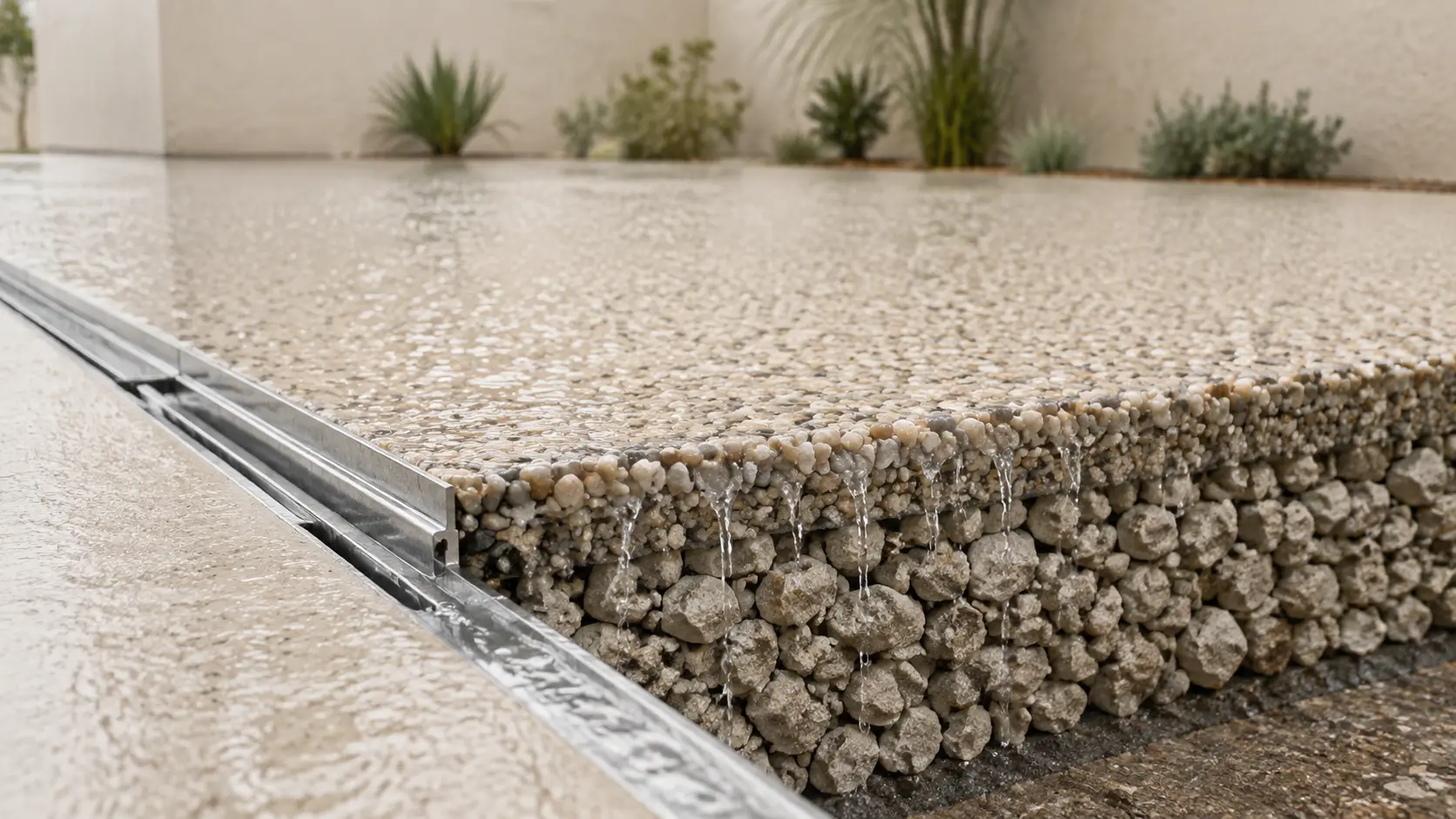
Resin-bound material may allow water through the upper layer. Full permeability depends on the construction below and the ground's ability to receive water. An overlay on concrete will normally continue to rely on falls and outlets.
Long routes should not be treated as one drainage condition. A high section, a shaded low point and an entrance beside a road can need different controls.
Edges should prevent loose soil and mulch from washing onto or beneath the path. Channels, open edges and outlets need to remain serviceable after planting develops.
Understand drainage and permeability
Trees, roots and planted edges
Roots can lift weak bases, distort edges and exploit existing cracks. Cutting major roots to simplify a surfacing project can damage the tree and destabilise the surrounding ground.
The route may need to move, widen around a tree or use a detail designed with appropriate arboricultural input. A resin-bound finish should not be used to bridge active root movement without considering what happens as the tree grows.
Planting also affects maintenance. Leaves, petals, fruit, soil and irrigation can collect in the surface texture. Pale blends beneath heavily shedding vegetation will show that load sooner than a mid-tone blend in an open route.
Tree pits require a defined edge and enough allowance for the tree and its environment. They should not be improvised by finishing resin-bound material directly against a trunk.
Edges and adjoining materials
Path edges hold the construction in place and create the transition to planting, gravel, walls, paving and drainage.
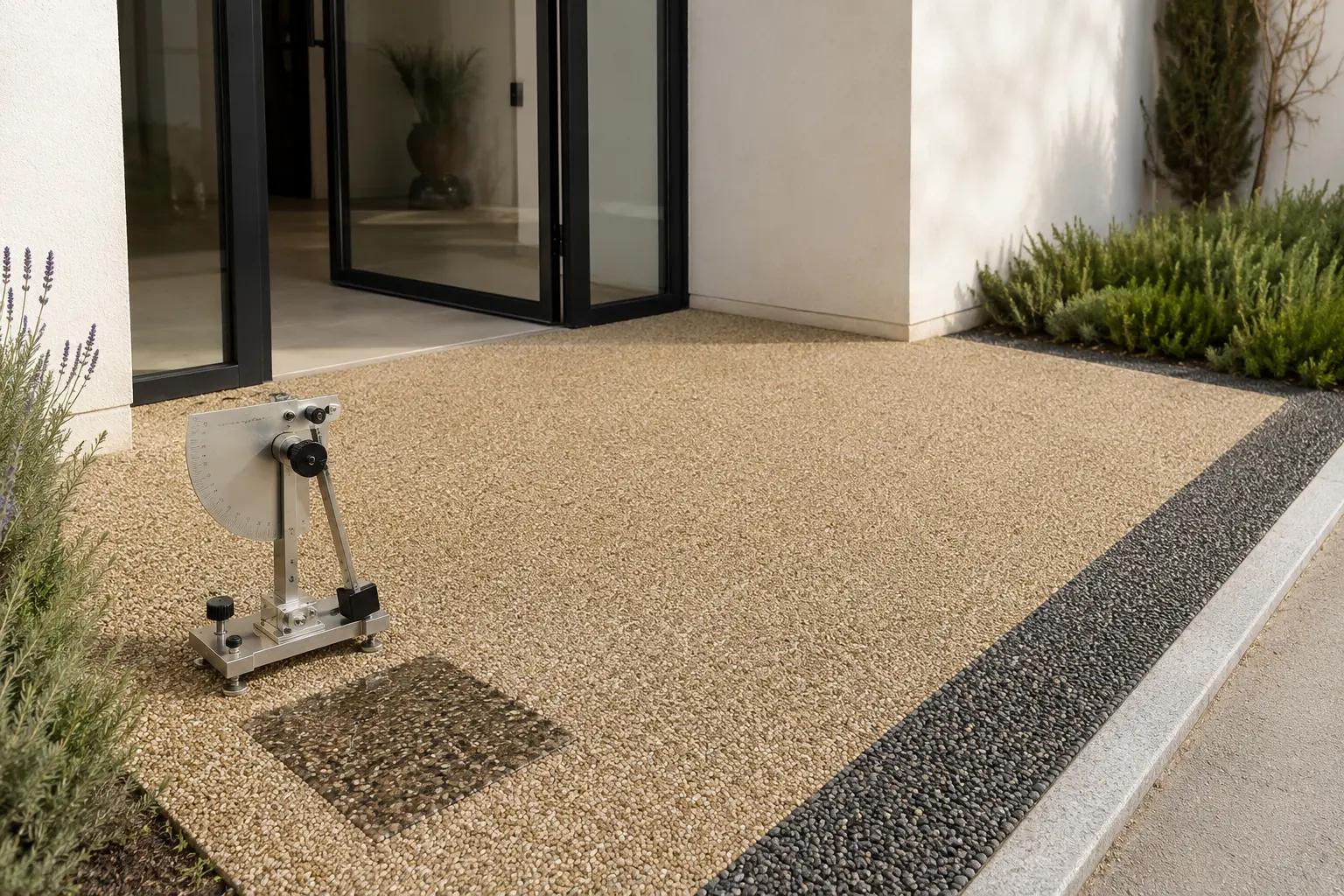
Existing kerbs or stable paving may provide restraint. Other routes need new metal profiles, blocks or compatible edging fixed to an adequate base. Thin unsupported margins are vulnerable to foot traffic, garden machinery and soil movement.
The proposal should show:
- where each surface begins and ends
- how curves and narrow points are restrained
- treatment beside walls and retaining structures
- interfaces with gates, drains and covers
- transitions into driveways, terraces and pool areas
- any border used for visual contrast or route definition
Service crossings and occasional vehicles
A pedestrian path may still be crossed by maintenance vehicles, refuse equipment, mobility scooters or delivery trolleys. Those uses should be stated before the base is accepted.
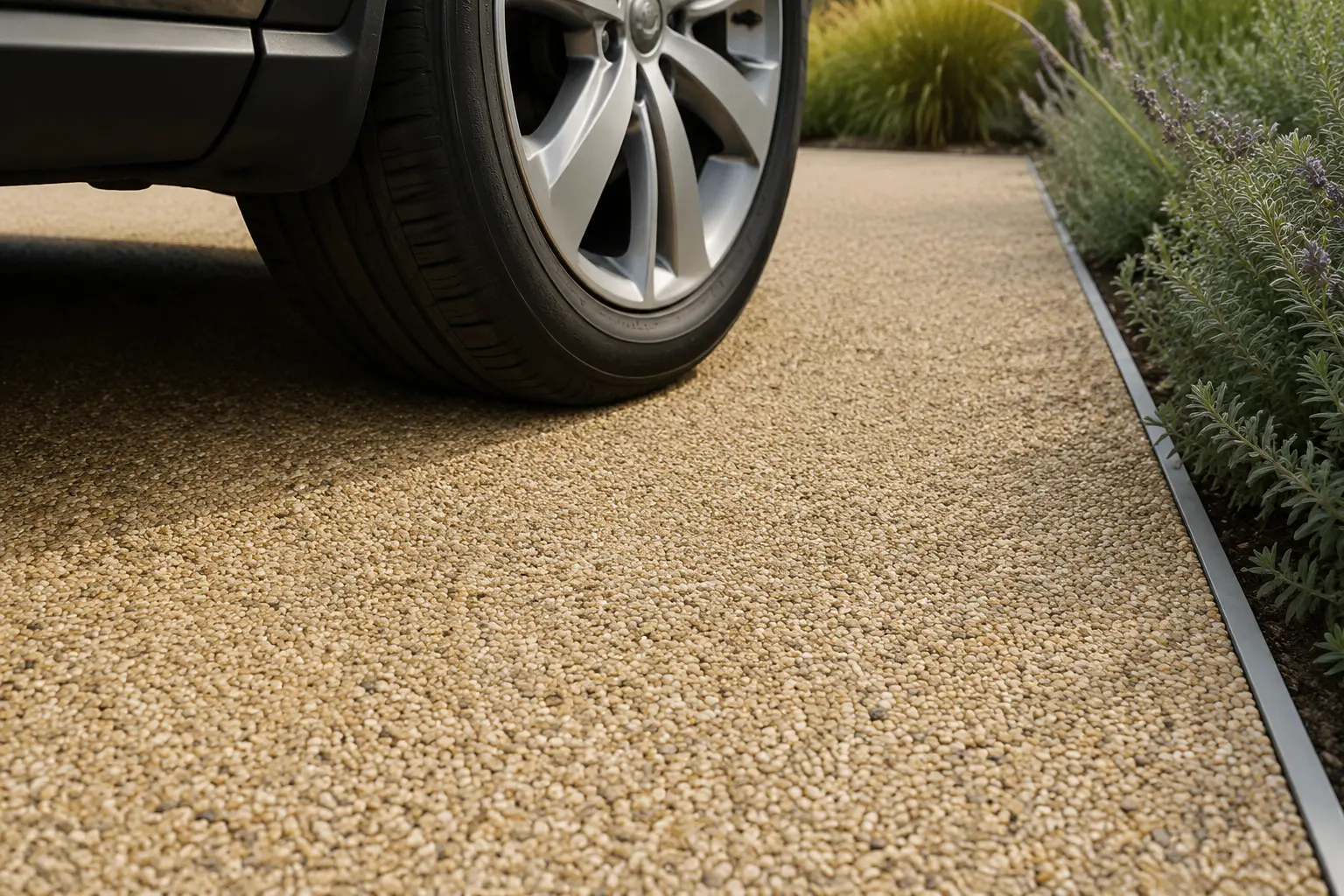
If vehicles regularly mount the path, the relevant section needs a construction and edge detail suited to that load. A decorative finish specified only for pedestrians should not be expected to compensate for an under-designed crossing.
Removable bollards, gates and service covers also create concentrated edges that need support.
Planning phased work
Communities, hotels and occupied properties may be unable to close every route at once. Phasing should identify the sequence, temporary access and how new work will be protected from other trades and normal movement.
Mixing and delivery areas need separation from residents, guests and garden operations. Newly completed sections should not be reopened because the next phase lacks an alternative route. Return-to-service timing comes from the selected system and installation conditions.
For larger properties, mark each phase on a plan and agree who controls barriers and communication.
Maintenance
Routine care begins with removing dry leaves, grit and soil before they become compacted or hold moisture. Shaded and irrigated sections may need closer observation for algae and organic growth.
Keep channels, outlets and path edges clear. Repeated soil wash or irrigation across one section may call for changes to planting, edging or water control as well as more cleaning.
Pressure-washing limits and compatible treatments should come from the installed resin system. Stop aggressive cleaning if aggregate is loosening or an edge has begun to fail.
Path and walkway costs
Path projects can contain high edge length relative to their surface area. Curves, steps, narrow access, drainage details and separate sections may have more influence on labour than the headline square metres suggest.
A new path over bare ground also includes base construction. An overlay price for sound concrete cannot be compared with excavation and a new build-up.
Commercial quotations should show phasing, temporary access, protection and any return visits separately where possible.
Understand resin-bound surfacing costs
Tell us about the route
Provide the property location, approximate length and width, current surface and main users. Include slopes, steps, trees, drainage concerns and any section crossed by vehicles.
For a community or commercial property, explain which routes must remain open and the preferred working period.
Project coverage and the appropriate next stage are confirmed after review.
Submit a path or walkway enquiry