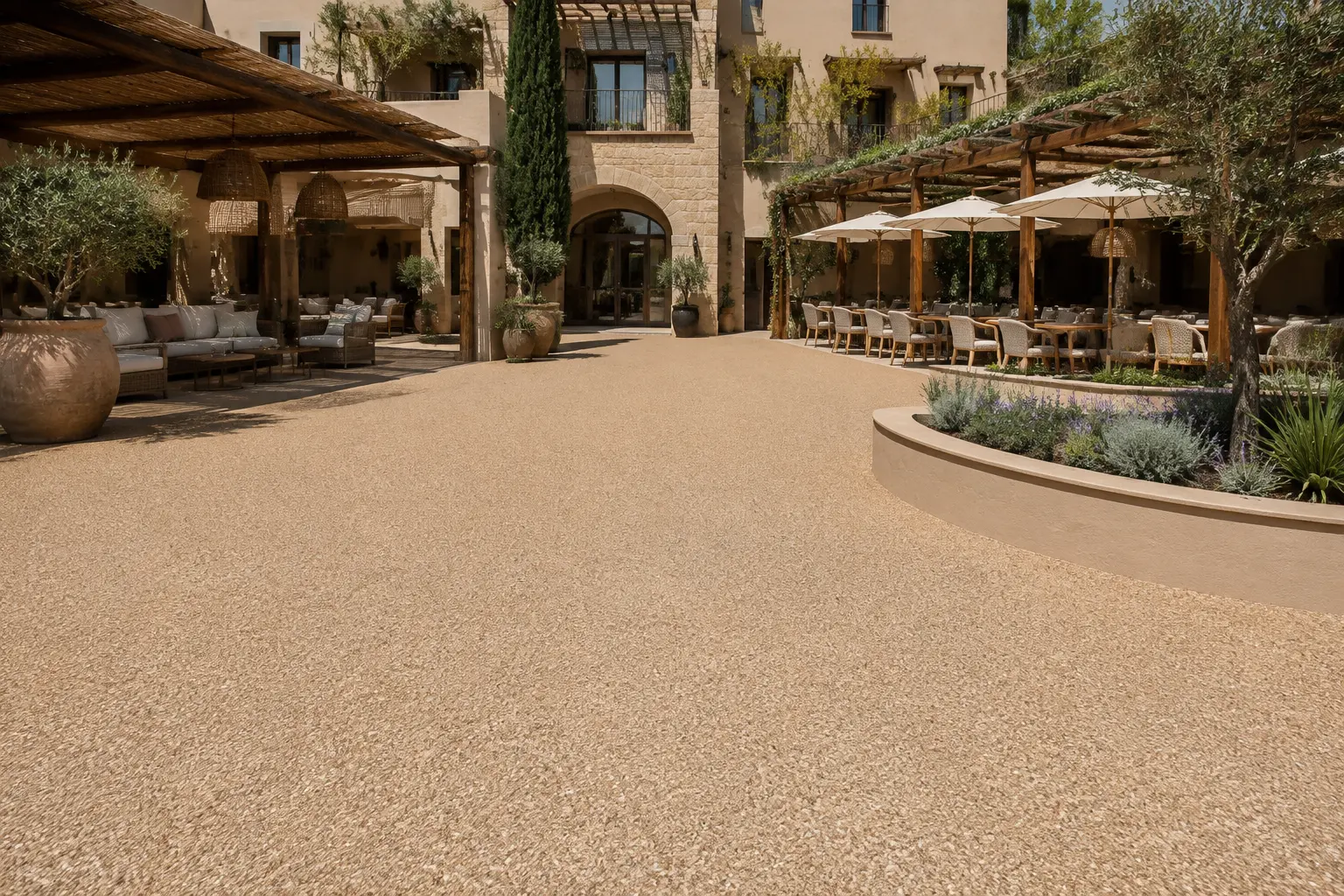
Resin-bound aggregate flooring for hotel grounds, communal pool areas, hospitality terraces, entrances and other exterior commercial spaces.
Understand the substrate, drainage, traffic and maintenance requirements before requesting a project proposal.
Discuss a commercial project Explore commercial applicationsExterior flooring has to work around the property
A commercial surface is rarely chosen on appearance alone. It has to fit around customers, residents, staff, deliveries, cleaning schedules and the times when an area can be closed safely.
Resin-bound aggregate can be considered for pedestrian areas and selected vehicle applications where the full construction is appropriate. It creates a continuous textured finish that can follow curves, connect spaces and incorporate contrasting edges or defined routes.
The finished resin-bound layer is only one part of the proposal. Existing surfaces, base construction, drainage, movement, loading and access all affect whether it is suitable and how the work should be priced.
Stone Carpet Spain helps commercial buyers understand those decisions and submit a properly described project enquiry.
Commercial applications
Hotels and resorts
Pool decks, guest paths, entrance areas and outdoor hospitality spaces have different demands. A hotel project may involve wet barefoot areas, luggage traffic, cleaning equipment, service access and tight closure periods. Any proposal should identify how these uses affect the selected system and installation programme.
Resin-bound surfacing for hotels and resortsResidential communities
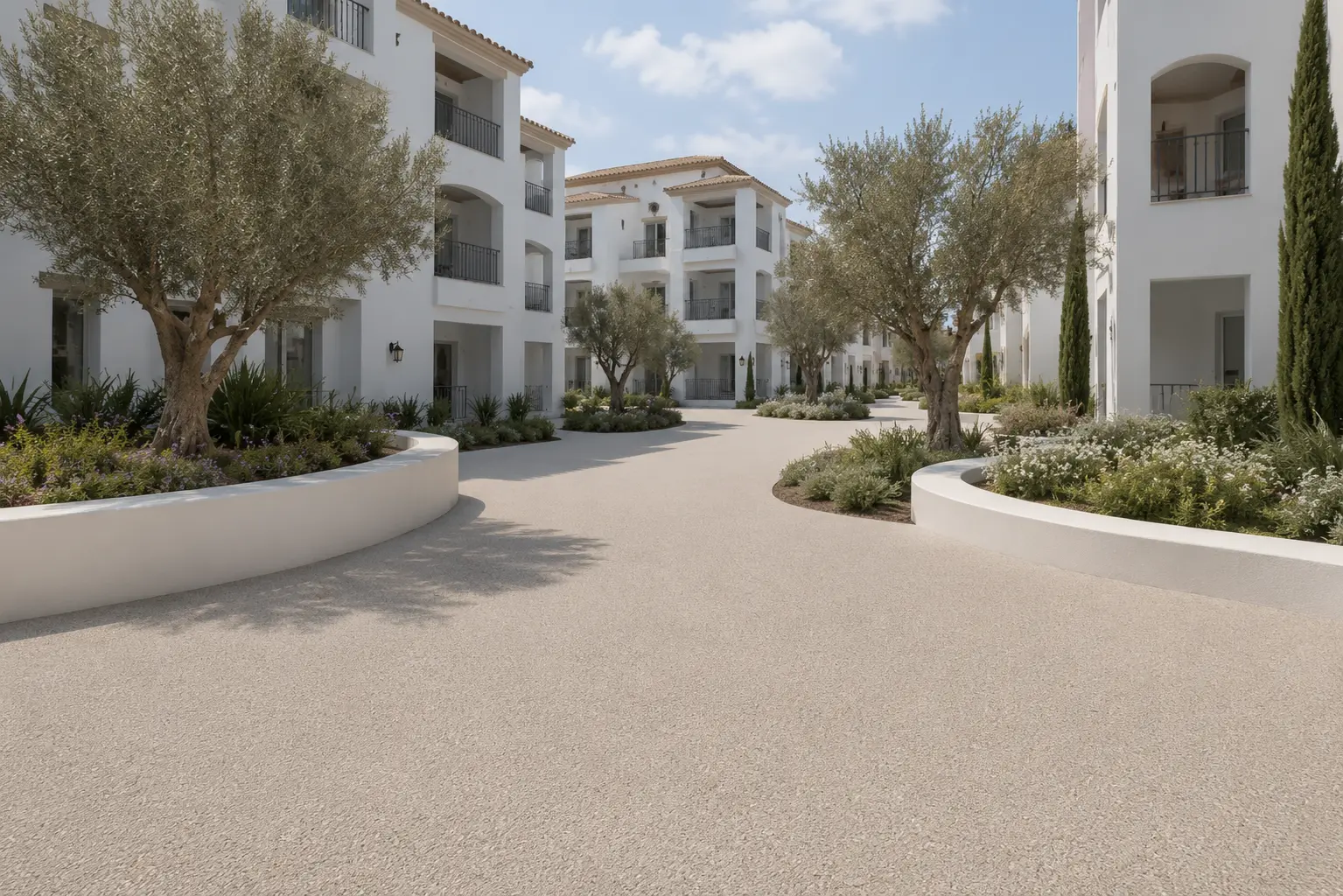
Urbanisations and comunidades de propietarios often need to improve large shared areas while keeping parts of the property accessible. Communal pools, paths, entrances and courtyards may require phased works, clear boundaries and quotations that a committee can compare on the same basis.
Resin-bound surfacing for residential communitiesRestaurants and hospitality terraces
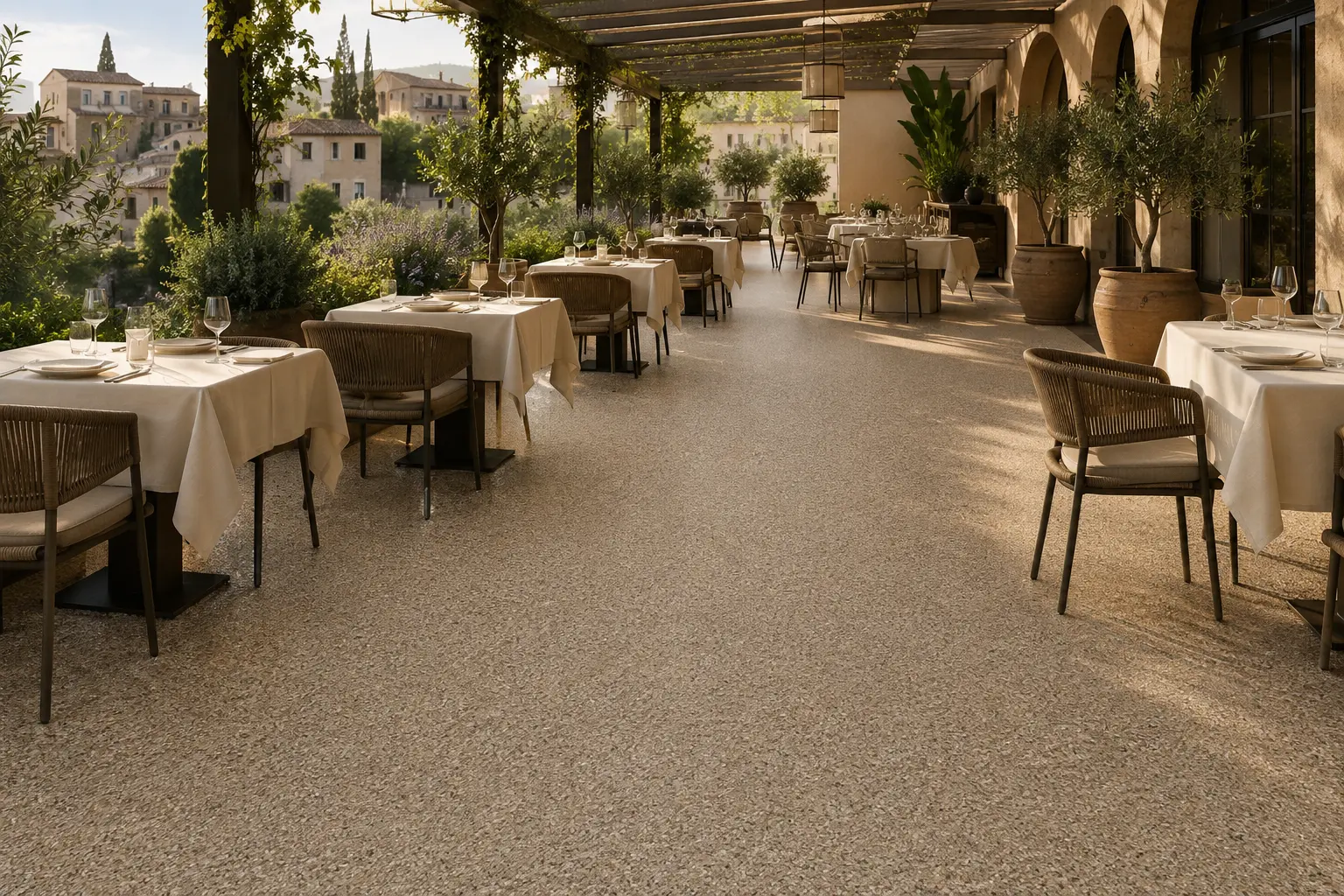
Outdoor dining areas and customer entrances need a finish that can be cleaned and maintained without unnecessarily disrupting trade. Existing tiles, surface falls, grease exposure, furniture and service routes should all be considered before a new surface is proposed.
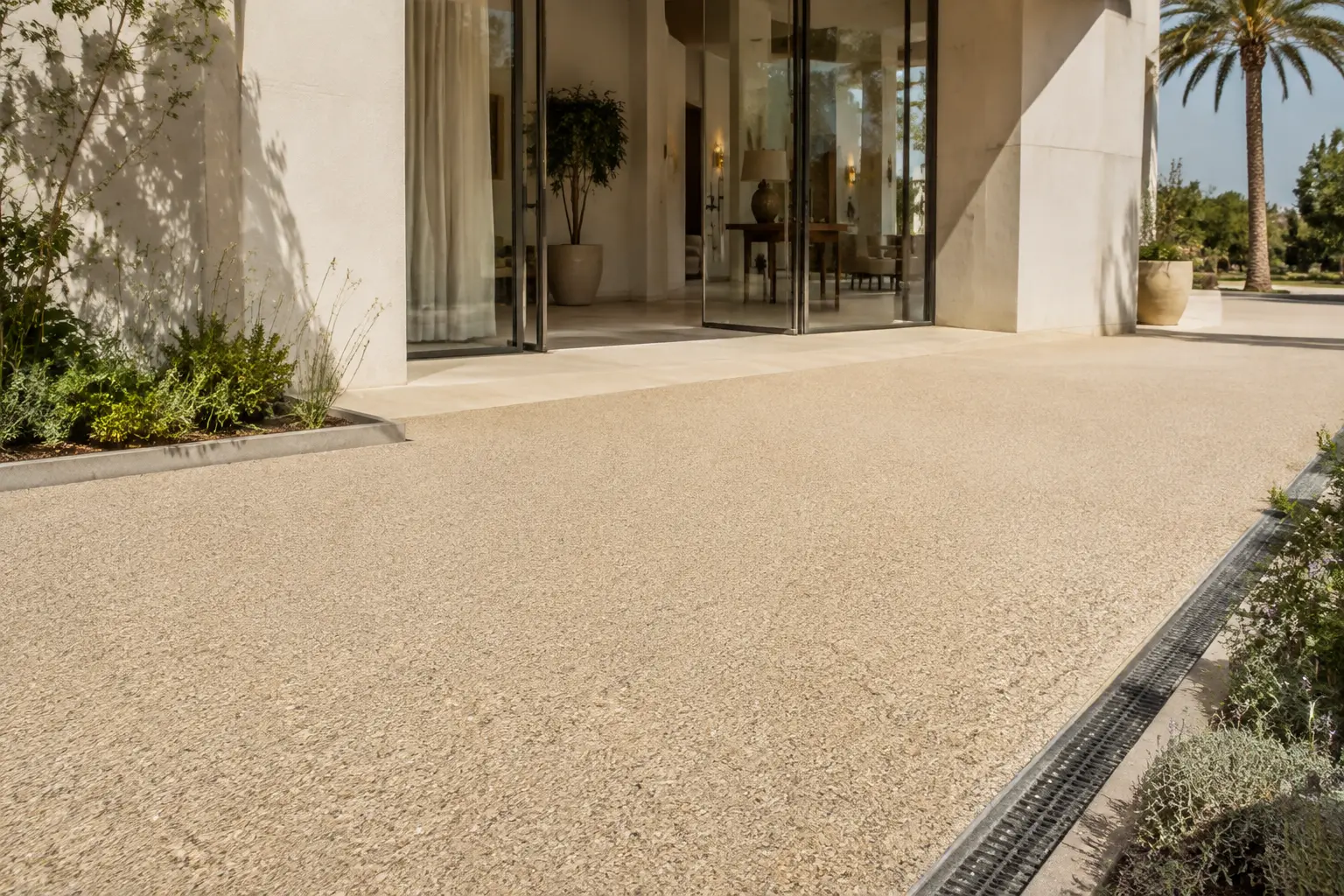
Entrances, paths and exterior circulation
Resin-bound aggregate can provide a continuous visual route through courtyards, landscaped areas and property entrances. The design still needs to deal correctly with thresholds, drainage outlets, movement joints, tree pits and adjoining materials.
Resin-bound paths and walkwaysWhat a commercial proposal should establish
The intended use
Pedestrian traffic, trolleys, maintenance equipment and vehicles impose different loads. The proposal should state what the finished construction is intended to carry rather than relying on a general claim that resin-bound flooring is hard-wearing.
The condition of the substrate
Existing concrete, asphalt or tiled areas require inspection. Cracks, hollow tiles, movement, poor falls, contamination and moisture can affect the preparation or make an overlay unsuitable. Covering a defect does not remove its cause.
The complete drainage route
Some resin-bound systems allow water to pass through the surface. Water still needs somewhere suitable to go. An impermeable base, blocked outlet or poorly designed fall can leave the completed area with the same drainage problem it had before.
The proposed materials
The binder type, aggregate grading, mixing proportions and intended installation depth should relate to the site and use. Commercial buyers should ask for the relevant product information rather than accepting broad claims applied to every resin-bound system.
The working programme
The quotation should explain preparation, installation areas, curing restrictions and when each part can return to service. Busy properties may need phased work or scheduling during quieter periods.
Handover and maintenance
Cleaning guidance, repair arrangements and any guarantee should identify who is responsible and which system the documentation covers. These details are more useful when agreed before installation.
Substrates and ground preparation Drainage and permeability The installation processResin-bound surfacing around commercial pools
Hotel and communal pool areas deserve separate consideration because several risks meet in one place. The surface is exposed to water, cleaning products, sunscreen, organic debris and regular barefoot traffic. It may also sit over an existing tiled deck with movement or drainage problems.
Terms such as “non-slip” are too broad to specify a commercial pool area. The proposed finish should be assessed for the actual wet-use conditions and supported by relevant information for the system being offered. Drainage, thresholds, coping details and the temperature of exposed surfaces also need attention.
Commercial pool surroundsResurfacing an existing commercial exterior
Replacing an exterior surface does not always mean removing the full construction beneath it. A sound and suitable base may allow an overlay after the required cleaning, repairs and preparation.
The assessment must come first. Cracked concrete may indicate movement below. Loose or hollow tiles will not become stable because another material is placed over them. Falls that direct water towards a doorway will remain wrong unless the preparation changes them.
Where the base is unsuitable, the proposal should explain what needs to be removed or rebuilt. That may increase the initial price but it also makes competing quotations easier to understand.
Can resin-bound flooring be laid over tiles? Can resin-bound flooring be laid over concrete? Repairs and resurfacingCommercial costs and comparable quotations
Commercial resin-bound flooring does not have a single reliable price per square metre. A large open pedestrian area laid over a sound prepared base is a different project from a pool deck with failing tiles, complicated edges and limited access.
The principal cost factors can include:
- site access and working restrictions
- removal and disposal
- substrate repairs or new base construction
- drainage and falls
- edges, thresholds and adjoining surfaces
- aggregate and binder specification
- installation area and layout
- phasing and return visits
A lower square-metre price may exclude work included elsewhere. Ask each contractor to price the same preparation, construction and handover requirements before comparing totals.
Resin-bound flooring costs in SpainPlanning around residents, guests and customers
The surface cannot usually be installed while the area remains in normal use. Preparation equipment, mixed materials and curing sections need controlled access.
For hotels and communities, the practical plan may be as important as the selected colour. The project enquiry should identify busy periods, essential access routes, delivery restrictions and any areas that must remain available. This allows a later site assessment to consider phasing rather than discovering the problem after a quotation has been prepared.
Submit a commercial project enquiry
Provide the location, type of property, intended application, approximate area and current surface. Add any known access, drainage or scheduling constraints and include photographs where useful.
The information will be reviewed before the appropriate next step is confirmed. Installation availability is not guaranteed in every part of Spain.
Discuss a commercial projectRelated information
- Resin-bound pool surrounds
- Surfacing for hotels and resorts
- Surfacing for residential communities
- Substrates and ground preparation
- Drainage and permeability
- Slip resistance
- Repairs and resurfacing
- Costs in Spain