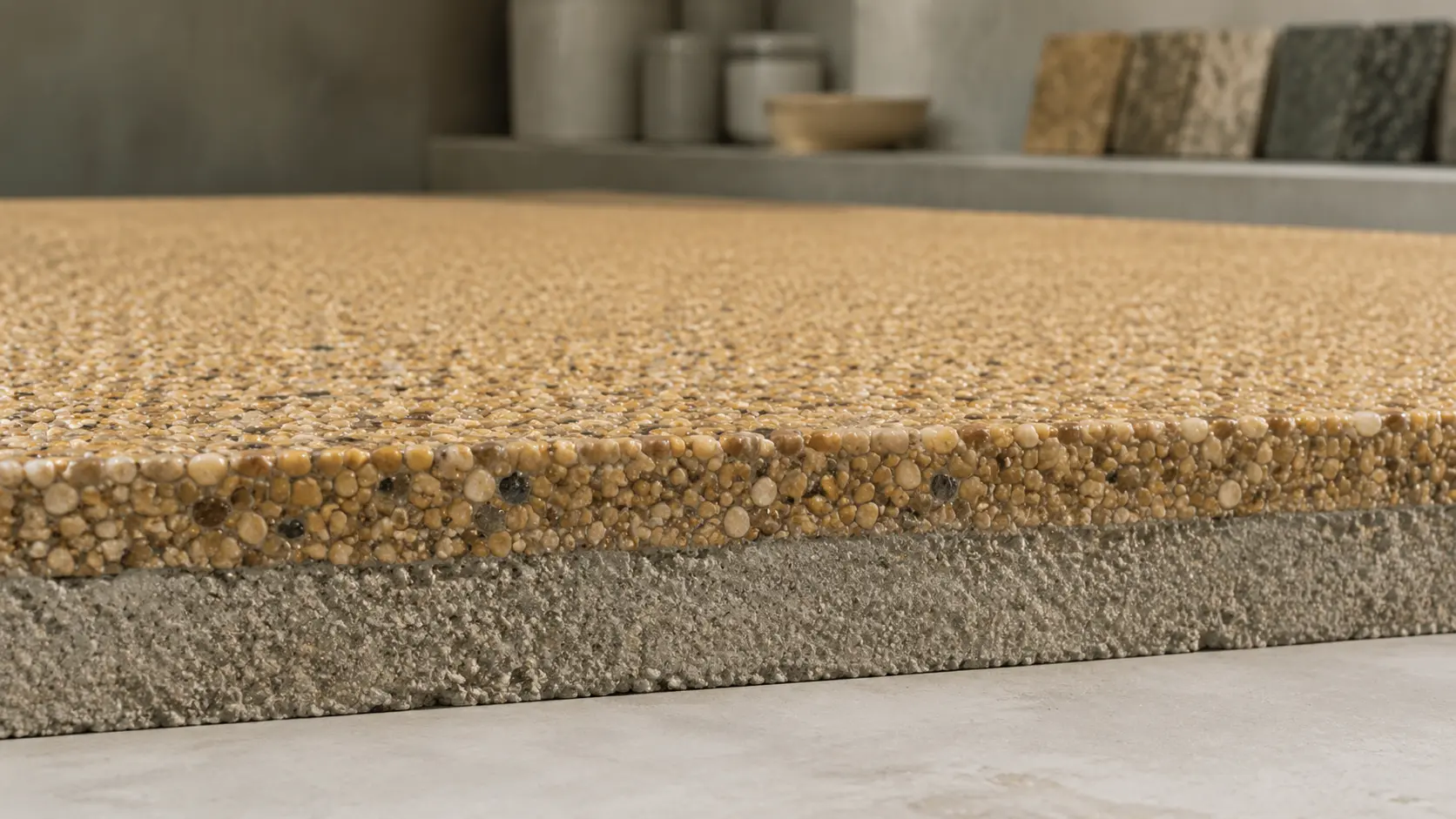
Resin-bound flooring is made by mixing clean, dry aggregate with a resin binder before the material is spread and finished over a prepared base.
The mixed method distinguishes it from resin-bonded surfacing, where resin is applied to the base and loose aggregate is scattered over it.
See where resin-bound flooring is used Resin-bound or resin-bonded?The short explanation
In a resin-bound system, the aggregate particles are coated with resin during mixing. The wet mixture is then laid to a controlled depth and finished by hand. Small voids remain between the coated stones, creating the characteristic textured surface and allowing water to pass through systems designed to be permeable.
The surface is sometimes called stone carpet, natural stone carpet, resin-bound stone or resin-bound paving. These names describe the broad product type. They do not identify a single resin, aggregate, installation depth or performance standard.
A useful specification therefore needs more than the words “resin-bound”. It should identify the materials, base, intended use and how water will be managed.
What is in a resin-bound surface?
Aggregate
The visible material is usually a graded stone or mineral aggregate. Marble, quartz, granite and other natural or manufactured aggregates can produce different colours, textures and mechanical properties.
The stone must be suitably graded and dry for the proposed resin system. Moisture, dust and inconsistent particle sizes can affect mixing and the finished matrix. Decorative appearance is only one part of aggregate selection.
Resin binder
The binder coats the aggregate and holds the particles together after curing. Exterior systems commonly use polyurethane-based resins, but formulations and performance vary.
The binder should be identified and supported by information relevant to exterior use, working conditions and colour stability. “UV resistant” or “Spanish-climate resin” is not a complete product specification.
Base or substrate
The resin-bound layer is not usually the structural foundation of the surface. It relies on a prepared base that is stable enough for the intended traffic.
Concrete, asphalt and purpose-built permeable constructions may be used in suitable circumstances. Existing tiles and other surfaces require careful assessment. The correct preparation depends on the actual substrate, its condition and the selected system.
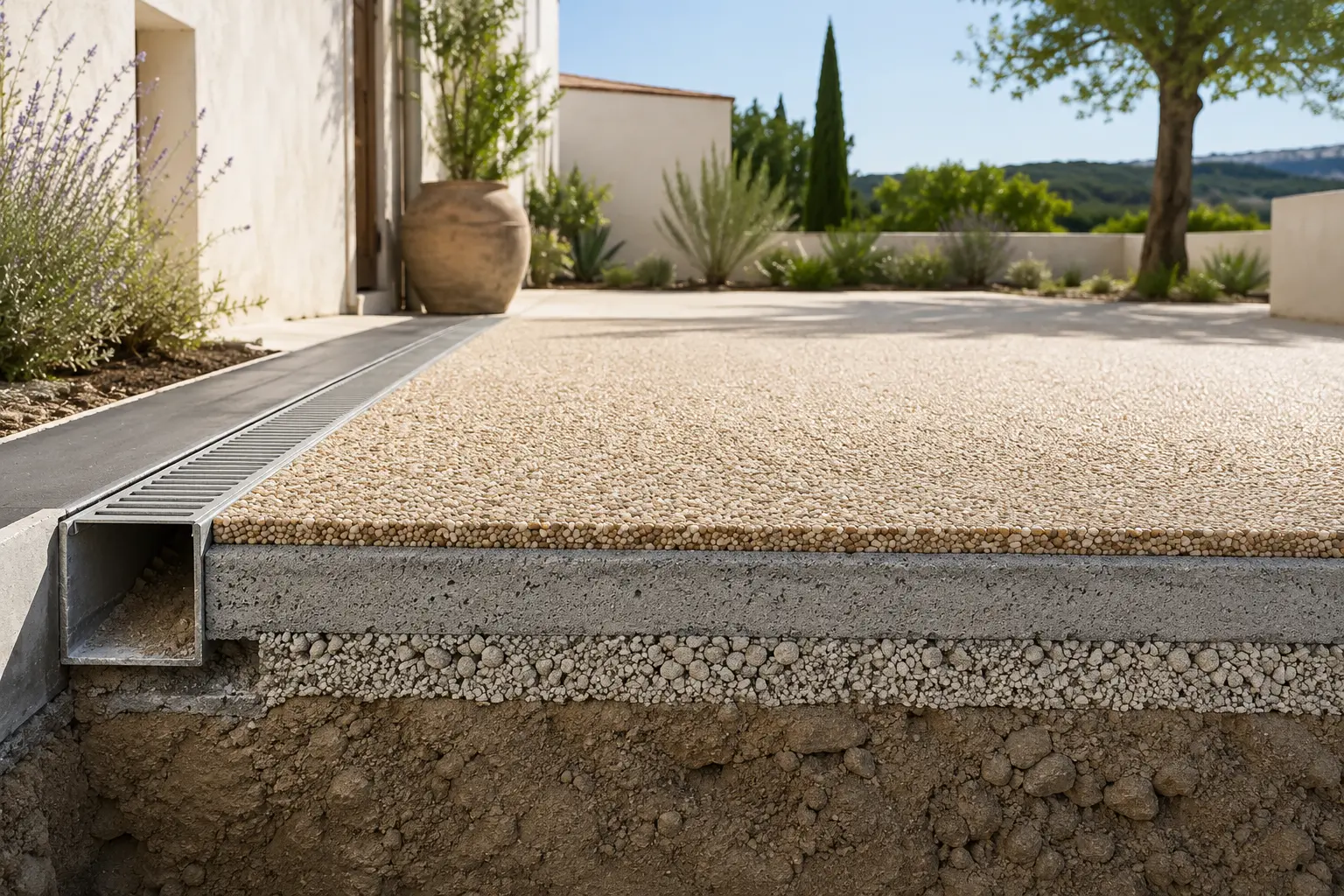
Edges and fixed details
The mixed material needs a secure boundary while it is laid and after it has cured. Kerbs, walls, drainage channels, metal strips or other restraints may define the edges.
Doors, gates, drains, inspection covers, steps and movement joints must be incorporated into the design rather than treated as interruptions after laying begins.
Substrates and ground preparationHow resin-bound flooring is installed
The exact method depends on the system, but a typical project includes:
- assessing the site, existing surface and drainage
- repairing or constructing a suitable base
- cleaning and preparing the substrate
- setting edges, levels and working sections
- measuring and mixing the resin components
- adding the aggregate and mixing until it is coated consistently
- placing the mixed material at the required depth
- finishing the surface by hand
- protecting the area while the resin cures
- handing over the surface with maintenance information
Timing matters because the mixed resin and aggregate has a limited working period. Temperature, moisture and weather can affect installation. Each batch also needs to remain consistent with the surrounding work.
This is why resin-bound surfacing is an installed system rather than simply a bagged decorative product.
The resin-bound installation processResin-bound and resin-bonded are different
The names are similar enough to cause regular confusion.
Resin-bound
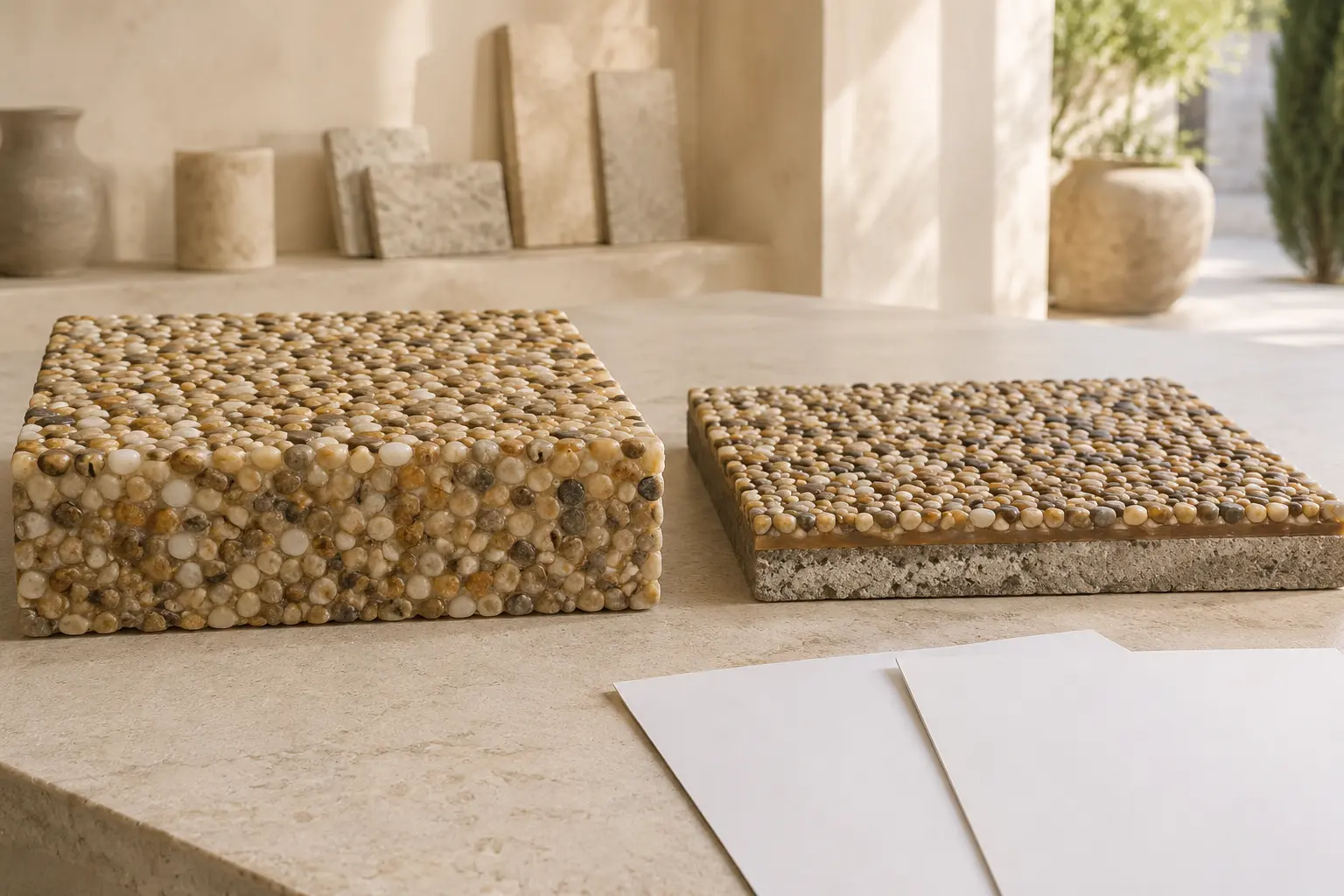
The aggregate and resin are mixed together before laying. The resulting material is spread and hand-finished as a continuous layer. Voids within the matrix can allow water through the surface.
Resin-bonded
Resin is spread over the prepared base first. Dry aggregate is then scattered or broadcast into the wet resin. This creates a rougher loose-gravel appearance, with some excess aggregate removed after curing.
Because the resin forms a coating across the base, resin-bonded surfacing is generally not treated as a permeable surface. It also has different texture, construction and maintenance characteristics.
Neither name should be used as a loose substitute for the other in a quotation.
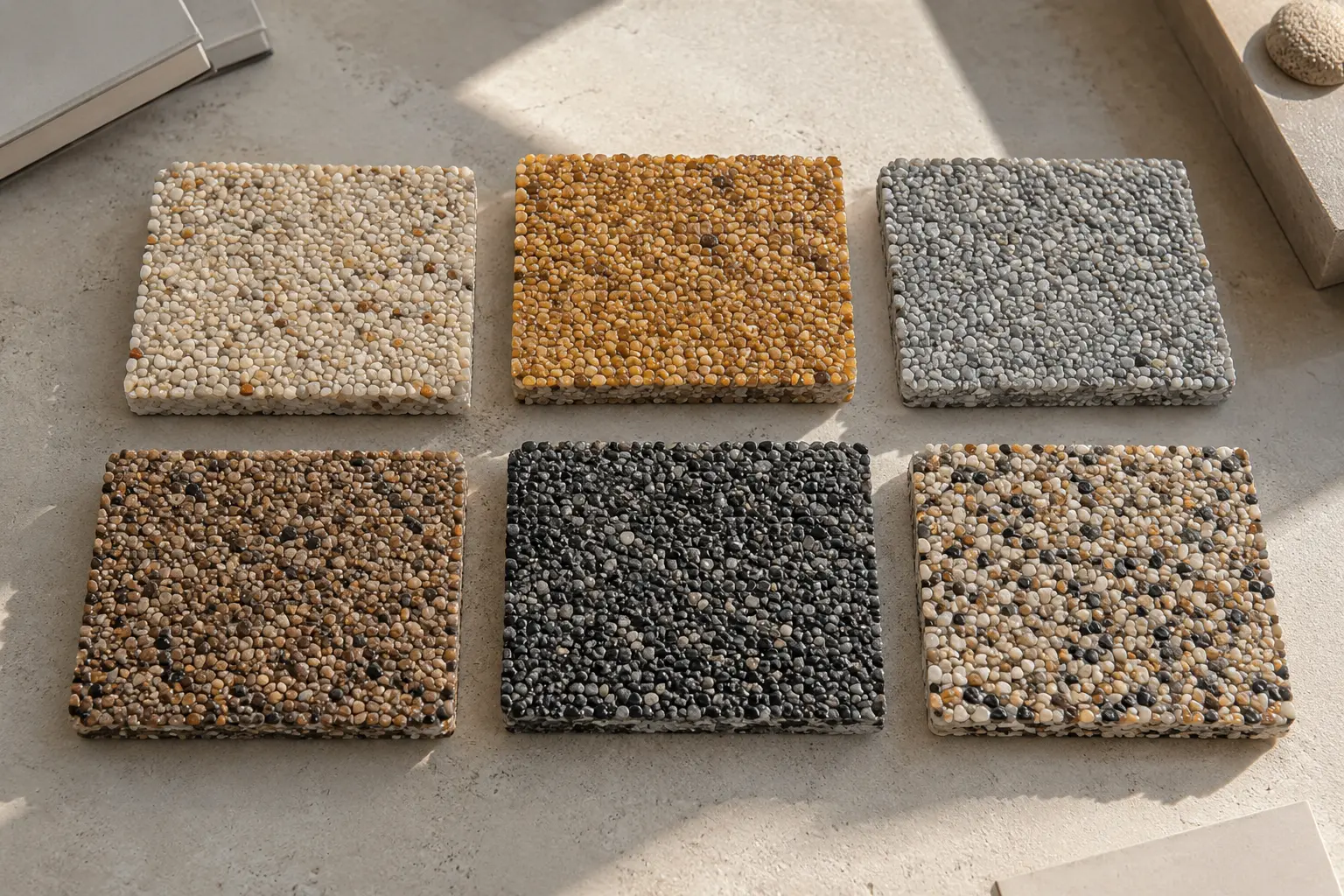
Resin-bound flooring is not an epoxy floor coating
The word “resin flooring” is also used for smooth epoxy and polyurethane coatings inside warehouses, garages, factories, kitchens and commercial buildings.
Those floors are applied as coatings or poured systems with a different finish and purpose. They are not the same as resin-bound aggregate surfacing used for exterior paths, terraces, pool surrounds and driveways.
Stone Carpet Spain focuses on bound aggregate surfaces. It does not use “resin flooring” to imply that exterior stone carpet and an internal epoxy coating are interchangeable.
Is resin-bound flooring permeable?
The voids between coated aggregate particles can allow water through a resin-bound surface. Whether the complete installation is permeable depends on what lies beneath it.
A resin-bound overlay on impermeable concrete does not make the concrete permeable. The surface may still allow water through to that base, where it must be collected or directed appropriately.
A fully permeable construction requires compatible layers and suitable ground or drainage conditions. The project should identify which arrangement is intended.
This distinction is particularly important during heavy rainfall and around pools, entrances and low thresholds.
Drainage and permeabilityIs every resin-bound system suitable for vehicles?
No general answer applies to every system or construction.
A pedestrian path, pool terrace and private driveway place different demands on the surface. Vehicle areas also experience braking, turning and repeated loading at gates or parking positions.
Suitability depends on the aggregate, binder, installation depth, base and intended vehicles. A product description that says “suitable for cars” does not explain the complete construction needed at a particular property.
Resin-bound driveways in SpainDoes resin-bound flooring crack?
Resin-bound aggregate is sometimes described as flexible or crack-resistant. That does not make it independent of the base.
Movement, weak construction, unsuitable preparation, moisture, installation conditions or incorrect mixing can contribute to cracking, lifting and loose aggregate. Existing structural or movement cracks may also transfer into a new surface if they are not treated appropriately.
The cause of a failure needs to be understood before a repair or overlay is proposed.
Why resin-bound surfaces crack, lift or shed stone Repairs and resurfacingWhere resin-bound flooring is used in Spain
Pool surrounds
Wet-use grip, drainage, surface temperature, chemicals and an existing tiled base are usually the central questions.
Resin-bound pool surroundsDriveways
The base, intended vehicles, slopes, turning areas, gates and drainage determine the required construction.
Resin-bound drivewaysTerraces and patios
Existing tiles, finished levels, thresholds and falls need to be assessed before an overlay is considered.
Resin-bound terraces and patiosPaths and communal areas
Continuous routes can be created through hotels, communities, gardens and exterior commercial spaces. Access and maintenance requirements vary by use.
Resin-bound paths and walkwaysCommercial properties
Commercial buyers also need to consider phasing, cleaning, return-to-service restrictions, documented performance and comparable quotation specifications.
Commercial resin-bound surfacingWhat resin-bound flooring does not guarantee
The product name alone does not guarantee:
- a fully permeable construction
- a particular wet-use slip classification
- resistance to every chemical or stain
- suitability for vehicles
- a fixed lifespan
- freedom from cracks or weeds
- colour stability under every condition
- successful installation over any existing surface
These outcomes depend on the selected materials, construction, site and maintenance. Claims should be checked against evidence for the proposed system rather than copied from a different product or country.
What to request in a quotation
A useful resin-bound proposal should identify:
- the area and intended use
- the existing surface and preparation
- the proposed base or retained construction
- the binder and aggregate system
- the installation depth
- edges, joints, thresholds and drainage details
- curing and return-to-service conditions
- maintenance guidance
- the provider and scope of any guarantee
This gives the buyer something more useful than a colour name and square-metre price.
Planning a resin-bound project?
Provide the project location, intended application, approximate area and current surface. Include known drainage, cracking or access issues and add photographs where useful.
The information will be reviewed before the appropriate next step is confirmed. Installation availability is not guaranteed in every part of Spain.
Tell us about your projectRelated information
- Resin-bound versus resin-bonded
- The installation process
- Substrates and ground preparation
- Drainage and permeability
- UV-stable resin
- Slip resistance
- Costs in Spain
- Maintenance
- Repairs and resurfacing