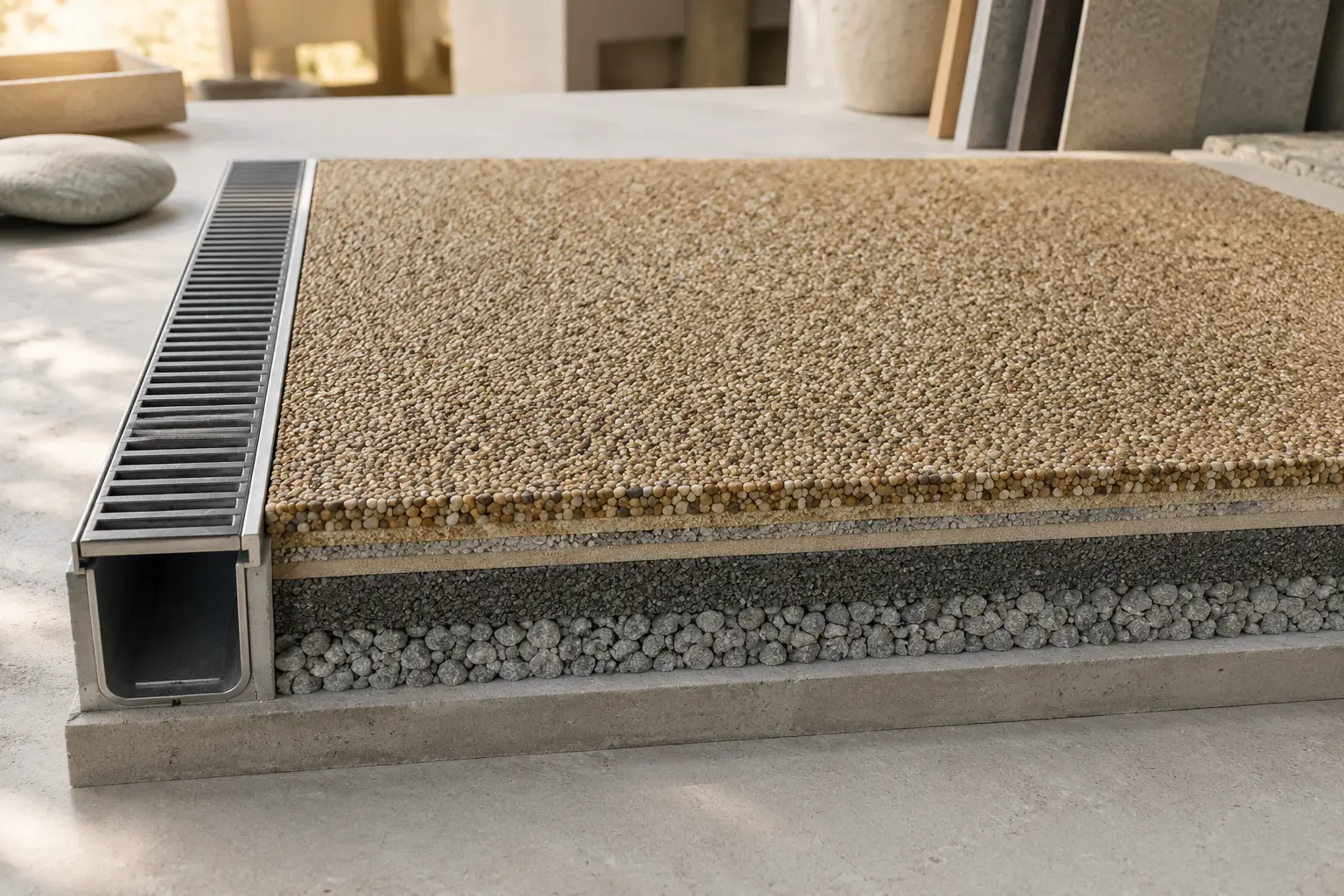
Understand how resin-bound aggregate surfacing is built, what supports it and which evidence should sit behind performance claims.
Use this technical library to examine the system, installation process, substrates, drainage, exterior resin, slip resistance and project specification in Spanish conditions.
Discuss a projectThe decorative surface is one layer
Resin-bound aggregate is the visible finish. Its performance also depends on the base, preparation, drainage route, materials, installation conditions and intended use.
That is why broad claims need context. A porous surface over concrete does not create a fully permeable pavement. A slip test for one aggregate and finishing method does not automatically apply to another. Exterior colour stability depends on the binder and the natural stone as well as cleaning and exposure.
Stone Carpet Spain's technical pages separate those questions so a project can be considered as a complete construction. They explain what should be checked without inventing universal depths, loading capacities, drainage rates or cure periods.
Technical subjects
How resin-bound flooring works
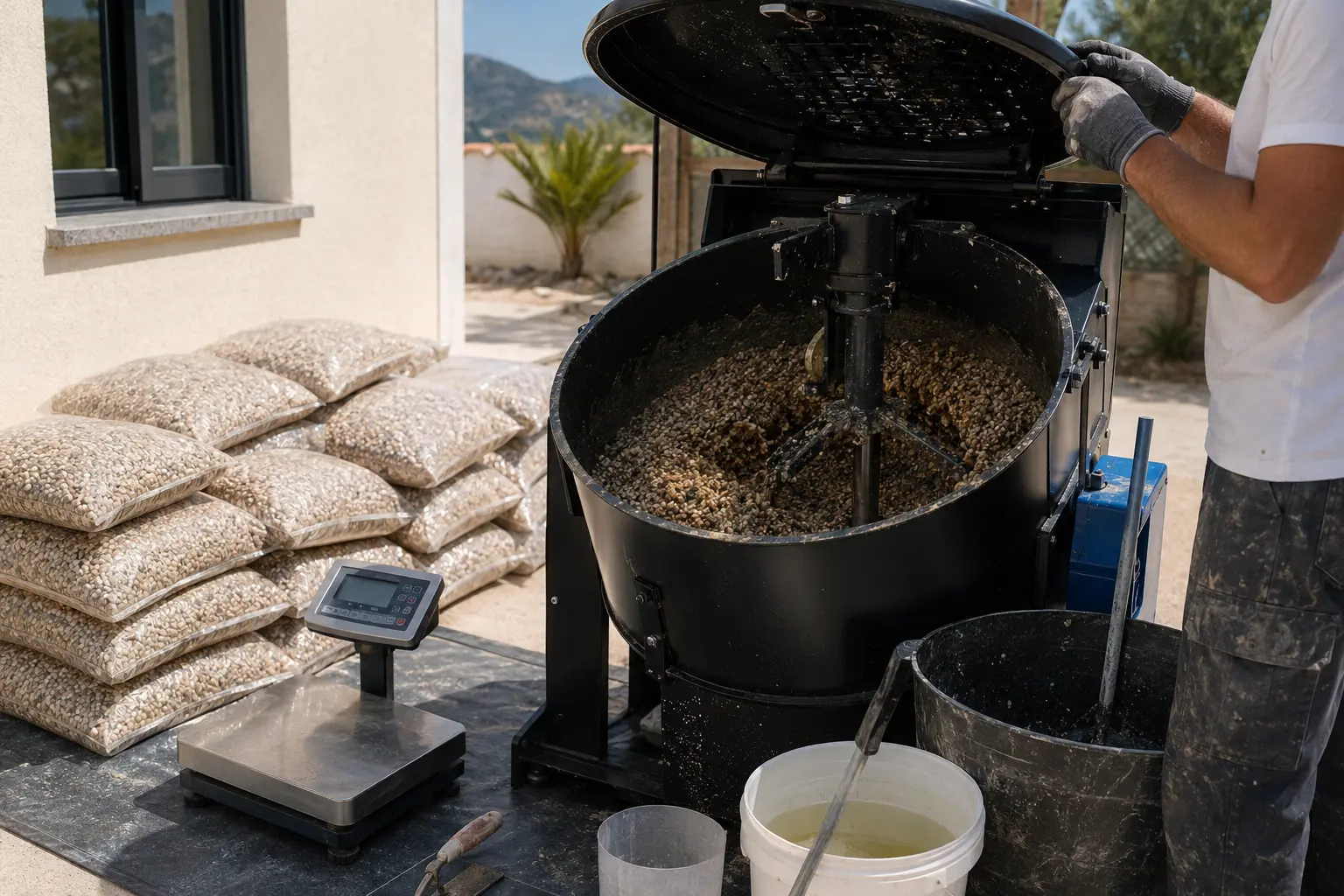
Begin with the product definition. Resin-bound surfacing is made by coating graded dry aggregate with resin in a controlled mixer before the complete material is laid and hand finished.
The bound matrix differs from a resin-bonded scatter system and from an interior epoxy floor coating. Those distinctions affect texture, loose-stone behaviour, drainage and suitable applications.
Understand how resin-bound flooring works
Installation process
Installation begins before the material is mixed. The sequence includes project briefing, site survey, base acceptance, drainage, specification, material planning, preparation, environmental checks, mixing, laying, protection and handover.
Each stage affects the next. A fixed laying date is subject to the site being ready and the product's stated installation limits.
Substrates and ground preparation
Concrete, asphalt, tiles, existing resin-bound surfacing and new ground present different questions. A retained surface must be stable and compatible because it becomes part of the new build-up.
This section covers cracks, movement, moisture, contamination, joints, edges and the circumstances in which an overlay should be rejected.
Explore substrates and ground preparation
Drainage and permeability
Water needs a complete route. It may pass through a fully permeable construction or travel across a resin-bound overlay towards designed channels and outlets.
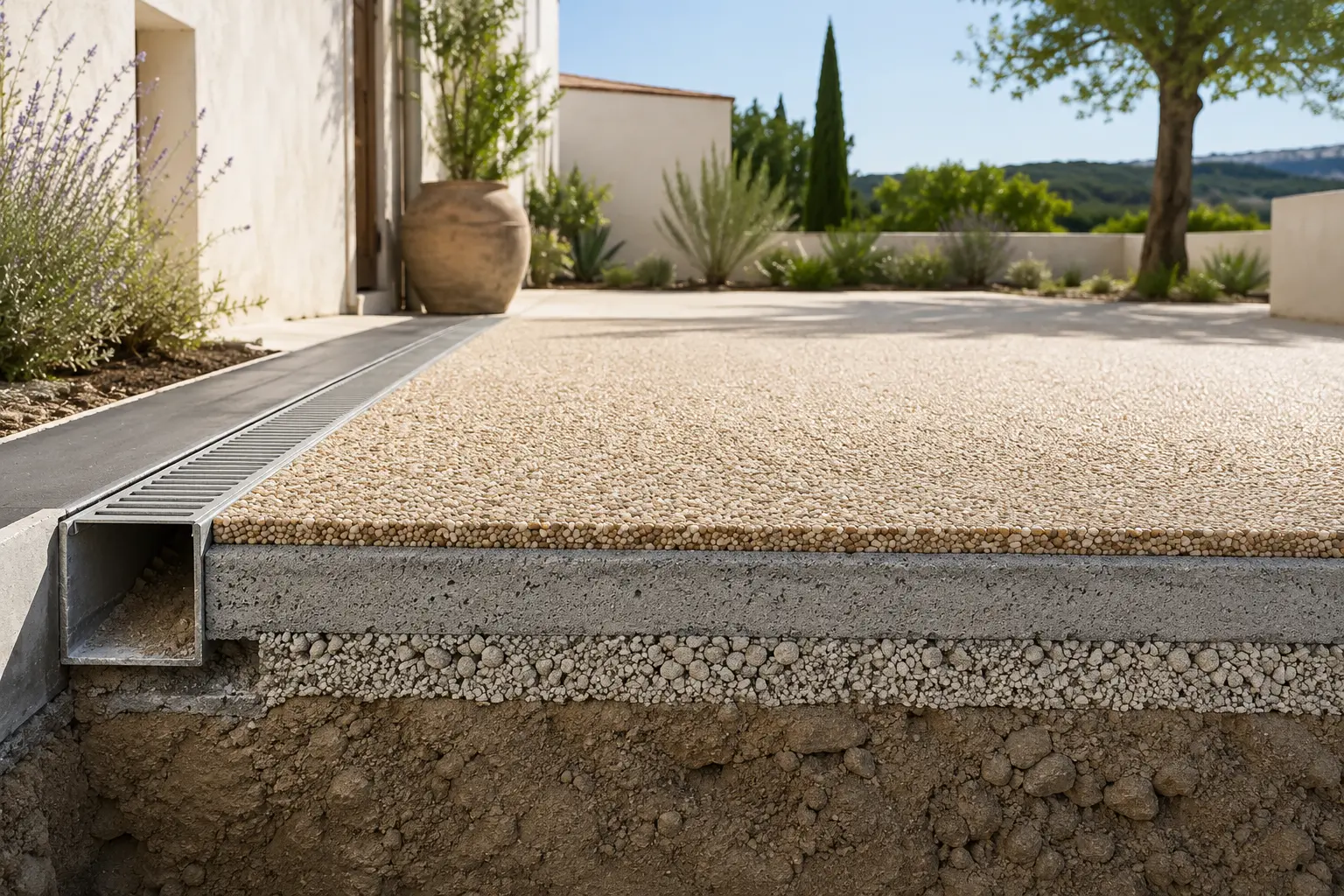
The drainage page distinguishes surface porosity from full-system permeability and covers bases, falls, thresholds, receiving ground, maintenance and water arriving from adjoining areas.
Understand drainage and permeability
UV-stable resin and colour
Exterior surfacing in Spain needs a binder selected for sustained sunlight and the intended appearance. The term UV stable should refer to the named product and supporting manufacturer information.
Aggregate colour, natural variation, staining, shade and installation batches also affect appearance. UV stability does not mean that every component remains visually identical forever.
Slip resistance and accessibility
Non-slip is not a technical classification. Slip risk changes with the exact finish, water, contamination, gradient, wear and maintenance.
This section explains test evidence, Spanish CTE context, wet areas, ramps and the difference between a product sample and the installed route. Accessibility still depends on levels, widths, landings, thresholds and other project details.
Explore slip resistance and accessibility
Project specification
A useful specification connects the intended use with the complete build-up, named materials, preparation, drainage, installation controls and handover requirements.
The specification page explains what can be defined at early enquiry stage and which values must remain project-specific until a system and site have been selected.
Read the technical specification framework
Start with the project use
Technical decisions follow what the surface needs to do.
A private terrace carries furniture and foot traffic. A driveway experiences turning and braking. Pool surrounds are used wet and barefoot. Hotel routes may carry luggage, cleaning equipment and high pedestrian volumes.
The same visual blend cannot establish suitability for all of them. The project brief should state routine use, occasional loads, exposure, cleaning and any formal performance requirement.
Explore resin-bound applications
The substrate carries the result
The upper layer cannot stabilise movement beneath it. Before accepting an existing surface, the assessment should identify its construction, condition and relationship with drains, joints and thresholds.
Visible inspection may show cracks, hollow tiles, deformation, coatings or standing water. Hidden strength, adhesion and moisture can require further testing or a controlled opening.
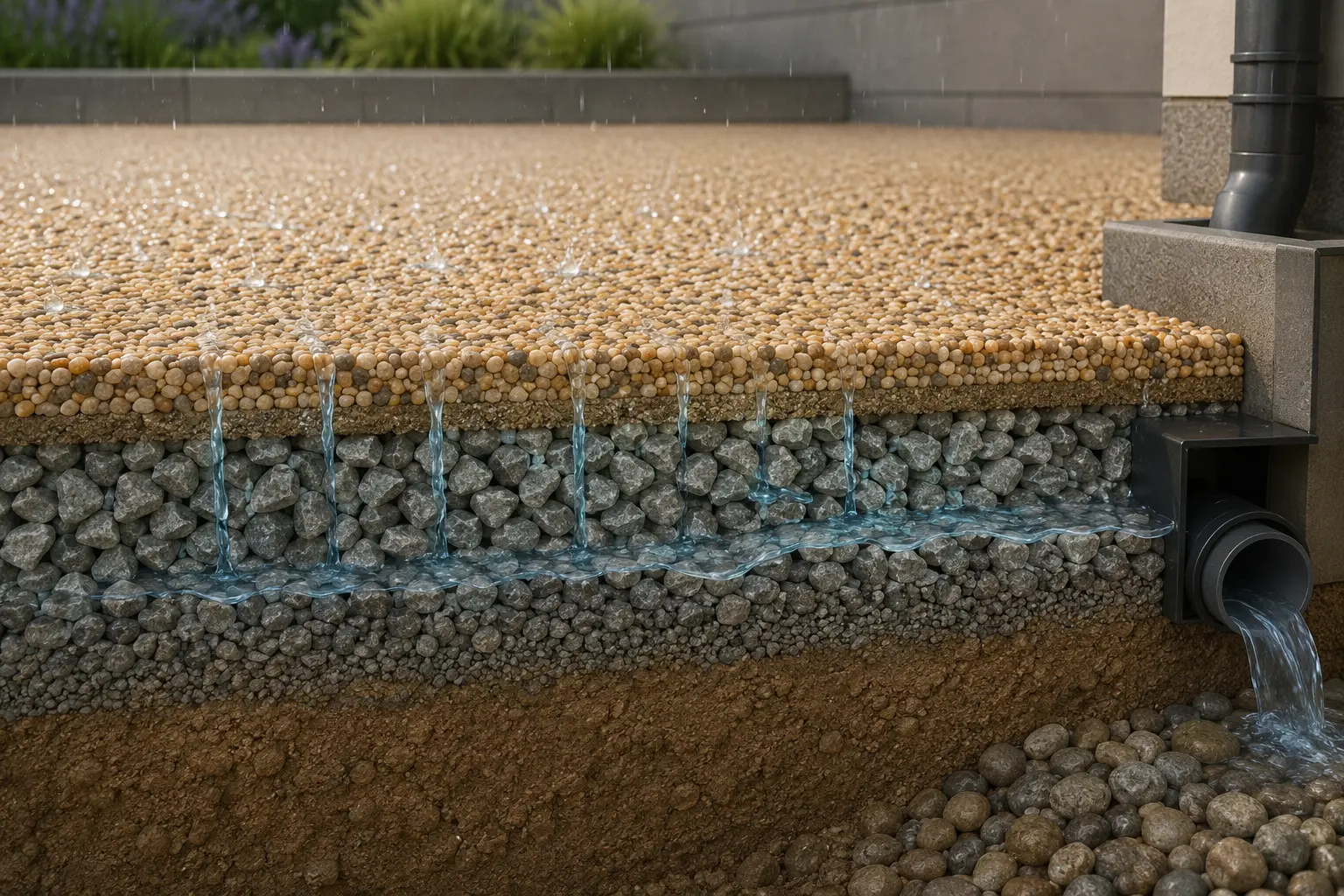
Where new construction is needed, the base must be designed for the ground, loading and water strategy. One standard build-up should not be copied into every site.
Water must go somewhere
Describing resin-bound material as porous answers only the first part of the drainage question.
Water may meet dense concrete beneath the finish, enter a porous base, collect at a saturated subgrade or arrive faster than an outlet can carry it. Slopes, walls, buildings and neighbouring surfaces affect its route.
The drainage design should identify the intended path under ordinary conditions and a safe response when rainfall exceeds that capacity. Local discharge and construction requirements may need confirmation from the relevant project professional or authority.
Product evidence belongs to the named system
Resin-bound products differ. Test evidence, installation limits and maintenance guidance should identify the exact binder, aggregate configuration and method to which they apply.
Do not transfer a slip value, permeability rate, chemical-resistance statement, curing time or vehicle claim from another product. A result from one sample can support the defined system tested. It is not a certificate for every resin and stone combination.
At quotation stage, ask for current documents and confirm that the product named in them matches the product proposed for the site.
Spanish conditions change the questions
Strong sunlight, high surface temperatures, coastal salt, wind-blown sand, pool chemicals, irrigation and intense rain affect different locations in different ways.
These conditions do not produce one national specification. A shaded inland path and a front-line hotel pool deck may use the same category of surface but require different evidence, cleaning and detailing.
Spanish regulatory context matters too. UK SuDS descriptions and overseas slip classifications should not be copied into a Spanish specification without establishing their relevance. Applicable CTE, local drainage and project requirements need to be considered by the responsible professionals.
Technical information for different audiences
Property owners
Use the library to understand what a quotation should explain. You do not need to design the pavement yourself, but you should be able to see how the base, water route and intended use have been addressed.
Communities and property managers
Technical information helps create one scope for comparable quotations. Area schedules should separate pedestrian, poolside and vehicle uses and identify existing defects before owners approve a total.
Architects and project managers
Use the specification framework to define performance, interfaces, submittals, inspection points and handover. Product-specific values can be inserted when the selected system and evidence are available.
Hotels and commercial operators
Technical requirements need to work alongside closures, temporary routes, cleaning and reopening. The method and programme should state who measures conditions and who releases completed areas for use.
Explore commercial resin-bound surfacing
Questions that should be answered before installation
A complete proposal should establish:
- intended pedestrian, poolside or vehicle use
- existing construction and whether it is retained
- preparation, repairs and new base work
- cracks, movement joints, edges and fixed details
- full drainage route and finished levels
- exact binder and aggregate system
- relevant test evidence and limitations
- installation conditions and readiness checks
- protection and project-specific reopening requirements
- approved maintenance and repair arrangements
- responsible parties and any warranty terms
The amount of detail should match the project. A private path and a hotel refurbishment do not need identical administration, though neither benefits from vague material claims.
Technical limits at launch
Stone Carpet Spain is a new specialist resource. Until the actual project system and delivery parties are confirmed, this library will not publish one universal specification as though it applied everywhere.
Values for depth, aggregate grading, resin ratio, moisture, temperature, working time, curing, loading, slip resistance, permeability and chemical resistance remain tied to the selected system and project.
This is a control, not an information gap. Publishing unsupported numbers would make the pages look more technical while making a real specification less reliable.
Submit a technical project enquiry
Send the location, intended use, approximate area, current surface and any drawings or known requirements. Identify the technical issue you need to resolve, such as an overlay, drainage, wet use, vehicle loading or a failed surface.
The information will be reviewed before the appropriate next stage and project coverage are confirmed.
Submit project details