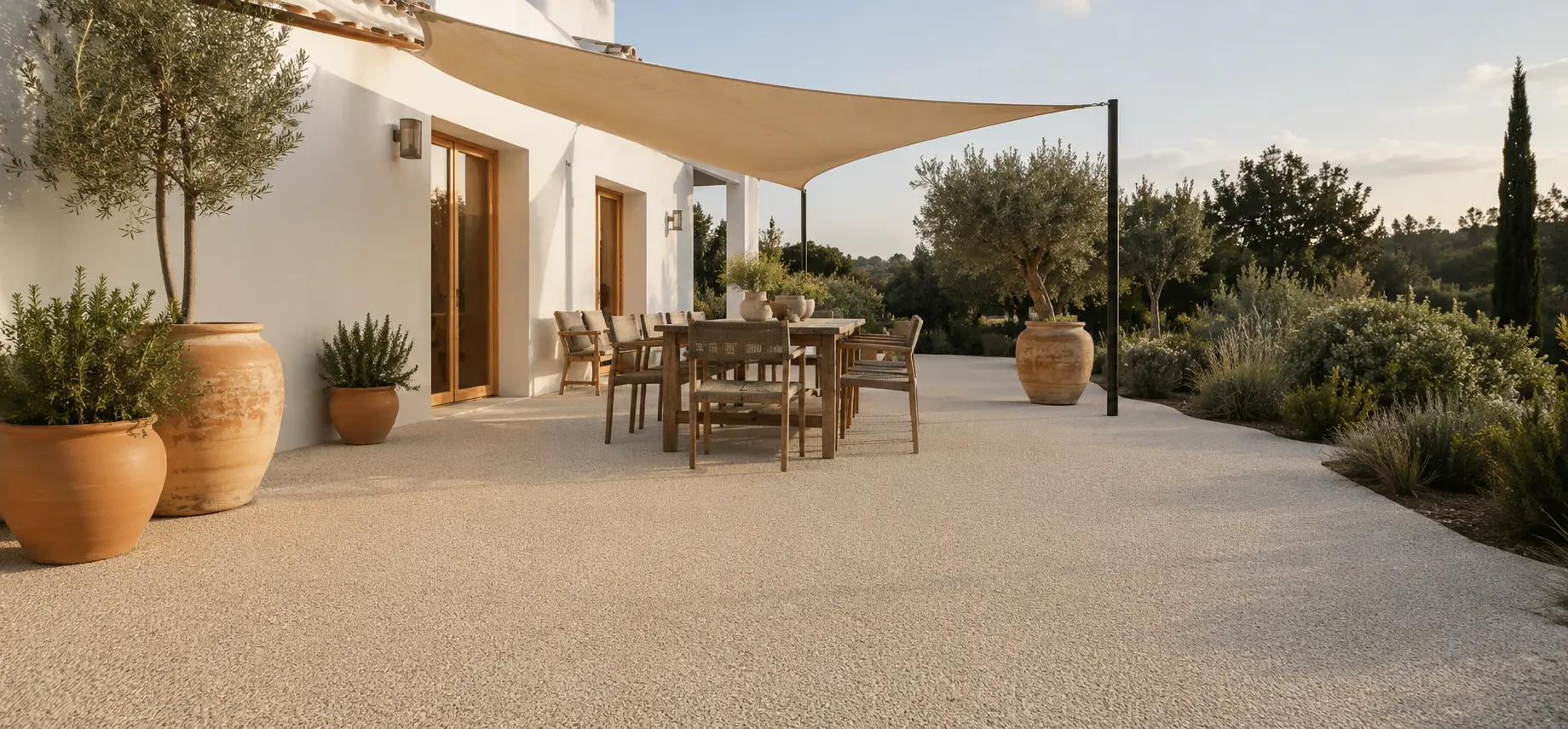
A continuous aggregate finish for outdoor living areas, covered nayas, courtyards and hospitality terraces, planned around the existing surface and the way the space is used.
Tell us about your terrace Can an existing terrace be resurfaced?A different finish for Spanish outdoor spaces
Terraces in Spain are used as dining rooms, sitting areas, routes around the house and connections between pools, gardens and internal floors. Many are tiled, with years of repairs, mismatched sections or joints that have started to fail.
Resin-bound aggregate can create a continuous stone finish across an outdoor area. It can follow curves and connect adjoining spaces without introducing a repeated tile pattern.
The visual change can be substantial, but the decision begins with the existing terrace. Movement, moisture, drainage, thresholds and surface levels remain beneath the new finish unless the preparation deals with them.
Where it may be used
Resin-bound aggregate may be considered for:
- open terraces and patios
- covered nayas and porches
- courtyards and entrance patios
- outdoor dining areas
- paths connecting terraces and gardens
- poolside sitting areas outside the immediate wet zone
- selected hospitality terraces
Balconies and roof terraces need separate structural and waterproofing consideration. A resin-bound finish should not be proposed there solely because it can be installed at a relatively shallow depth.
Can resin-bound flooring be laid over existing tiles?
Sometimes, but the tiles and construction beneath them must be suitable.
A tiled terrace can appear intact while individual tiles are hollow, loose or moving. Cracked grout may indicate local wear or wider movement. Water can also enter through failed joints and remain trapped beneath the finish.
Before an overlay is proposed, the assessment should examine:
- whether the tiles are securely bonded
- active cracks or movement
- moisture and signs of water ingress
- existing falls and low points
- the available height at doors and drains
- movement joints and changes between old and newer areas
- contamination from sealers, paint or previous repairs
Unsuitable tiles may need to be removed. Local repairs may be enough in other cases, but the method should be included in the quotation rather than decided during installation.
Resin-bound flooring over outdoor tiles Substrates and ground preparationDoors, thresholds and finished levels
Adding a new surface raises the finished level. Even a modest increase matters at patio doors, drainage channels, steps, inspection covers and transitions into other areas.
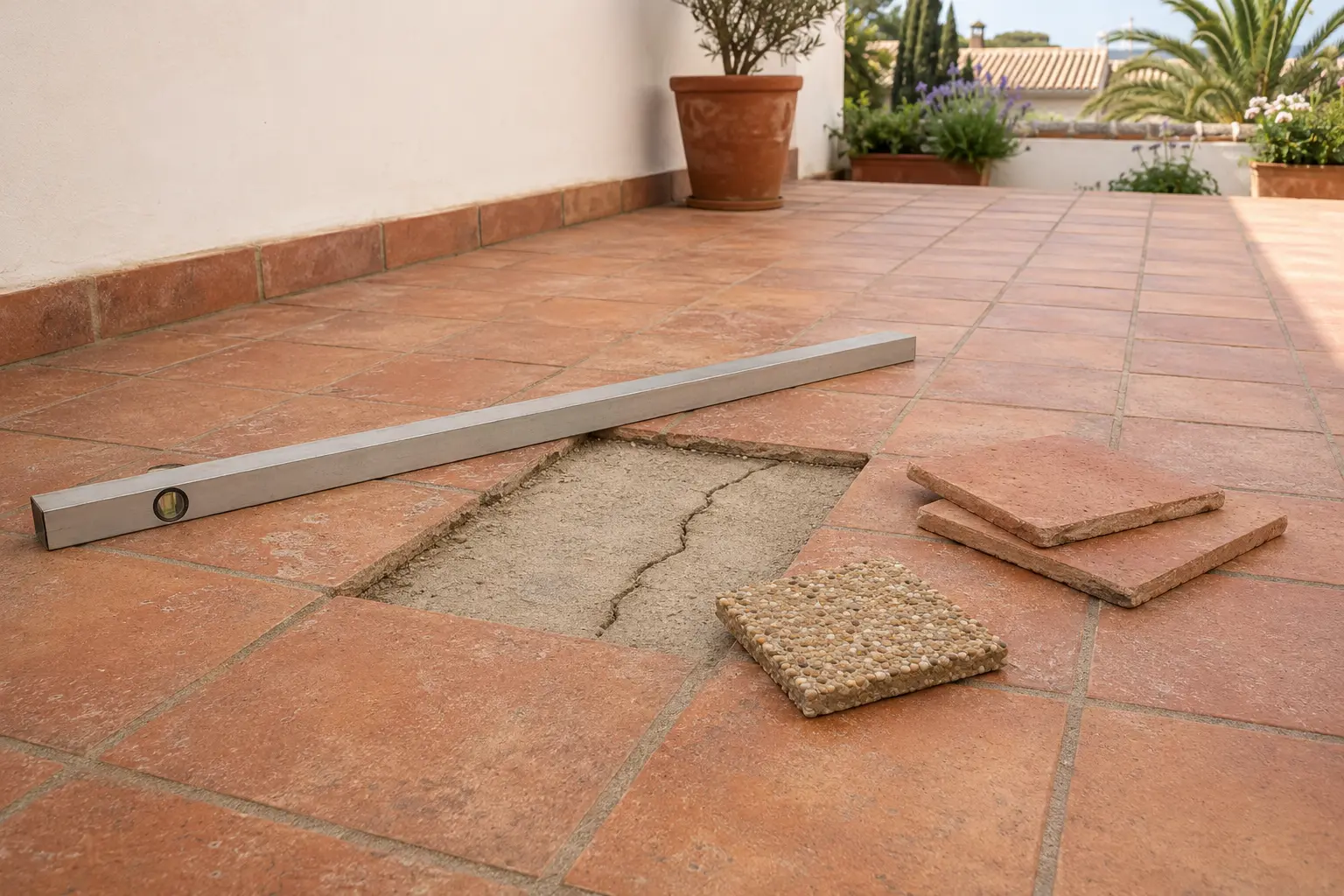
The proposal should identify how the resin-bound surface meets each threshold. It should not obstruct a door, reduce the useful depth of a drain or create a small step where the terrace previously met another surface evenly.
Where the level is already tight, preparation may require removing the existing finish or adjusting the construction rather than laying directly over it.
Drainage still needs a route
Exterior terraces need working falls whether the finished surface is permeable or impermeable. Rainwater must be kept away from internal thresholds and directed towards a suitable outlet or area.
A resin-bound top layer may allow water through its structure. An existing tiled or concrete terrace beneath it will usually remain impermeable. The design must then account for how water reaches the drains without becoming trapped between layers.
Terraces that already hold water should not be resurfaced until the cause is understood. A new finish can change the appearance of the low point without changing its level.
Drainage and permeabilityOpen terraces and covered nayas
An open terrace may spend much of the year in full sun and receive intense rain over a short period. A covered naya is protected from some weather but may collect dust, cooking residues or moisture near its open edges.
The same aggregate blend can look different in bright sun and deep shade. Viewing samples outdoors helps avoid choosing a colour solely from an indoor board or screen.
Covered and open sections also need to meet cleanly. If one area stays damp longer or receives different levels of wear, the maintenance pattern may vary across what appears to be one continuous floor.
Heat, colour and exterior resin
The proposed binder should be suitable for exterior use. Manufacturer information should support any claim about colour stability under ultraviolet exposure.
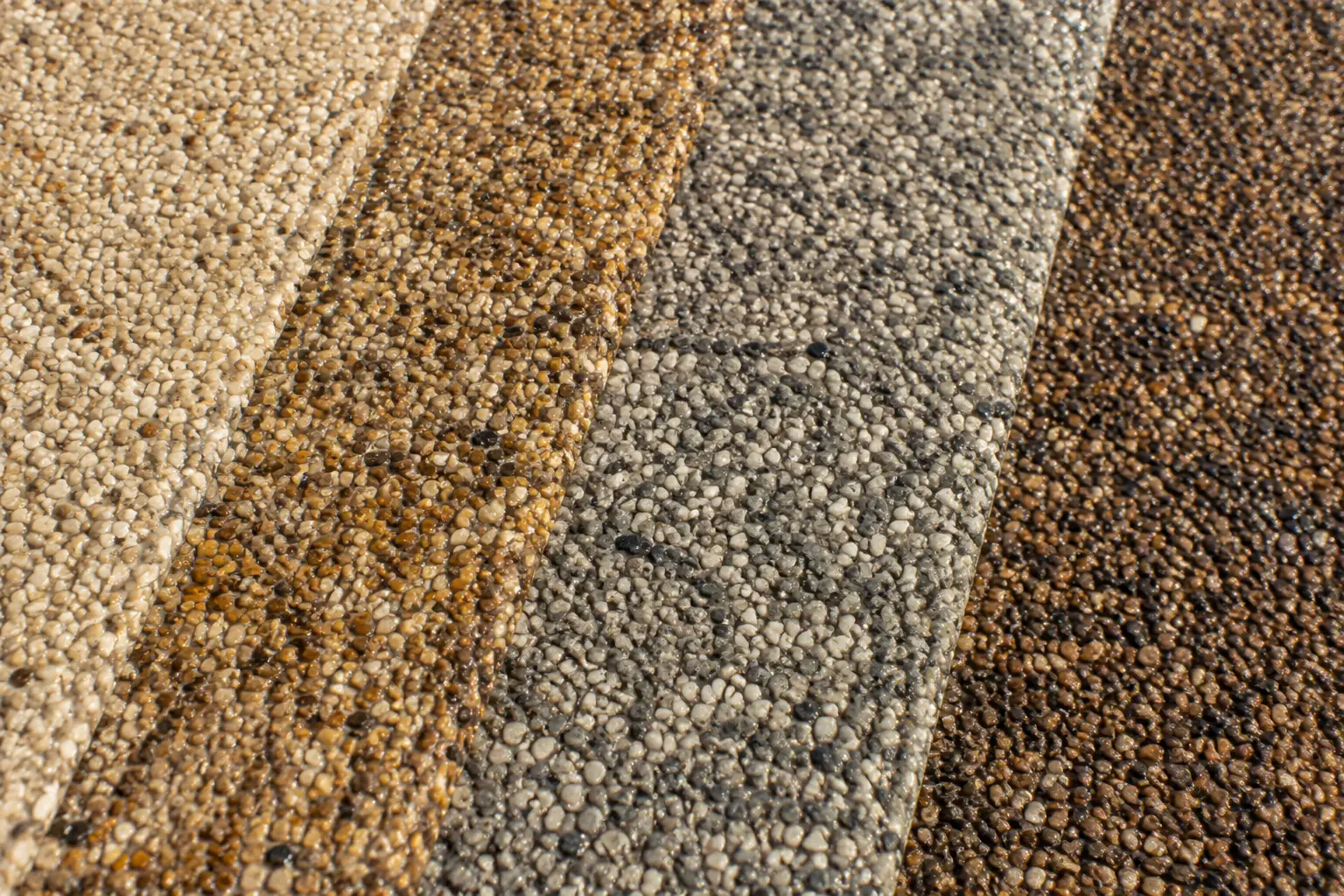
Aggregate colour affects both appearance and use. Darker blends can provide contrast but may become less comfortable in strong sun. Very light blends can suit pale Spanish architecture but may show soil, leaves, food spills and irrigation marks more readily.
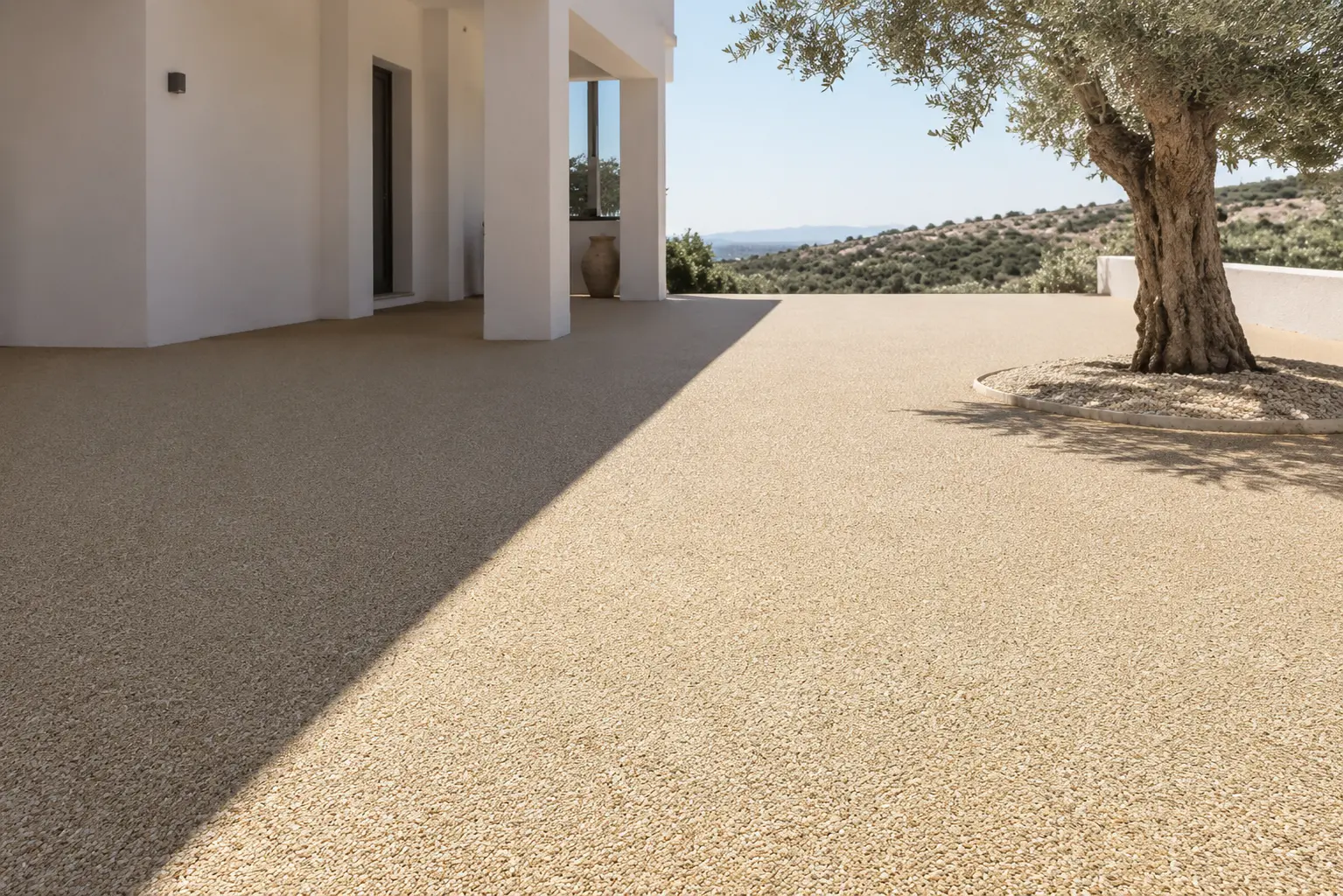
Colour should be judged alongside the walls, coping, internal flooring and garden materials rather than in isolation. Contrasting borders can define steps, edges or different areas where that serves a practical purpose.
UV-stable resin in Spain Colours and finishesFurniture, dining and everyday use
Terraces carry more than foot traffic. Tables, chairs, planters, barbecues, outdoor kitchens and storage units can create repeated loads or conceal areas during cleaning.
Heavy items should be moved rather than dragged. The selected finish and maintenance guidance should also account for food, drink, grease, sunscreen, plant material and irrigation water.
Commercial hospitality terraces need a more detailed plan for furniture movement, daily cleaning, service routes and the period during which the area cannot be used.
Commercial resin-bound surfacingSteps, curves and adjoining areas
Resin-bound aggregate can follow curved edges and irregular terrace shapes, but every perimeter still needs a sound termination.
Steps require clear nosings and consistent finished levels. Planting beds, walls, existing stonework, drains and retained tiles need secure edges. Covers and access points must remain usable after the new finish is installed.
Where a terrace connects to a pool surround or path, using related aggregates can unify the spaces without assuming that every area needs the same construction or surface texture.
Roof terraces and balconies
Roof terraces and balconies should not be treated as ordinary ground-level patios. They may form part of the building’s waterproofing and drainage system and can have structural loading limits.
Any proposed resin-bound finish must be compatible with the roof build-up, outlets, upstands and movement details. The waterproofing should be assessed by a suitably qualified person before a decorative overlay is considered.
This page does not assume that every resin-bound system is suitable for roof terraces or balconies.
Maintenance
Routine sweeping and suitable periodic cleaning help prevent leaves, dust and organic material collecting within the textured surface. Shaded areas, planters and irrigation can create different maintenance needs from exposed sunny sections.
Spills should be treated promptly with a method compatible with the installed system. Cleaning-product restrictions and pressure-washing guidance should come from the relevant technical information rather than general advice about resin flooring.
What if the terrace is already cracked or uneven?
Cracks, loose tiles and uneven areas need diagnosis before resurfacing. Local repair may be possible where the defect is stable and limited. Movement in the slab or base requires a different response.
Levelling also affects thresholds and drainage. Raising a low area may improve the fall but create a problem at an adjoining door or step. The complete terrace should be surveyed rather than pricing only the visibly damaged section.
Repairs and resurfacingTerrace and patio costs in Spain
The price depends on more than the visible area. Existing tiles, access through the property, furniture removal, level corrections, drains, steps, curves and detailed edges can influence preparation and labour.
A straightforward open terrace over a sound base is not comparable with a courtyard reached only through the house or a tiled area requiring extensive repairs. Quotations should identify these differences rather than reducing every project to one square-metre figure.
Resin-bound flooring costs in SpainQuestions to resolve before requesting a quotation
- Is the terrace at ground level, over a room or on a roof?
- What is the current surface?
- Are any tiles loose, cracked or hollow?
- Does water collect anywhere after rain?
- How much height is available beneath doors and at drains?
- Are movement joints visible?
- How can materials and equipment reach the area?
- Will the space carry furniture, dining equipment or commercial traffic?
- Which sections are open, covered or heavily shaded?
- Are adjoining paths or pool areas part of the same project?
Tell us about your terrace or patio
Provide the location, approximate area, current surface and how the space is used. Include known tile, drainage or threshold problems and add photographs where useful.
The information will be reviewed before the appropriate next step is confirmed. Installation availability is not guaranteed in every part of Spain.
Submit your terrace projectRelated information
- Can resin-bound flooring be laid over outdoor tiles?
- Substrates and ground preparation
- Drainage and permeability
- UV-stable resin
- Colours and finishes
- Pool surrounds
- Repairs and resurfacing
- Maintenance
- Costs in Spain
- Resin-bound flooring or porcelain tiles?