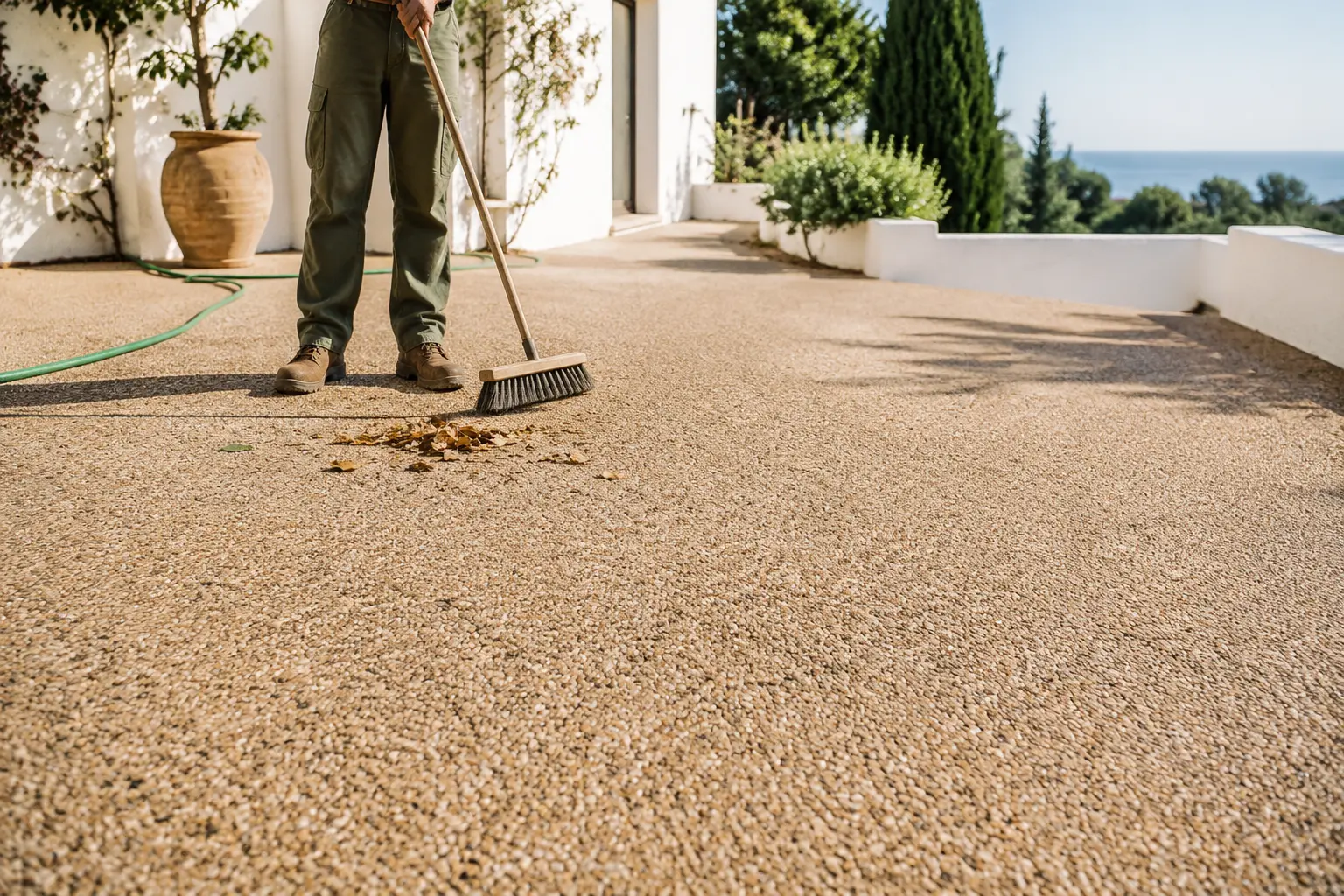
Resin-bound surfacing needs regular removal of debris, appropriate cleaning and attention to drainage, edges and defects.
The correct method depends on the installed resin system, aggregate, exposure and use of the area. Use this page to find the relevant guidance and recognise when cleaning should stop and technical assessment should begin.
Ask about a damaged surfaceWhat routine maintenance needs to achieve
Maintenance should preserve the appearance and working condition of the surface without damaging the resin or driving contamination deeper into the construction.
Loose leaves, sand, soil and grit are best removed before they become wet or compacted. Spills need a response suited to the contaminant and the named resin system. Channels, outlets and adjoining edges need attention at the same time as the visible finish.
A universal annual-cleaning promise is too simple for Spain. A shaded path beside irrigation may need attention more often than an open sunny terrace. A beachfront hospitality property can receive fresh sand and salt after a single period of strong wind. Pool areas and vehicle surfaces face their own contamination.
The maintenance plan should follow what reaches the surface and how quickly conditions change.
Choose the problem or area
General cleaning and seasonal care
Start with the full guide to cleaning and maintaining resin-bound surfacing in coastal Spain.
It covers routine sweeping, washing, salt, sand, irrigation, organic growth, pool contamination, food and vehicle fluids. It also explains why pressure and chemical limits must come from the installed system rather than a generic patio-cleaning method.
Pool surrounds
Poolside care needs to account for sunscreen, treated water, leaves, wet grip and overflow drainage. Concentrated pool chemicals present a different risk from ordinary splash water.
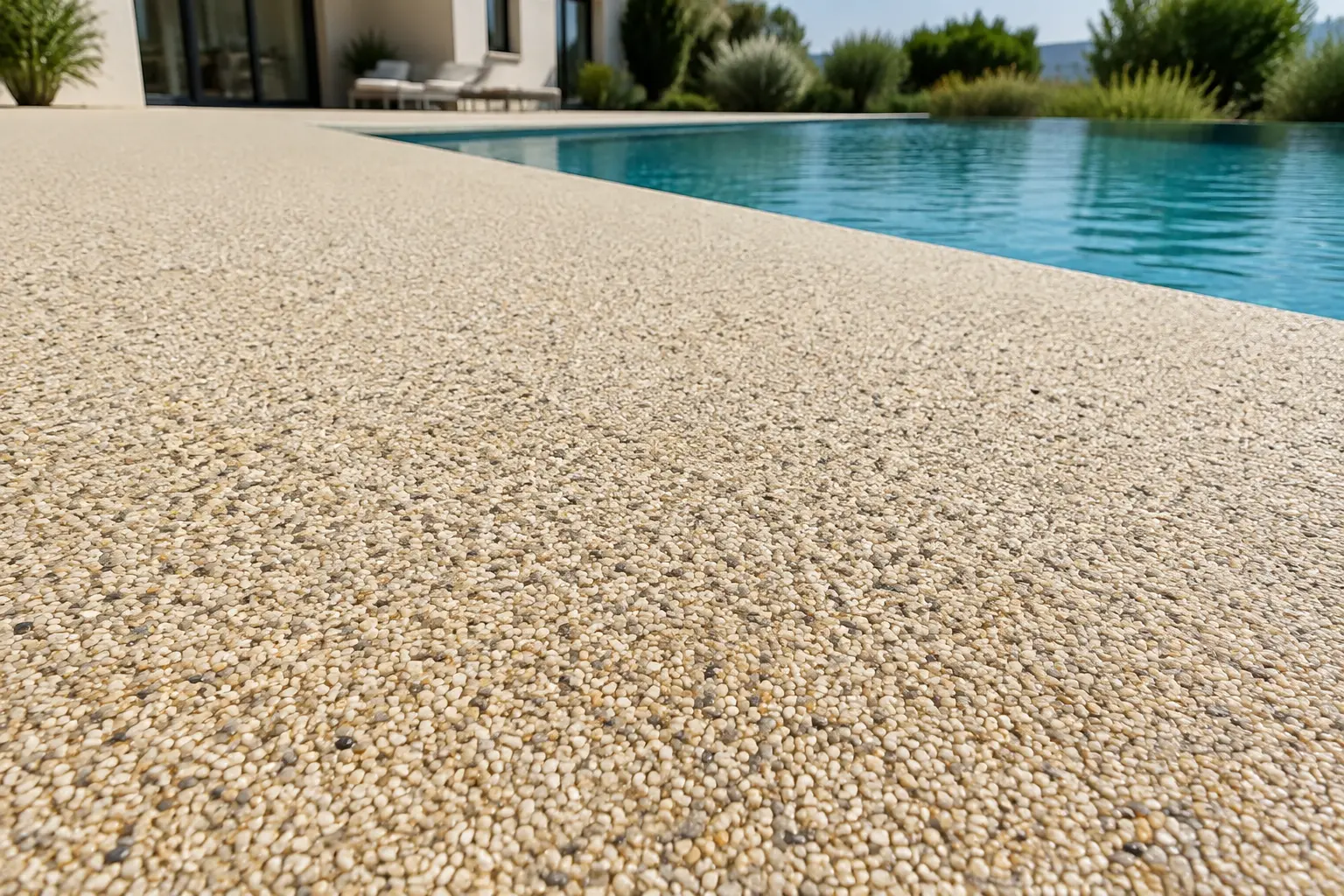
See resin-bound pool surrounds for the connection between specification, use and aftercare. If the surface becomes slippery when wet, also read the slip-resistance guidance.
Driveways and vehicle areas
Tyre deposits, grit, engine oil, fuel and turning loads can affect a driveway. Stop an active leak before treating the mark. Avoid using a solvent or concrete degreaser unless compatibility with the exact resin system has been confirmed.
Areas that are loosening, sinking or cracking need diagnosis rather than progressively stronger cleaning. Use the repairs and resurfacing page when the issue appears structural or continues to spread.
Terraces and outdoor dining
Terraces can collect grease, wine, food, flower staining, soil from planters and grit beneath furniture. Cleaning access and the likely use of the area should influence the surface choice from the beginning.
Read about resin-bound terraces in Spain for furniture, heat, drainage and existing-tile considerations. Hospitality operators should record approved cleaning products and spill procedures for staff and contractors.
Coastal exposure
Salt, wind-blown sand and repeated marine exposure can increase the maintenance load. Sand should be removed before furniture, feet or cleaning equipment grind it against the surface. Salt-like marks should be identified because sea spray, irrigation minerals, pool deposits and adjoining masonry do not necessarily need the same treatment.
The guide to salt, sand and pool-chemical exposure explains how exposure affects both specification and maintenance.
Algae, moss and shaded areas
Organic growth points to moisture, shade and available nutrients. It can alter wet grip before a strong green colour becomes obvious.
Use only a treatment and method accepted for the installed system. Check for leaking irrigation, overspray, blocked drainage or persistent damp at the same time. Repeated chemical treatment without correcting the moisture source is unlikely to settle the underlying condition.
Cracks, loose stone and failed areas
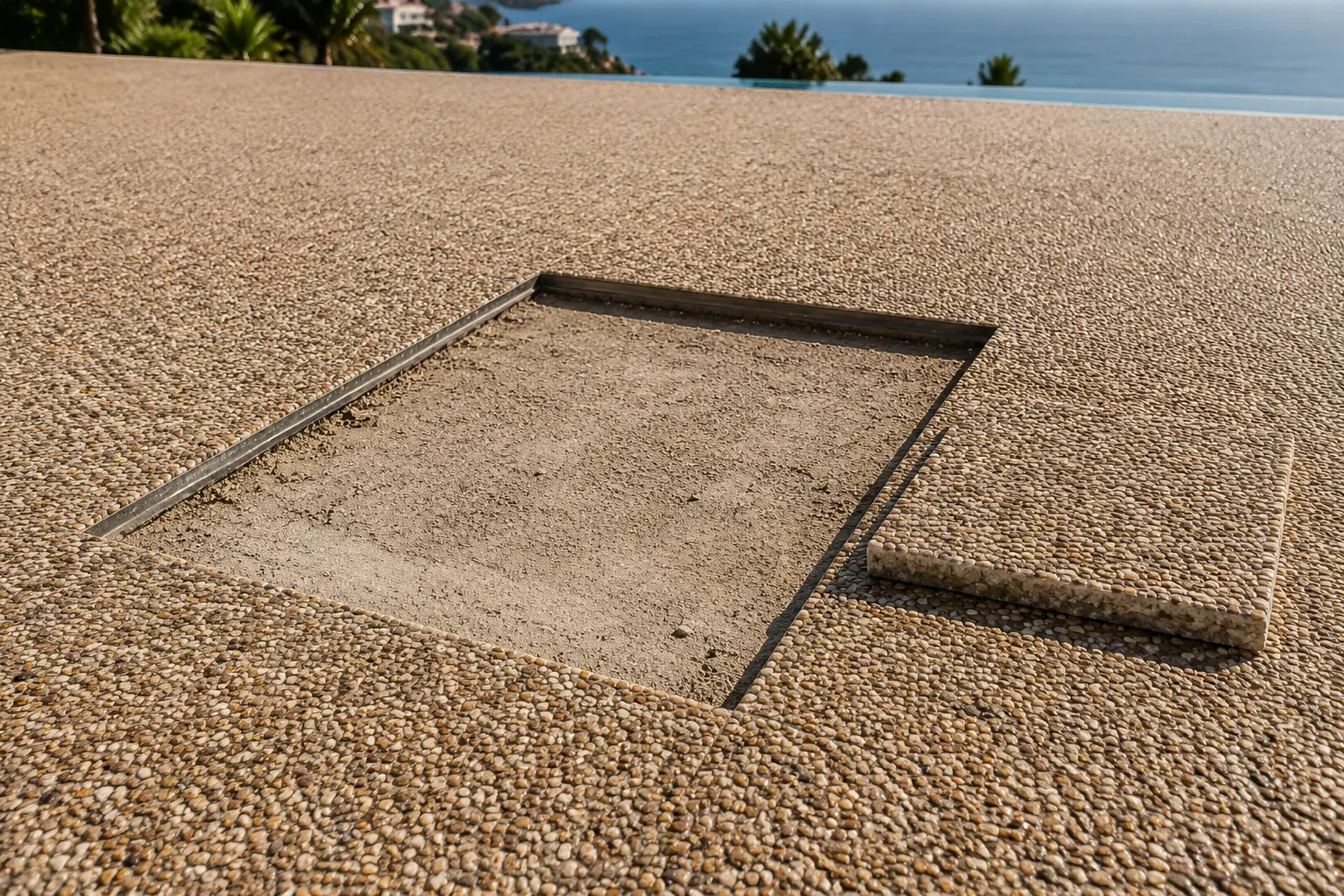
Cleaning is not a repair. Stop aggressive washing if the surface is shedding aggregate, feels soft, lifts at an edge or sounds hollow over a wider area.
The article Repairing resin-bound surfacing: patch, overlay or replace? explains how the defect, base and visual expectations affect the available options.
A safe routine for normal care
Remove dry debris first
Sweep or use approved mechanical equipment to remove loose grit, leaves and soil. Work carefully around edges, joints, drainage grilles and any existing repair.
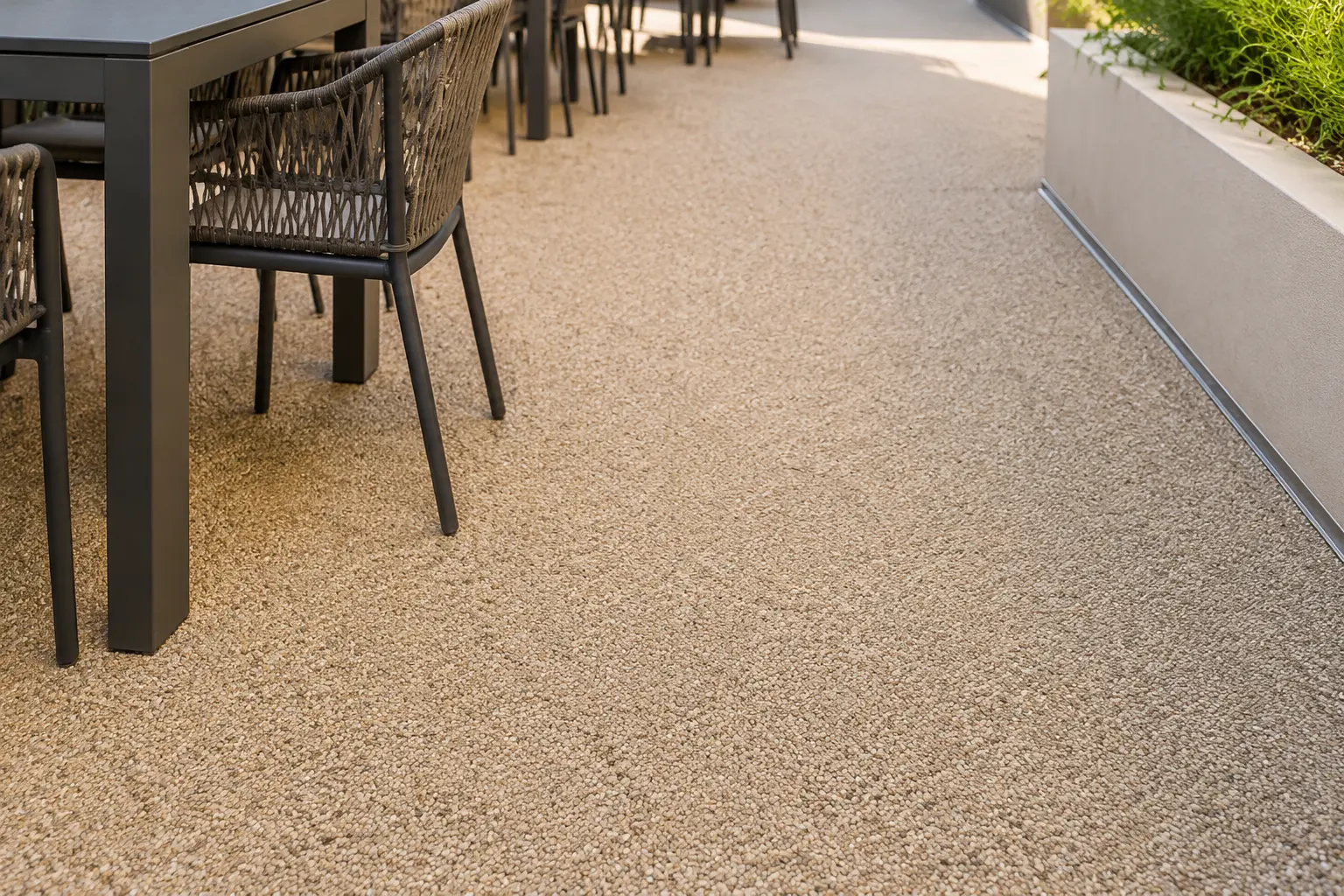
Do not drag heavy planters or furniture across trapped grit. Move them using a method that protects both the surface and the people handling the load.
Identify the contamination
A dark patch could be oil, organic growth or trapped moisture. White residue may come from sea spray, hard water, pool deposits or masonry. Treatment should follow the source rather than the colour alone.
If the substance is unknown, begin with observation and the least aggressive approved method. Record what was present before cleaning, particularly where a warranty or wider defect may be involved.
Follow the installed system guidance
Use the current maintenance information for the actual resin-bound product. It should identify compatible cleaners and any pressure-washing limits.
Do not transfer a chemical recommendation, pressure setting or coating instruction from another manufacturer's surface. Binder formulations and complete systems differ.
Keep the water route open
Clear grilles, channels, baskets and outlets. Prevent loosened sediment from being pushed into a small drainage point.
Where the surface is intended to be permeable, accumulated fine material may reduce the rate at which water enters. Ponding that remains after appropriate cleaning and outlet clearance needs further investigation.
Pressure washing
Pressure washing may be permitted for a particular resin-bound system, subject to its stated pressure, nozzle, temperature and working-distance limits.
An uncontrolled narrow jet can damage weak areas, dislodge aggregate and open vulnerable edges. It can also remove evidence from a failed surface before the cause is assessed.
Obtain the installed system's instructions before using pressure-cleaning equipment. If the product cannot be identified, a cautious technical review is more responsible than assuming a setting that is safe for concrete or tiles will also be safe for resin-bound aggregate.
Products and treatments to check before use
Do not apply a product merely because it is sold as a patio, stone or driveway cleaner. Obtain compatibility confirmation before using:
- strong acidic or alkaline cleaners
- solvents and paint removers
- arbitrary bleach mixtures
- cement or rust removers
- generic sealers, gloss coatings or rejuvenators
- concentrated moss and algae treatments
- weedkillers that may contact the resin or adjoining planting
A film-forming treatment may affect appearance, porosity and wet grip. Approval for one proprietary resin system should not be treated as approval for every resin-bound surface.
When to stop cleaning
Arrange an assessment before further treatment if you find:
- continuing or widespread aggregate loss
- softness, brittleness or lifting
- cracks that change, widen or return after repair
- a hollow or detached area
- recurring ponding with clear outlets
- movement at an edge, drain or threshold
- a slippery film that approved routine cleaning does not remove
- chemical damage or an unidentified spill across a significant area
Take wide photographs and close views before the area is disturbed. Record when the problem appeared, whether it changes after rain or heat and what products have already been applied.
Maintenance records for communities and commercial properties
A short written record helps prevent unsuitable products being used by different staff or contractors. It can also show when a defect began and whether it is spreading.
Record the date, location, condition found, cleaning product and method, drainage condition and any follow-up required. Keep the installed-system data and handover information available to the person responsible for cleaning.
Hotels, communities and hospitality venues should define who can authorise stronger treatment, coating or repair. A cleaning contractor should not have to infer the resin system from its appearance.
Request a surface assessment
Use the project enquiry form if the surface is cracking, lifting, losing aggregate, holding water or no longer responding to approved maintenance.
Include the location, approximate area, installation date if known, current symptoms and anything applied since installation.
Request a maintenance or repair assessmentRelated information
- Cleaning and maintaining resin-bound surfacing
- Repairs and resurfacing
- Heavy rain and permeable resin-bound surfacing
- Slip resistance and wet-area safety
- Contact Stone Carpet Spain