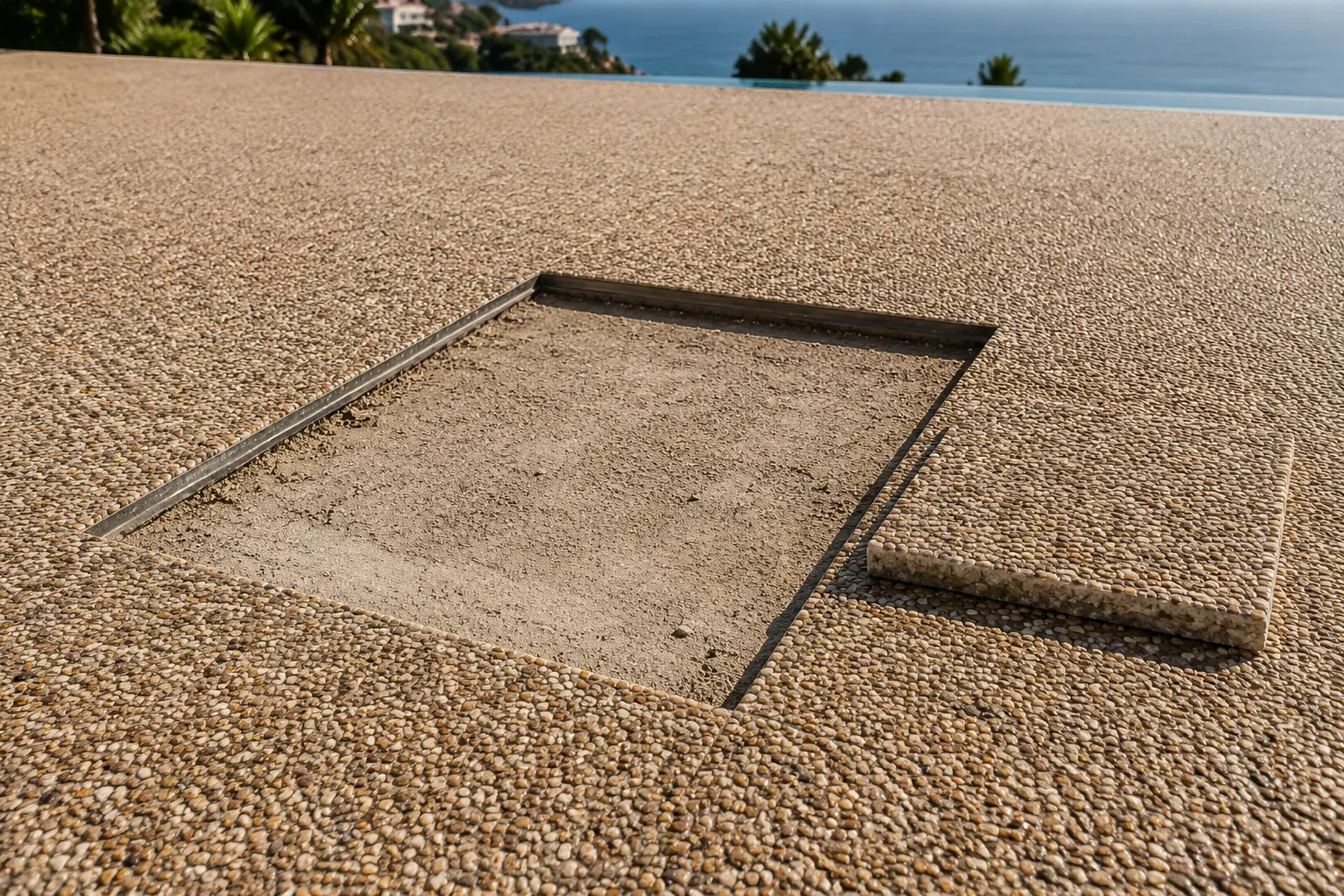
Cracks, loose stone, lifting, ponding and damaged edges need diagnosis before a repair method can be selected.
Stone Carpet Spain accepts enquiries about failed or ageing resin-bound surfaces, unsuitable previous installations and exterior areas being considered for resurfacing.
Request a repair assessmentStart with the failed layer
The visible defect does not always identify the failed part of the construction.
A crack may follow movement in the base. Loose aggregate can result from local wear, a weak batch or a problem through the full resin-bound layer. A hollow sound may come from the finish separating from its primer or from tiles and screed detaching below it.
Repairing only what can be seen can leave the cause in place. An assessment should establish the extent of the defect, which layer has failed and whether the movement, moisture or contamination responsible is still active.
Photographs are useful for an initial review. Adhesion, hidden moisture, base construction and structural movement may require inspection or a controlled opening of the surface.
Problems we can assess
Cracking
Cracks can reflect construction joints, base movement, settlement, root pressure, thermal movement or a local impact. Their pattern and history matter.
A line that closes and reopens should not be treated as a static cosmetic mark. Where a joint is required, the repair may need to preserve that movement through the finished surface.
Loose aggregate or surface ravelling
Occasional loose stones after installation are different from continuing loss across a wider area. Repeated aggregate release can indicate weak resin coverage, mixing or curing, abrasion or degradation of the installed layer.
A coating or rejuvenator is not an automatic answer. It may change colour, sheen, porosity and wet grip while leaving weak material underneath.
Lifting, hollow areas and delamination
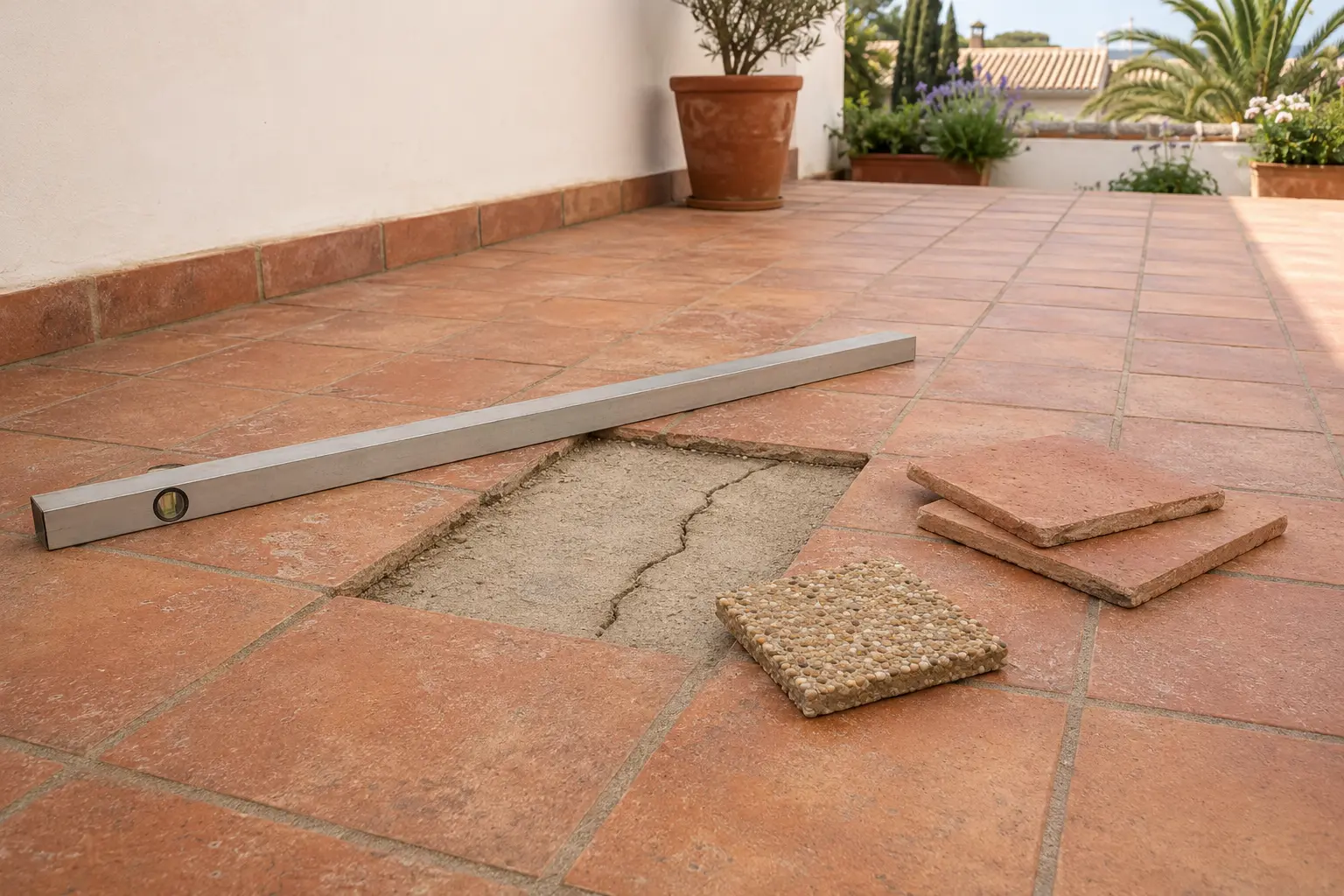
Lifting shows that an interface has lost adhesion. That interface could be directly beneath the resin-bound finish or several layers lower in retained tiles, adhesive or screed.
The affected area should be mapped beyond the visibly raised section. A new finish laid over a detached layer will inherit its lack of support.
Ponding and poor drainage
Standing water may be caused by blocked pores, closed outlets, inadequate falls, settlement or an unsuitable base and discharge arrangement.
Filling a low point can move the water towards a door, wall or adjoining property. Drainage needs to be traced from where water lands to where it can lawfully and safely leave or be managed.
Broken edges and details
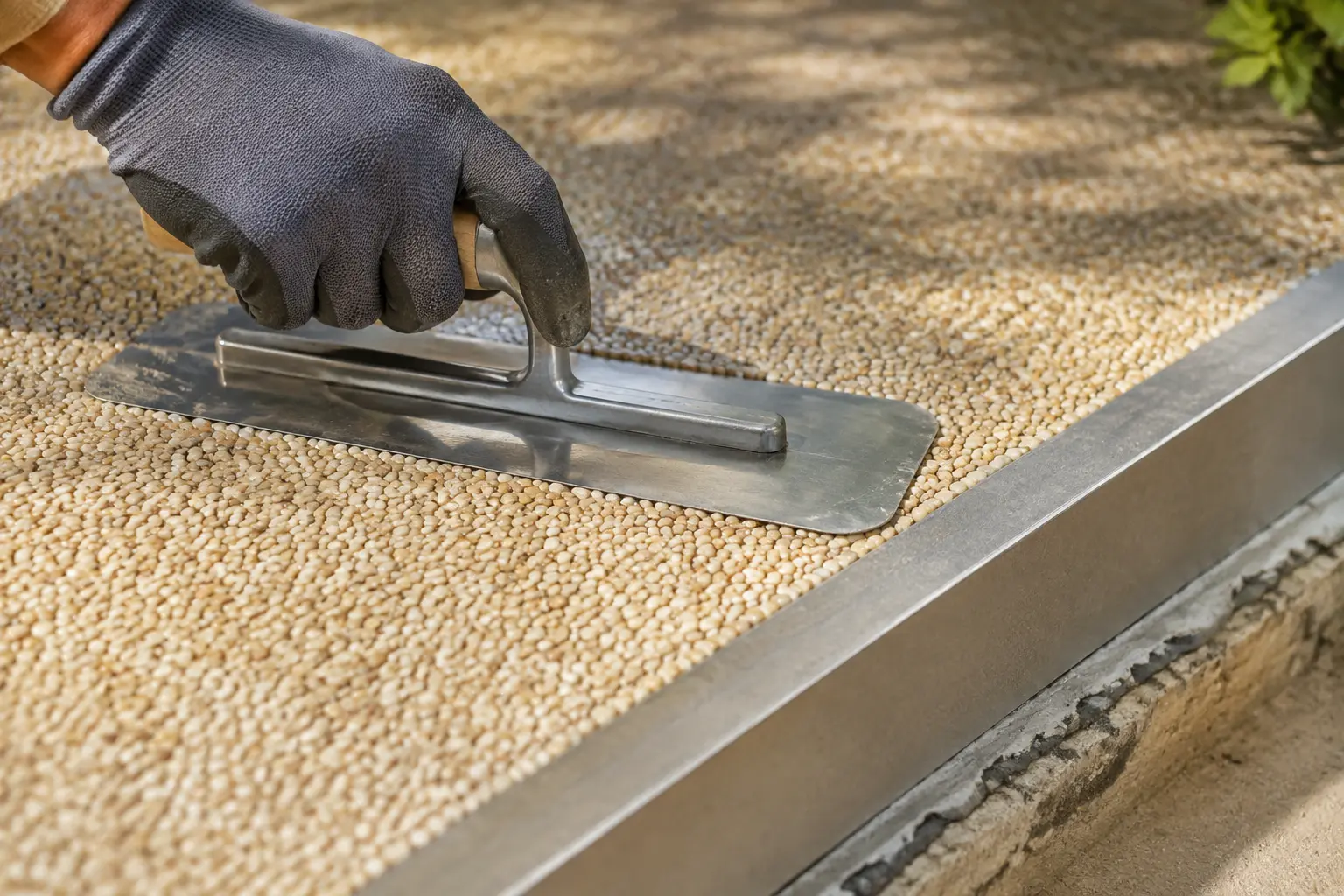
Damage often develops beside soil, gravel, gates, drains, service covers and poorly supported profiles. Replacing the visible strip may be short-lived if the edge still lacks restraint.
The repair may include a new support, profile or drainage detail. Covers and channels must remain accessible after the work.
Staining, discolouration and worn appearance
Colour change can come from dirt, mineral deposits, natural aggregate variation, binder discolouration, furniture shadows or a previous coating.
The surface should be cleaned or tested using an approved method before appearance alone is used to justify full replacement. If the installed material remains sound, resurfacing is an aesthetic and commercial decision rather than a necessary structural repair.
Repair options
Local patching
A patch may be appropriate where the damage has a defined cause and the surrounding construction is sound.
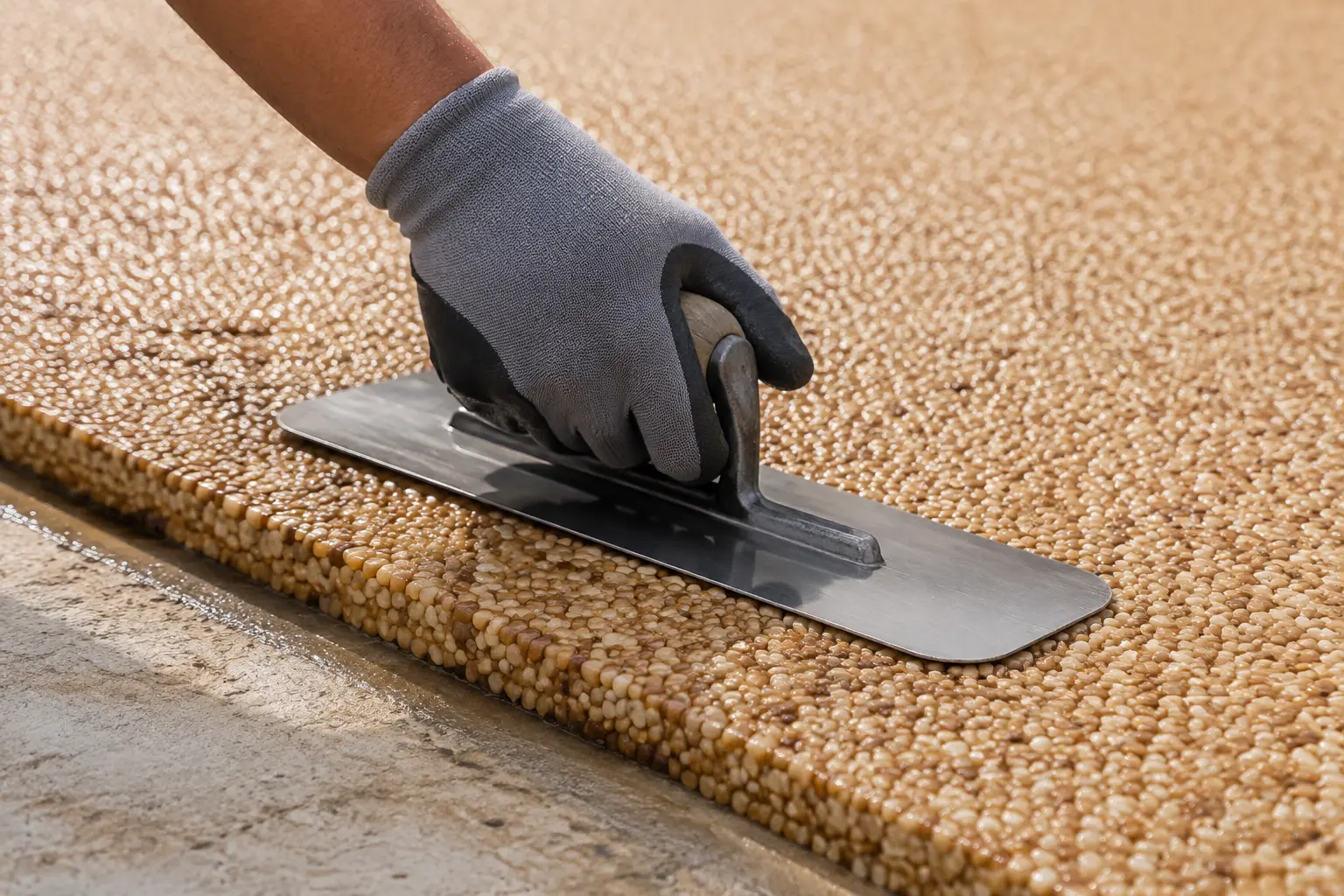
The failed material needs to be removed to stable boundaries. The new build-up should be compatible with the retained surface and base. A patch may remain visible because natural stone, binder, texture and weathering are difficult to match exactly.
Straight bands, joints or deliberate shapes can create a more controlled result than following an irregular crack or stain.
Bay or section replacement
Replacing a complete section can suit one failed installation phase, a turning area, a terrace bay or a poolside zone bounded by channels and copings.
This approach creates a clear construction and visual boundary. A complementary aggregate may be more honest than promising an invisible match to an older surface.
Overlaying an existing surface
An overlay may be considered where the retained resin-bound surface is firmly bonded, strong, stable and compatible with a documented overlay system.
Added height must be checked at doors, drains, steps, covers and gates. Preparation, contamination, porosity and joint treatment also need to be resolved. An overlay should not be used to conceal widespread detachment or weakness.
Removal and replacement
Widespread hollow areas, base movement, full-depth weakness, trapped water or unsuitable levels may make removal more credible than repeated repair.
The required depth depends on the failed layer. In some projects, the resin-bound finish can be removed from a reusable base. Others require tiles, screed or the complete base construction to be taken out and rebuilt.
The initial scope should state how concealed conditions will be handled if opening the area reveals a wider problem.
Resurfacing concrete, tiles and other exterior finishes
Resurfacing enquiries are not limited to existing resin-bound work. Ageing concrete, exterior tiles and suitable asphalt may be considered for a new resin-bound finish.
An overlay depends on the condition and construction of the retained surface. Hollow tiles, continuing cracks, weak screed, coatings, poor drainage or insufficient threshold height can rule out a straightforward overlay.
Bare ground, loose gravel and unstable paving normally need a designed base rather than surface preparation alone.
Residential repairs
Private enquiries may concern driveways, pool surrounds, terraces, paths or courtyards. Include wide views so the damaged area can be understood in relation to slopes, buildings, drains and adjoining surfaces.
Where the original installer or material system is known, provide the quotation, specification and handover information. The aggregate blend name alone may not identify the binder, primer or base accepted at installation.
An urgent trip or loose edge should be made safe while the final repair is assessed. Avoid applying an untested coating or carrying out destructive work if a warranty claim may still be possible.
Communities, hotels and commercial properties
Communal and commercial surfaces may need temporary access controls, phased investigation and a defined reopening plan.
The enquiry should identify operating hours, routes that must remain open and any fixed closure period. Defects should be marked on a plan where the site contains several entrances, terraces or pool zones.
Responsibility may involve the owner, installer, base contractor, designer, manufacturer or maintenance provider. Preserve relevant records and notify parties who may need an opportunity to inspect before removal begins.
Commercial proposals should separate investigation, temporary safety work, permanent repair and any contingency for concealed failure.
What to send with a repair enquiry
Provide:
- project location and approximate affected area
- installation date, if known
- wide photographs showing the complete setting
- close photographs of each type of defect
- a description of when the problem first appeared
- whether it changes after heat, rain, traffic or cleaning
- product, installer and base information where available
- details of cleaners, sealers, coatings or earlier repairs
- drainage or water-entry concerns
- any warranty or tender deadlines
Do not pressure wash, coat or cut open the area solely to prepare the enquiry. Existing evidence may help identify the cause.
How the assessment progresses
Initial review
We review the location, type of surface, symptoms, photographs and available records. This establishes the main questions and whether project coverage can be considered.
Site investigation
If an inspection is appropriate, it may cover defect mapping, levels, drainage, edges, joints and the apparent condition of the base. A controlled sample or opening should have an agreed purpose and reinstatement arrangement.
Repair scope
The proposed approach should identify the diagnosed defect, removal boundary, base work, selected surface system, joint and drainage treatment and expected visual difference.
Where hidden conditions remain, the proposal should state what is included initially and how approval will be obtained before the work expands.
Installation and handover
The agreed surface is installed under the requirements of the selected system. Handover information should identify the completed scope, products used, maintenance method and any limitation applying to retained construction.
Repair quotations should be comparable
A useful quotation explains what has failed and what will be removed. It should state what remains, how the base will be prepared and which resin and aggregate system is proposed.
Look for explicit treatment of cracks, joints, levels, edges and drainage. The document should address colour matching and identify what happens if a larger failed area is exposed.
A single line offering to repair damaged resin gives too little information to compare scope or likely durability.
Request an assessment
Submit the project location, affected area, installation history and photographs through the quotation form. Select Repair or resurfacing enquiry as the project type.
Installation coverage and the appropriate next stage are confirmed after the information has been reviewed.
Submit a repair or resurfacing enquiryRelated information
- Patch, overlay or replace?
- Why resin-bound surfaces crack, lift or shed stone
- Resin-bound surface maintenance
- Technical guidance
- Where Stone Carpet Spain works