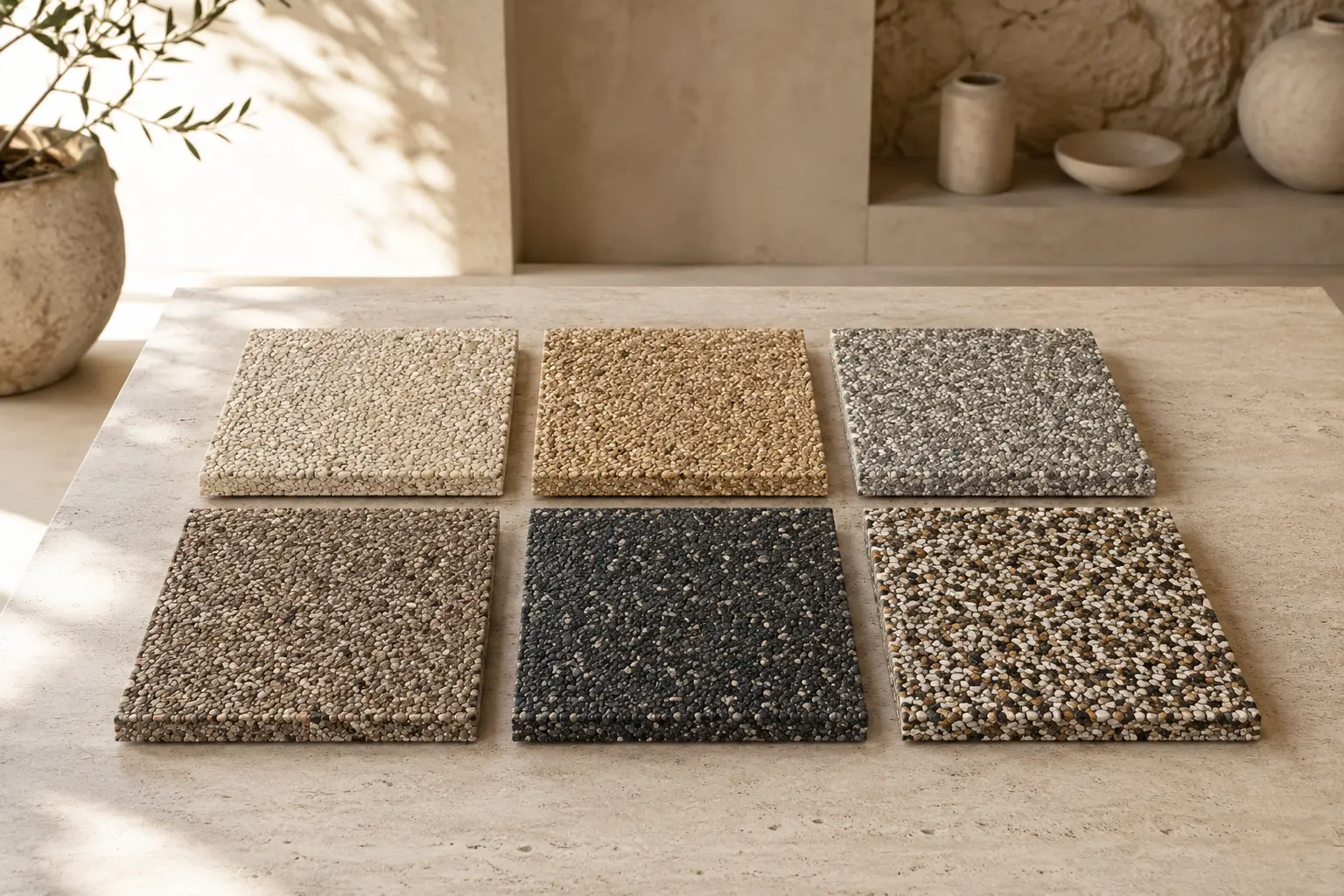
Choose an aggregate finish around the architecture, use, exposure and maintenance of the area, not from a colour swatch alone.
Natural stone, resin, grading, texture, sunlight and installation batches all affect the completed surface.
Discuss colours for your project Understand UV-stable resinColour comes from the complete mix
A resin-bound surface is not a painted floor. Its appearance comes mainly from natural aggregate coated in clear or lightly tinted binder and finished as a continuous matrix.
The resin changes the apparent depth and saturation of the stone. A loose aggregate sample can therefore look drier and lighter than the finished surface. Grading, the proportion of each stone and hand finishing also affect how the blend reads across a larger area.
Stone Carpet Spain does not publish invented collection names at launch. Available aggregates will depend on the selected supplier, system compatibility, quantity, batch and project location. The safer starting point is a colour family and practical brief, followed by physical samples of materials that can genuinely be supplied.
Broad colour families
Cream, ivory and pale beige
Pale warm blends can work with white render, limestone, sandstone and light pool copings. They often suit Mediterranean terraces and pool areas where a bright appearance is wanted.
They can also show soil, tyre marks, leaves, rust, irrigation deposits and food staining more readily. Changes in a binder are easier to see against light stone, so documented exterior colour stability is particularly important.
Honey, buff and warm stone
Warm mid-tone blends can connect traditional stonework, terracotta, sandy render and garden planting. Variation within the mix may make ordinary dust and natural stone differences less conspicuous than a near-monochrome pale surface.
Yellow or orange undertones should still be judged against the building in direct sun. A small indoor sample can appear much stronger outdoors.
Grey and silver
Cool grey blends can suit contemporary buildings, aluminium joinery, concrete and darker pool details. Mixed greys may also provide useful contrast beside white walls.
Pale dust, limescale and dried salt can be visible on darker grey stone. Blue or green undertones in neighbouring materials may make a neutral-looking sample appear warmer or colder once installed.
Brown, bronze and earth tones
Earth blends can sit comfortably beside planting, timber, traditional walls and natural ground. They may disguise some dry garden debris better than very pale stone.
Dark organic staining and irrigation marks can still be visible. A colour that blends into soil visually does not reduce the need for stable edge restraint that keeps soil off the surface.
Dark grey, charcoal and near-black
Dark aggregates can create strong borders, entrance zones and contemporary finishes. They may conceal some marks while making pale dust, salt and mineral residue more apparent.
Dark surfaces can become hotter in direct sun. This matters beside pools and on barefoot terraces. Colour should be selected with the application and exposure rather than used across every area for visual consistency.
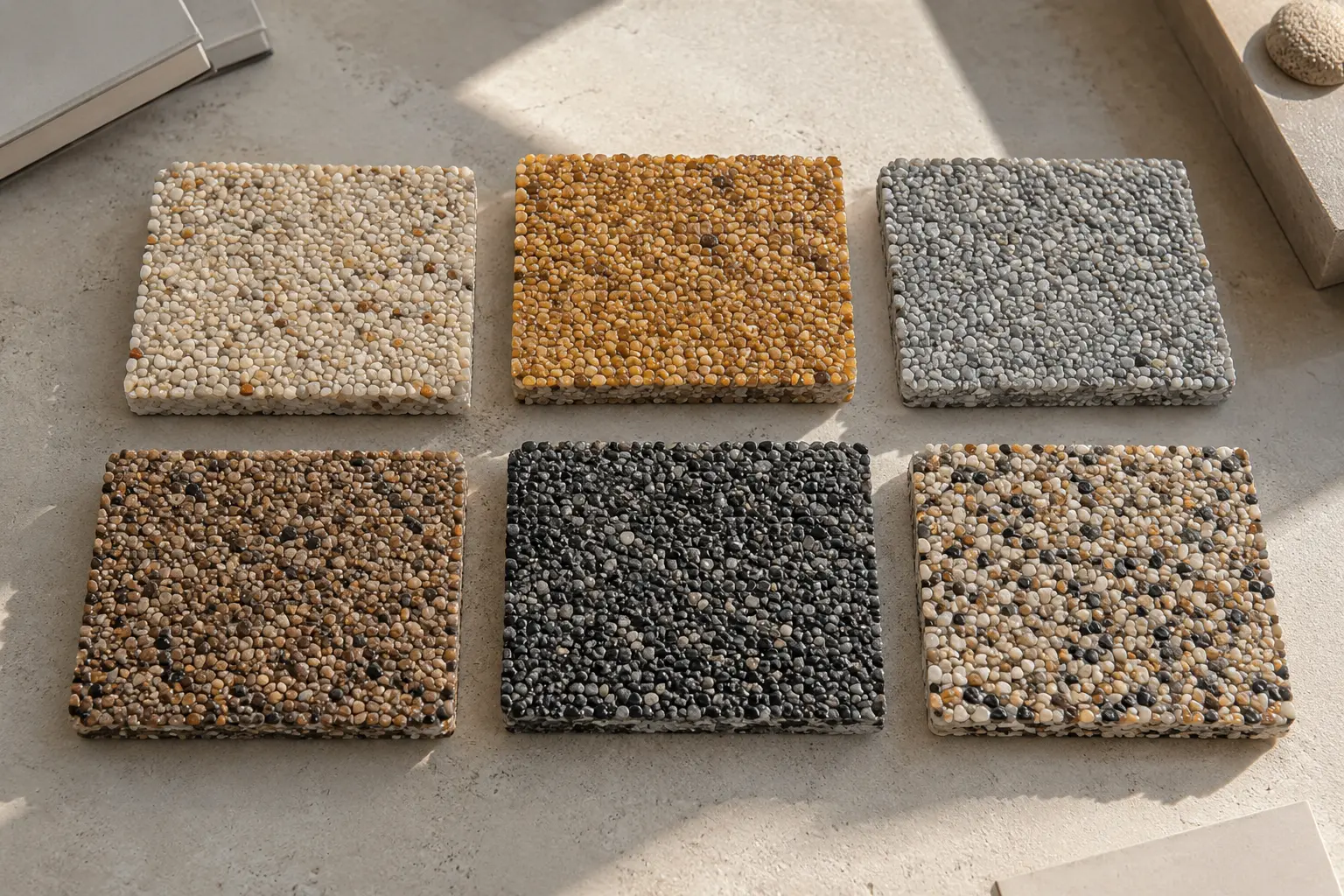
Mixed and contrasting blends
A blend containing several related tones can accommodate normal natural variation more comfortably than an almost uniform colour. Contrasting stone may also connect different materials already present at the property.
The mix should look balanced across a cured panel, not only in one loose handful. Large particles or a distinctive minority stone can appear more or less frequently across small samples.
Natural stone is naturally variable
Aggregate comes from mineral material rather than a manufactured colour code. Quarry source, seam, crushing, washing and grading can create variation between deliveries.
The project should establish what level of natural variation is expected and how material is allocated across the site. A sample represents the design and likely range. It cannot guarantee that every square metre will contain identical stone distribution.
Where visual consistency matters across a large or phased project, plan quantities and batches before installation. Retaining the product and batch information is useful for later maintenance or repair, though it cannot guarantee an invisible future match.
Aggregate grading and texture
Colour and texture cannot be separated completely. The stone size, shape and distribution influence the exposed surface and the way light moves across it.
A finer-looking blend may create a different appearance and cleaning behaviour from a coarser one. The grading must remain compatible with the selected system, installation depth, intended use and any tested performance being relied upon.
Do not change aggregate merely to obtain a preferred colour without checking the consequences for the complete system. A slip result or installation method for one grading may not validate another.
Resin affects appearance
The binder surrounds the aggregate and remains visible between particles. Its clarity and colour stability therefore matter.
For exterior decorative work, ask for the named resin product and current information supporting its intended use. A general statement such as UV resistant is not enough to identify the binder or its limitations.
A documented UV-stable binder reduces the risk of resin-driven yellowing or darkening. It does not promise that natural stone, dirt, gloss and the whole finished area will remain visually unchanged throughout its life.
Sun, shade and reflected light
The same blend can look markedly different in open sun, covered shade and evening light. Pale walls, glazing, blue pool water and surrounding greenery also affect perception.
View the sample beside the permanent materials it needs to meet:
- render, stone and brick
- pool coping and tiles
- doors and window frames
- adjoining paving
- walls and retaining structures
- fixed furniture or joinery
- gravel, soil and planting
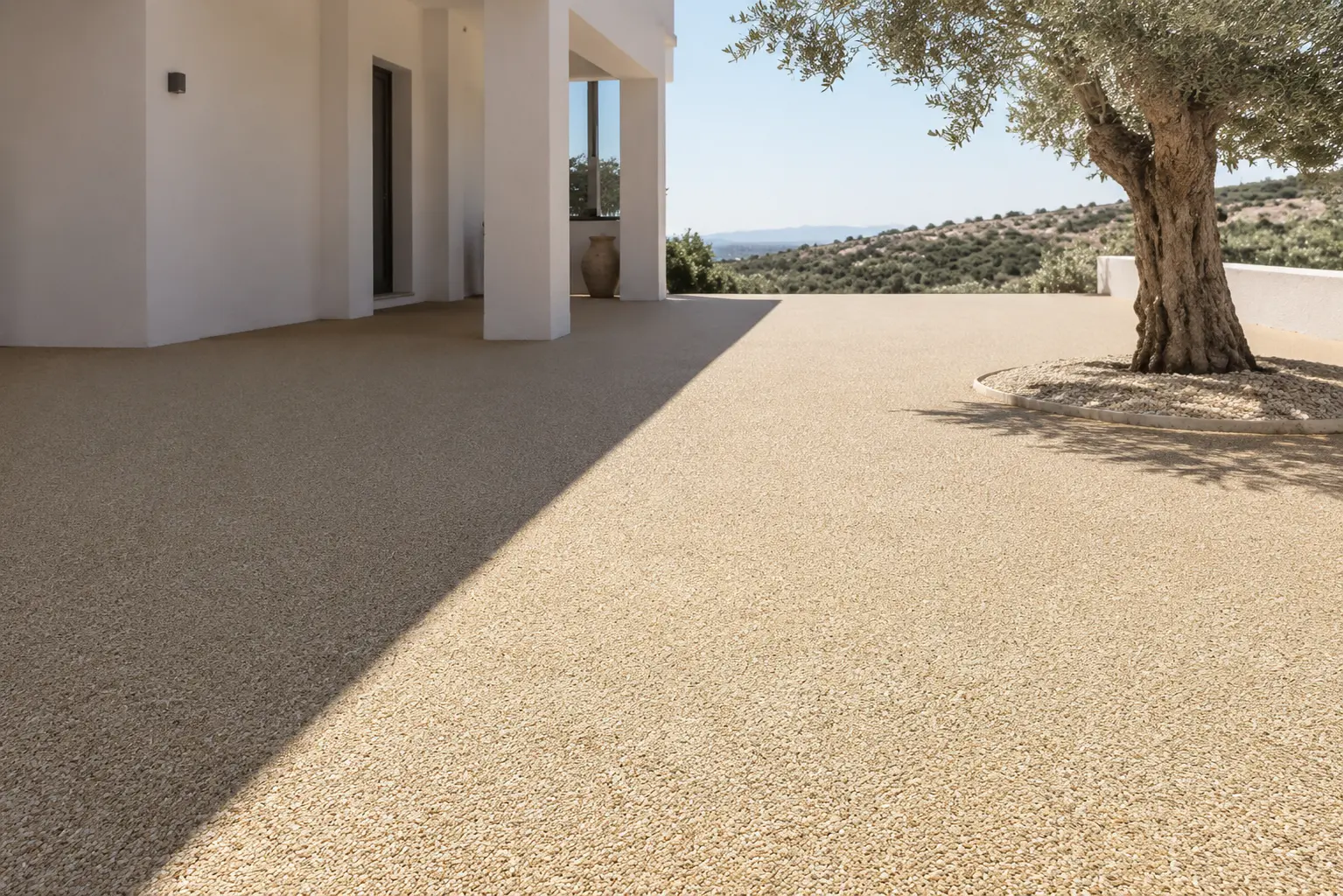
Move the sample through sun and shade. Note areas that will remain permanently covered and those shaded only by furniture, planters, vehicles or awnings.
Choosing by application
Pool surrounds
Poolside colour needs to work with coping, water and strong light. Barefoot comfort, wet texture, sunscreen, leaves and cleaning should be considered alongside appearance.
Very dark blends may be less comfortable in direct sun. Very pale blends can display organic and mineral deposits sooner.
Driveways
Vehicle areas receive tyre marks, road dust, oil, leaves and repeated turning. Mid-tone or mixed blends can be more forgiving than an almost white finish, though maintenance still depends on the actual exposure.
Borders may define parking or pedestrian routes where the design and construction support them.
Terraces and hospitality areas
Terraces need to sit with walls, internal floors, furniture and landscaping. Food, drink, planters and irrigation influence the practical choice.
Hospitality properties should judge finishes under expected cleaning and furniture use. A colour chosen for an empty presentation area may behave differently during daily operation.
Paths and entrances
Paths can use a related blend to connect separate areas, with contrast at steps, edges or changes in use where appropriate.
Visual contrast should support route legibility and safety. It does not replace the technical requirements for accessible design.
Borders, bands and transitions
Resin-bound aggregate can incorporate contrasting borders or planned divisions. These can frame an area, define a route or provide a deliberate boundary between phases.
The visual line should align with construction and drainage where possible. Useful positions include edges, channels, joints, changes in level and transitions between applications.
Small decorative motifs add setting out, material separation and finishing work. They should be drawn, measured and priced rather than decided while the material is being laid.
Contrast at steps and thresholds may form part of a wider accessibility design. The responsible project professional should define the requirement.
Cured samples, not screen colours
Digital images are useful for finding a direction. Screens, white balance, compression and surrounding colours make them unreliable approval standards.
Request a cured sample made with the proposed binder and complete aggregate blend. Record:
- supplier and blend reference
- resin product
- aggregate components and grading
- sample date
- intended application
- approved borders or adjacent blends
- any accepted natural variation
Review a representative panel rather than a tiny chip where the project is visually sensitive. The panel still cannot reproduce every variation across a large natural-stone installation.
Sample approval does not prove performance
A cured panel helps judge colour and texture. It does not establish suitability for vehicle loading, wet slip, pool chemicals, permeability or a particular base.
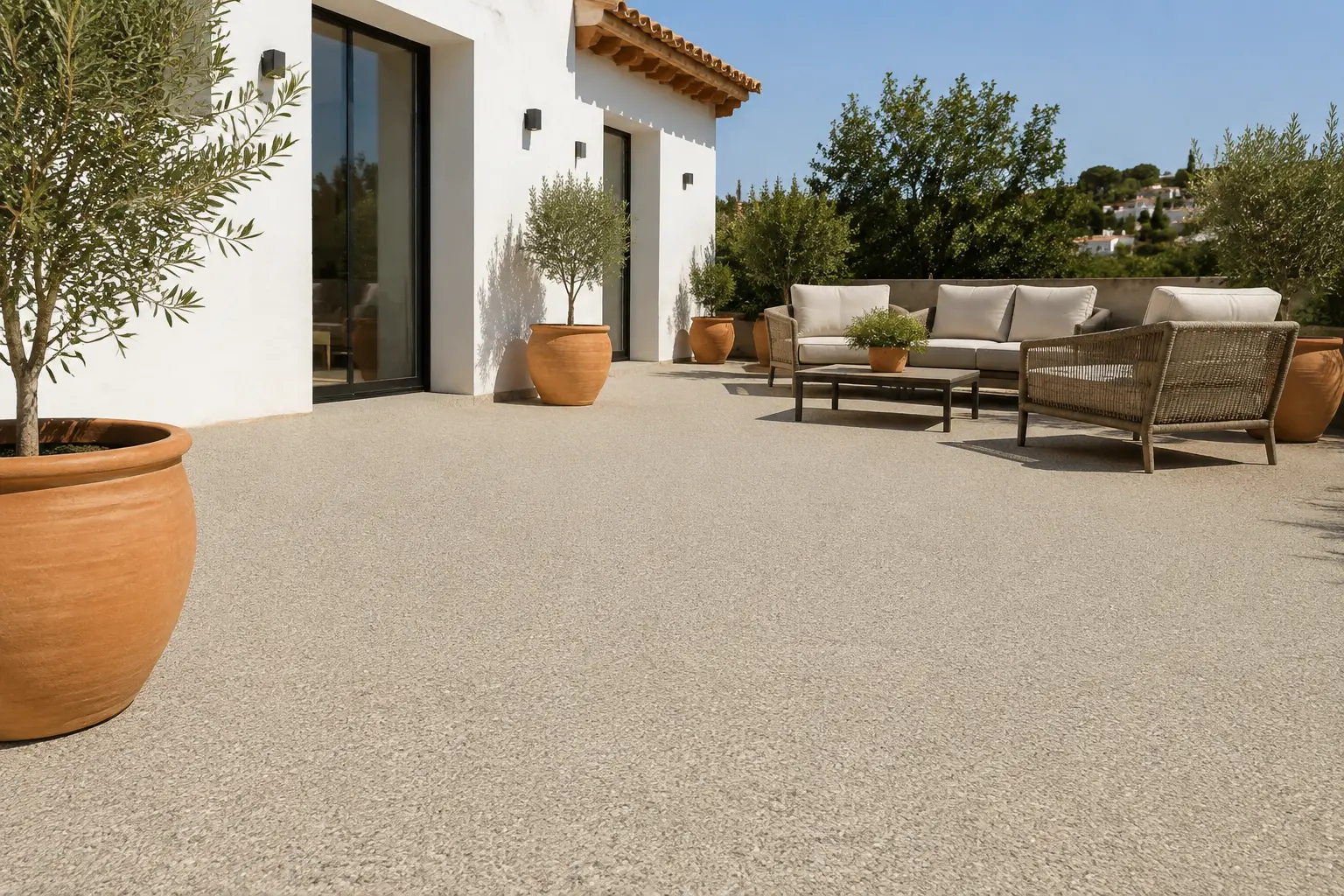
Those questions require the relevant project specification and system evidence. Keep the visual approval separate from technical acceptance so a preferred colour does not override an unsuitable material configuration.
Read the specification framework
Batch planning and installation
Consistent appearance depends on organised materials and a repeatable mixing and finishing process.
The installation plan should allocate aggregate batches across the work, particularly where adjoining sections will be laid on different days. Unexpected stops can create visible boundaries. Changes in trowelling and compaction can alter how light reflects from the surface.
Large projects may use planned phase lines and architectural divisions to manage installation. Promising one perfectly uniform appearance across natural aggregate and separate working days is unrealistic.
Staining, dirt and weathering
Colour change should be diagnosed before a treatment is chosen. Possible causes include:
- ordinary dirt and uneven cleaning
- leaf, flower or fruit staining
- tyre and vehicle residues
- food, wine, grease and sunscreen
- irrigation minerals or pool deposits
- rust from furniture or fittings
- salt and wind-blown contamination
- binder discolouration
- natural aggregate weathering
- a previous coating or repair
The correct response depends on the cause and installed system. An unapproved acid, solvent, bleach mixture or sealer can change colour, texture, porosity and wet grip.
Repairs and future matching
A repair may remain visible even when the original blend name is known. Natural stone batches vary and the surrounding surface has acquired its own exposure, wear and cleaning history.
New resin may initially look different from aged material. Texture and sheen can also reveal the boundary.
Where a future alteration is foreseeable, deliberate bays, borders or straight divisions can create more manageable repair limits. Do not approve a project on the promise of an invisible patch years later.
Read about repairs and resurfacing
Sealers and colour-enhancing treatments
Some proprietary systems may offer compatible treatments intended to refresh or alter appearance. They are not universal maintenance products.
A coating can deepen colour, introduce sheen, reduce pore space or change surface texture. It may also complicate later repair. Obtain written confirmation for the installed system and assess the effect on drainage and slip performance before use.
Do not specify a generic patio sealer simply because a sample looks richer when wet.
Request a colour and finish review
Send the project location, application, approximate area and preferred colour direction. Include the adjoining building and landscape materials, together with information about sun, shade, pool use, vehicles, planting or hospitality activity.
Available physical samples can be considered once the material supply and proposed system are identified. Project coverage is confirmed separately.
Submit your colour brief