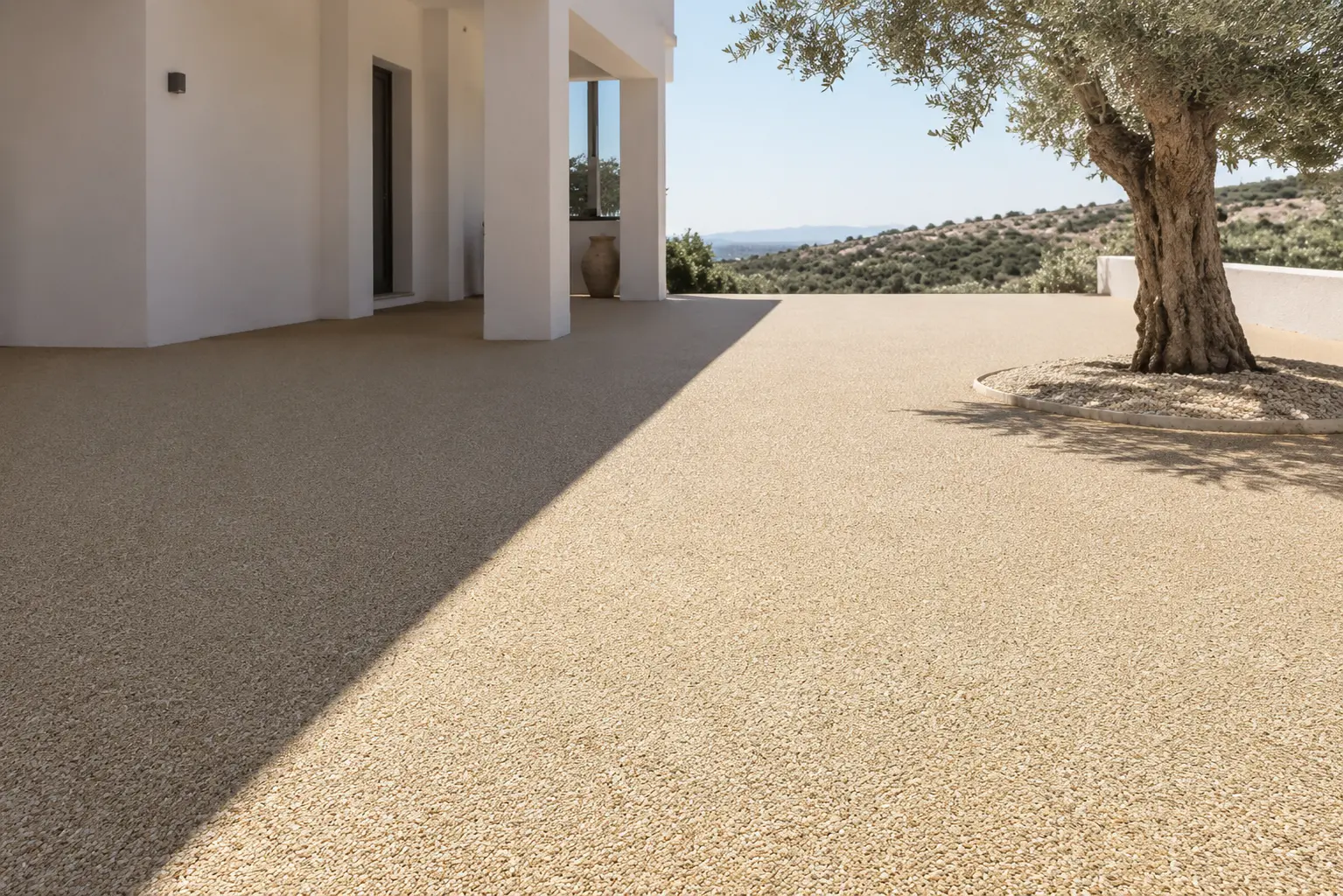
Resin-bound flooring can be used in sunny Spanish exteriors when the system is chosen and installed for that exposure. A documented aliphatic UV-stable binder is the usual starting point where colour retention matters.
Sun affects more than colour. Dark surfaces can become hot underfoot. Strong heat can shorten the working time during installation. Shade from buildings, cars and planters can create uneven exposure, while natural aggregate may still weather even when the resin binder resists yellowing.
The right answer is therefore yes, subject to a named exterior system, realistic colour choice and installation within the manufacturer's limits.
Why ultraviolet exposure matters
Ultraviolet radiation reaches outdoor surfaces as part of sunlight. Spain's state meteorological agency, AEMET, measures and publishes ultraviolet information and explains that the UV Index represents the intensity of ultraviolet radiation reaching the Earth's surface.
For resin-bound flooring, the concern is the long-term effect on the clear binder surrounding each aggregate particle. If that binder changes from clear towards yellow or brown, the colour of the whole surface can appear different.
Exposure is cumulative and uneven. A terrace can receive direct sun across one section while another remains beneath an overhang. Driveways have areas covered by vehicles for hours or days. Pool furniture and planters move with the season.
That pattern is why the resin chemistry needs to be specified before the aggregate colour is approved.
UV-stable and non-UV-stable resin
Exterior resin-bound suppliers commonly distinguish between aliphatic UV-stable polyurethane and aromatic non-UV-stable polyurethane.
Aliphatic binders are formulated to resist UV-related yellowing and retain a clearer appearance. Aromatic binders are more likely to change colour in sunlight and are sometimes offered with dark aggregate blends where that change is considered less obvious.
The saving from a non-UV-stable binder needs to be weighed against the decorative risk. A dark blend may disguise general discolouration, but objects left in place can create a visible contrast between exposed and protected areas.
For a pale terrace or pool surround, that contrast can be pronounced. For an external installation in Spain where appearance matters, the quotation should identify the exact UV-stable product rather than use the phrase “premium resin”.
Read the technical explanation of UV-stable resin
What UV stable does not mean
UV stability is a property of the stated binder. It is not a guarantee that the complete surface will look unchanged in every respect.
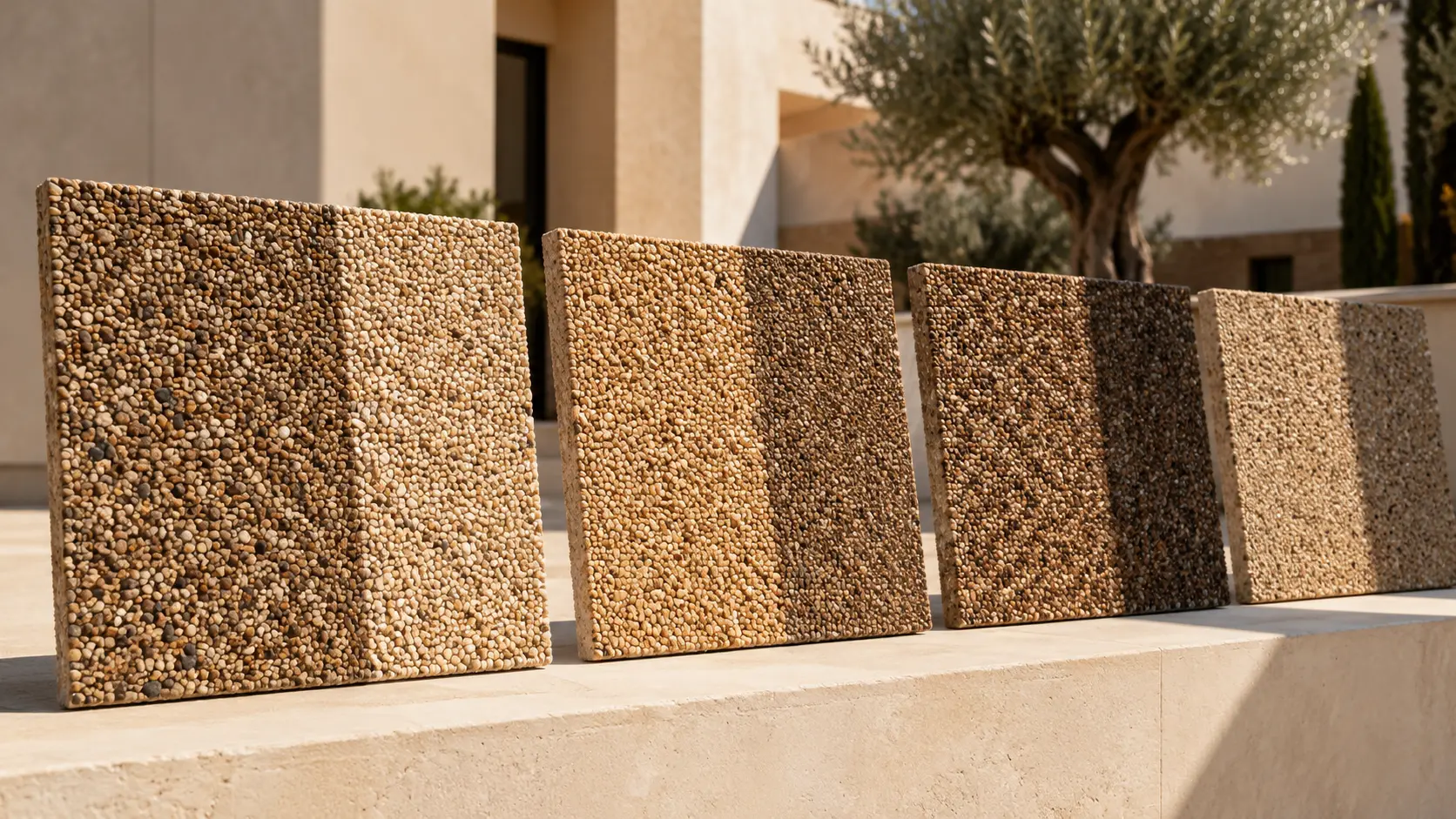
The term does not establish that:
- natural stone will never fade or bleach
- every aggregate batch will be identical
- dirt, oil or minerals cannot stain the surface
- gloss and texture will remain fixed
- local repairs will be invisible
- the material remains cool in direct sun
- installation can proceed at any temperature
- one manufacturer's guarantee applies to another system
This distinction matters because a surface can change colour for several reasons. Diagnosing all change as resin fading can lead to the wrong treatment.
The aggregate has its own exposure history
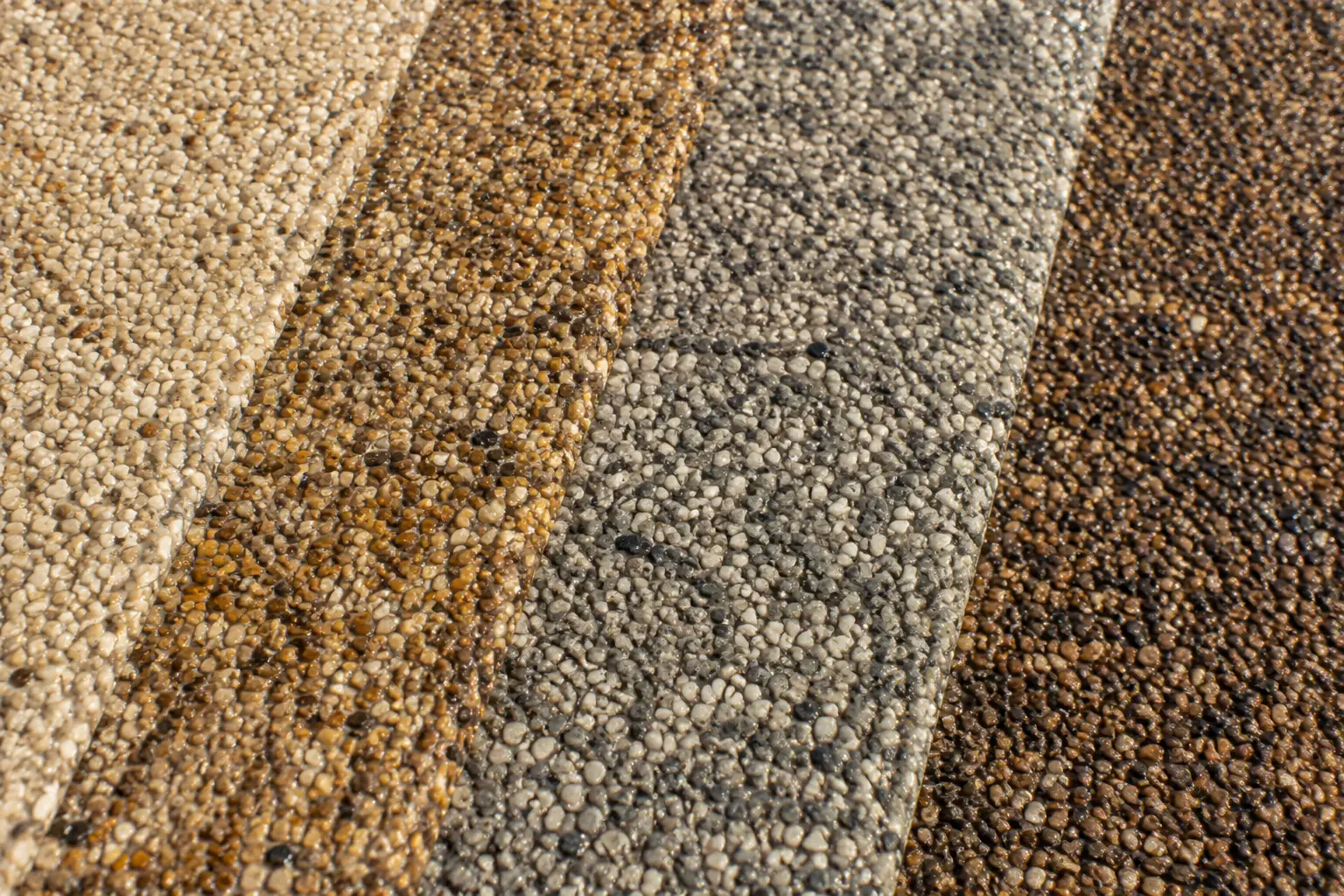
Natural aggregate is not a printed colour layer. It contains mineral and tonal variation before it is mixed with resin.
Some stone may lighten gradually through weathering or natural bleaching. Particular minerals can contribute to local rust-coloured spots. Dust, leaf residue and irrigation water may alter appearance without changing the stone itself.
Manufacturers of UV-stable systems often separate binder colour stability from aggregate variation and natural weathering in their guarantee terms. A cured sample should therefore be read as a representative blend, not a promise that every particle or future batch will be identical.
For large projects, ordering and batch planning help prevent obvious blocks of different material. Consistent mixing and finishing then influence how light reflects from the surface.
Shade can reveal a non-UV binder
Uneven sunlight creates one of the clearest risks with non-UV-stable resin.
Items that can leave protected areas include:
- cars and caravans
- plant pots and storage boxes
- outdoor rugs
- bins and fixed signs
- tables with broad bases
- pool covers and equipment
When the item is moved, the protected resin may retain its earlier appearance while the exposed area has darkened or yellowed.
A UV-stable binder reduces this resin-driven contrast. It cannot prevent a clean patch being revealed beneath an object where the surrounding surface has accumulated dirt or weathered naturally.
Moving furniture and planters for routine cleaning can reduce this second type of contrast.
Surface heat is separate from UV stability
A UV-stable binder can resist yellowing while the finished surface still becomes hot in direct sun.
Colour has an obvious role. Dark aggregate absorbs more solar energy than a pale blend under comparable conditions. The base, exposure, wind and time of day also affect the temperature experienced at the surface.
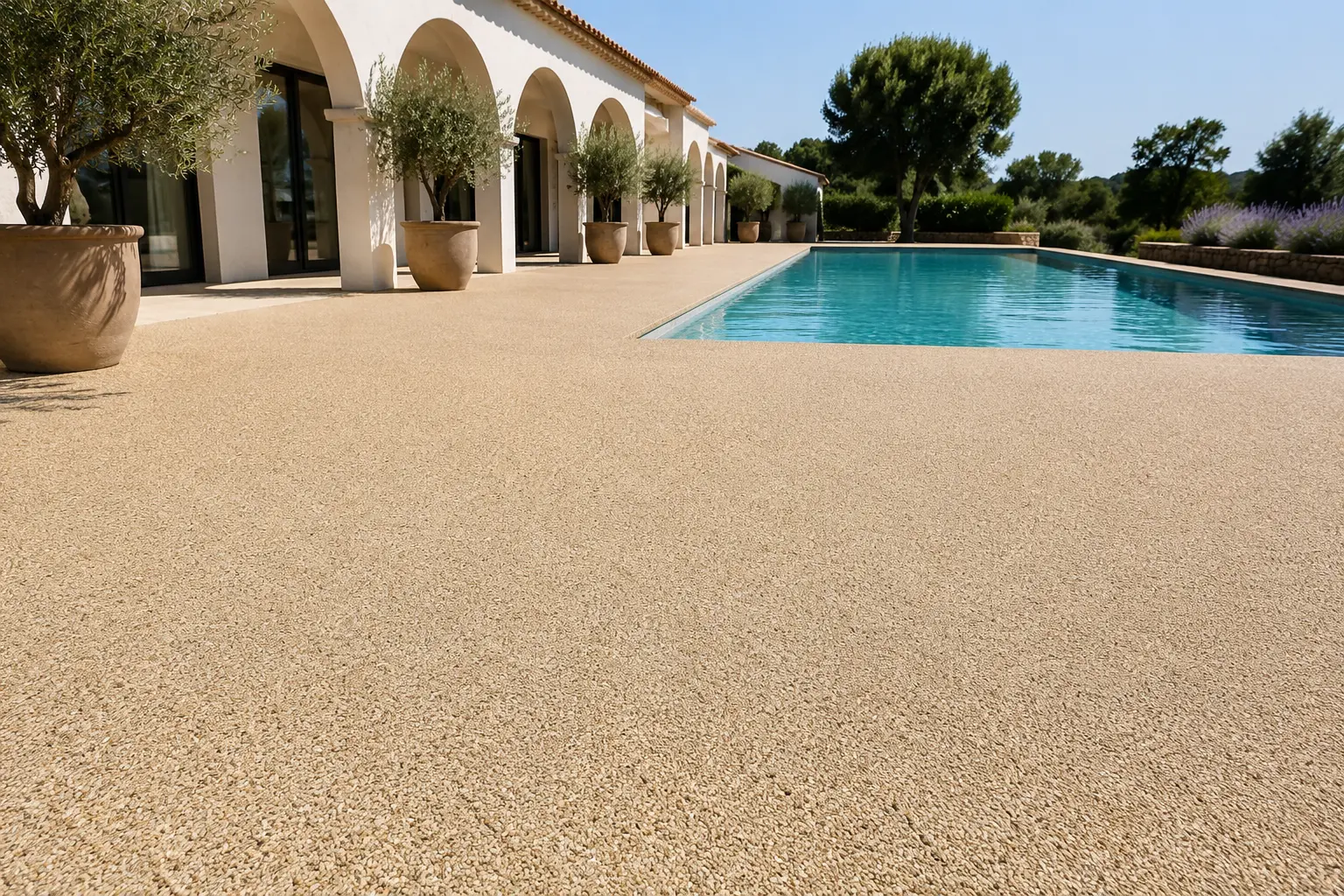
This matters most where people are barefoot, including pool surrounds and terraces used by children. A dark dramatic blend may suit a vehicle entrance but be uncomfortable beside a pool in full afternoon sun.
No aggregate should be described as permanently cool without relevant evidence. Compare cured samples on the site and consider when the area is actually used.
Pale colours and glare
Pale stone can reduce the visual heaviness of a large terrace and may be more comfortable than a very dark blend under direct sun. It introduces other practical questions.
Bright aggregate beside a pale rendered wall or pool can increase glare. White and cream surfaces also show soil, tyre marks, leaf stains and irrigation deposits more readily.
A mixed light-neutral blend may be more forgiving than a near-white finish while retaining a cooler visual character. The choice should be made outdoors, beside the permanent building materials and in both direct sun and shade.
Screens and indoor sample rooms are poor colour judges for an exterior project.
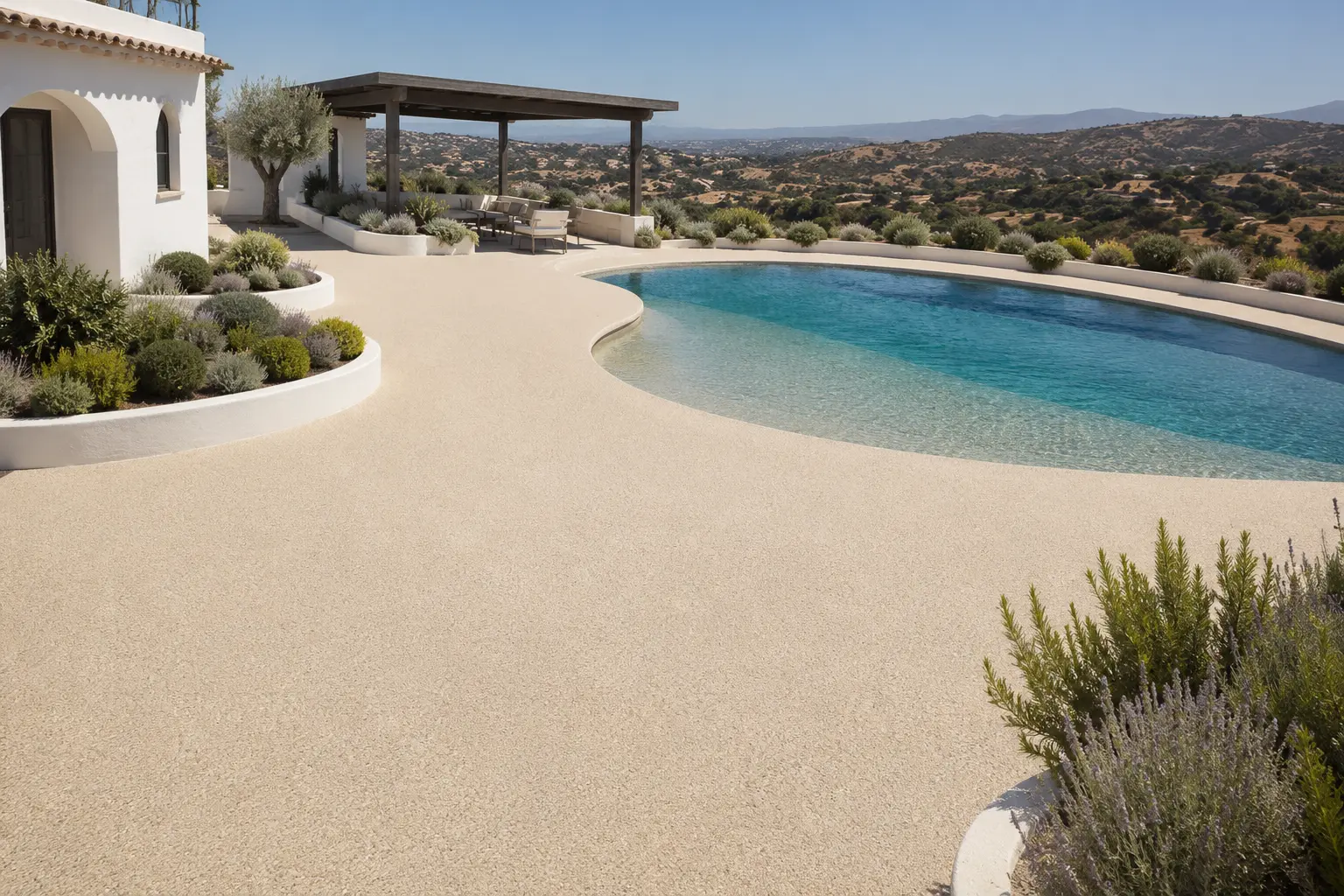
Pool surrounds in full sun
Pool areas combine ultraviolet exposure, heat, water, sunscreen and cleaning products.
The specification needs to address:
- UV-stable exterior resin
- aggregate colour and barefoot comfort
- wet slip-resistance evidence
- falls, channels and splash-water routes
- copings, skimmers and movement joints
- mineral deposits and cleaning procedures
- shade from loungers, covers and pergolas
A porous resin-bound finish can support drainage, but permeability does not establish wet slip performance. Likewise, a pale colour does not by itself prove comfortable surface temperature.
The complete pool detail matters more than any one product label.
Plan a resin-bound pool surround
Terraces facing south or west
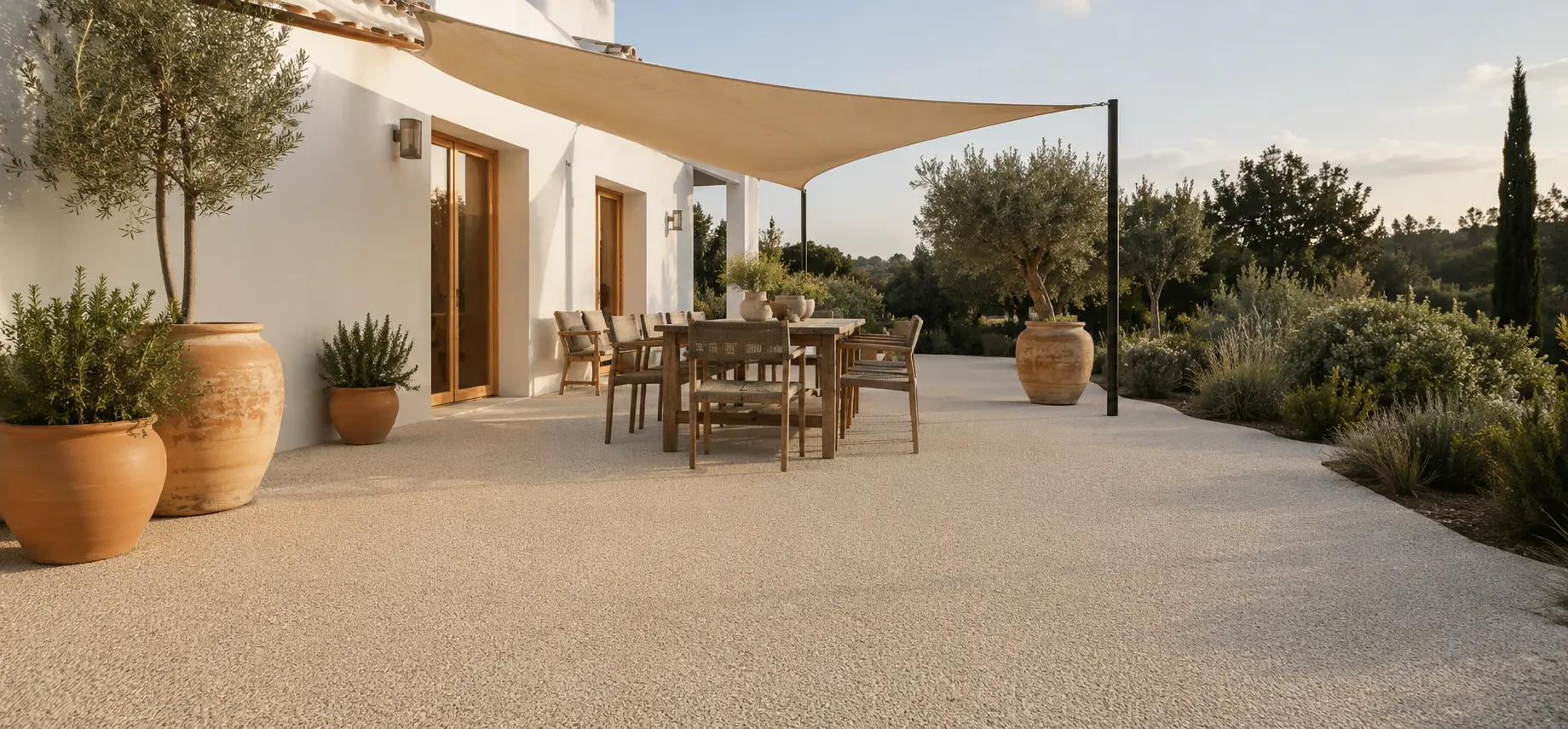
Orientation affects the duration and time of exposure. A west-facing terrace may receive intense afternoon sun when it is most likely to be used. A covered south-facing area can contain sharply divided sun and shade.
The survey should note:
- hours of direct exposure during the likely season of use
- permanent shade from roofs and walls
- seasonal shade from awnings or planting
- reflected light from glazing and pale façades
- areas repeatedly wetted by irrigation
- thresholds and indoor transitions
These observations guide colour and binder selection. They also help plan installation because the base temperature can change as shade moves across the working area.
Driveways and parked vehicles
Driveways expose resin-bound surfacing to both sunlight and long periods beneath vehicles.
Non-UV-stable binder can develop a different tone in areas routinely covered by cars. Tyres, oil and dust add separate marks. A dark blend may conceal some contamination, although it can become hotter and show pale dust more clearly.
The selected surface also needs a base, edges and application specification suitable for turning and braking. UV resistance only addresses one part of driveway performance.
Commercial areas and colour zoning
Hotels, restaurants, retail entrances and community spaces often use colour to define routes or complement branding. Exposure across these sites can vary beneath canopies, furniture and parked service vehicles.
Where colour consistency matters, project records should identify the resin product, aggregate blend, batches and sample approval. A later repair is easier to plan when the original specification is known, although a perfect visual match should still not be promised.
Cleaning regimes also need to distinguish sunlight-related change from staining and surface deposits. Applying a coating to an area that only needs compatible cleaning may alter gloss, slip resistance or permeability.
Hot weather affects installation
The completed surface's ability to withstand sunshine should not be confused with acceptable conditions during installation.
Resin systems have defined limits for air temperature, surface temperature, humidity and moisture. Dark concrete or asphalt can become much hotter than the measured air. Warm resin and aggregate can also shorten the available time for mixing, spreading and hand finishing.
If one batch cures faster than the next, the team may struggle to maintain a live edge and consistent texture. Rushed trowelling can leave visible differences.
The installer should measure actual site conditions and follow the named system's current guidance. A date booked in advance remains conditional on those conditions.
See how the resin-bound installation process works
Can installation simply start earlier in the day?
Starting before the hottest part of the day may form part of a professional plan, but it is not a universal solution.
The base may still retain heat from previous weather. Humidity and dew can affect an early start. Shade may move across a large area during laying, changing material and surface temperatures.
The product supplier's working limits and catalyst guidance, where applicable, govern the decision. The team also needs enough time to complete the planned section without creating an unplanned joint.
Material storage on a hot site
Resin and aggregate temperatures can influence the working behaviour of the mix. Materials left in direct sun or inside a hot vehicle may behave differently from those stored under controlled shade.
Storage should follow the manufacturer's instructions. Aggregate must remain dry and clean. Resin components should not be improvised, diluted or cooled through a method that the supplier has not approved.
The mixing area needs protection from sun, dust and unexpected moisture while remaining safely ventilated and organised.
Expansion and movement beneath the surface
Sun warms the whole construction, not only the resin-bound finish. Concrete, tiles, asphalt, walls and pool structures can expand and contract differently.
Existing movement joints may need to remain expressed through the new surface. Cracks in a sun-exposed slab should be assessed to determine whether they are static or still responding to movement.
UV-stable resin does not prevent reflective cracking caused by a moving base. Substrate condition and joint detailing remain separate parts of the specification.
Read about substrates and ground preparation
Will the surface soften in summer?
A properly specified cured resin-bound system should be selected for its intended exterior use, but “resin” alone does not prove temperature performance.
Different binders and systems have different formulations and documentation. Soft patches can also result from incorrect mixing, contamination, unsuitable component ratios or incomplete cure rather than ordinary sunshine.
Ask for the named product and its exterior-use documentation. A claim that all resin surfaces behave identically in Spanish summer conditions is not credible.
If an installed area becomes unexpectedly soft, restrict the affected use and have the cause investigated rather than applying a coating over it.
Does sunlight make the surface crack?
Sunlight by itself should not be used as a catch-all explanation for cracking.
Cracks can reflect movement in concrete, failed tile beds, inadequate edges, settlement, weak base construction or incorrect system installation. Thermal cycles may contribute to movement within the overall construction, which is why joints and compatible layers matter.
The crack pattern, depth and relationship with the base need examination. A superficial repair may fail again if the underlying cause remains active.
Cleaning a sun-exposed surface
Dust and fine soil can dull the appearance of a resin-bound finish. Irrigation water may leave mineral deposits, while shaded damp edges can support organic growth.
Routine sweeping and compatible periodic cleaning help keep the aggregate visible and the surface voids open. Follow the product supplier's guidance for pressure, chemicals and stain treatment.
Cleaning in strong sun can cause water and detergent to dry quickly, leaving residues. Choose suitable conditions and rinse the surface through its intended drainage route.
Aggressive acids, solvents and generic sealers should not be applied without confirmation of compatibility.
Can a faded surface be restored?
First establish what has changed.
Possible causes include binder discolouration, natural aggregate weathering, surface dirt, mineral deposits, iron staining, abrasion and an old incompatible coating. Each requires a different response.
Some manufacturers offer rejuvenating products for defined systems. These can change gloss, colour depth, slip performance and permeability. They should not be treated as a universal cure or a substitute for choosing an exterior UV-stable binder at the start.
What should the exterior quotation identify?
A useful proposal should record:
- resin manufacturer and product
- confirmation of exterior and UV-stable use
- aggregate blend and grading
- cured sample approval
- expected exposure and intended use
- base, joints and drainage design
- product-specific installation limits
- maintenance guidance
- guarantee provider, coverage and exclusions
- treatment of repairs and possible colour variation
“Suitable for Spanish weather” has little value without these details.
Questions to ask before choosing the colour
- Is the cured sample made with the exact resin and blend proposed?
- How will the surface be used, including barefoot use and vehicles?
- Which areas remain in direct sun during the main season?
- Will furniture, cars or planters cover sections for long periods?
- How visible will dust, tyre marks or irrigation residue be?
- Can all material be planned from compatible project batches?
- What natural aggregate variation is expected?
- What does the product guarantee exclude?
Colour is part of the performance decision rather than the final decorative choice alone.
A sensible specification for Spanish exposure
Start with a named aliphatic UV-stable exterior binder. Select a compatible aggregate blend after considering surface heat, glare, contamination and uneven shade. Make sure the base, joints and installation conditions are handled independently of the UV question.
Send the project location, use, preferred colour family and photographs taken in sun and shade. We can help identify the product and site questions that should be answered before a quotation is accepted.
Request an exterior specification review